Carnegie Mellon University graduate student specializing in parametric design, full-stack development, and data-driven sustainable design.
I build the tools that make building performance analysis faster and more defensible.
Core Expertise: Python, RAG, Neural Network, Machine Learning, End-to-end tool development, GHPython, Grasshopper, Building Performance Simulation, Data
Science, Energy Modeling, Carbon Accounting, Passive Design optimization, HVAC Design, Energy Plus, LEED, WELL, IESVE, Radiance.
Spatial analysis examining relationships between industrial facilities and demographics
using kernel density analysis, buffer zones, and demographic correlations.
GIS
Analysis
Python
Scripting
Model
Builder
GISSpatial AnalysisData Visualization
032024
Small Office HVAC Analysis
San Francisco, CA · System Comparison Study
Comparative HVAC system analysis with detailed load calculations and ERV sizing.
Evaluated four system types, recommending mini-split VRF for 33% energy savings.
33%
Energy Saved
54
kBTU/ft² EUI
VRF
Selected
System SelectionLoad CalculationsERV SizingEnergy Modeling
042025
Farmhouse - VR Daylighting
Academic Workshop · Parametric Daylighting
Intensive daylighting workshop exploring spatial quality through annual metrics,
glare analysis, and view studies. Parametric iteration of shading strategies.
Parametric energy optimization across two climate zones using eQUEST.
37 energy models with OFAT methodology achieving 5.6% (Pittsburgh) and
8.8% (Miami) EUI reductions through climate-specific envelope strategies.
37
Models
8.8%
Best Reduction
2
Climate Zones
eQUESTEnergy ModelingParametric AnalysisASHRAE
062025
Environmental Performance Simulation
Climate Studio & IESVE · Daylighting & Energy Analysis
Parametric daylighting analysis of a small office space and comprehensive
secondary school energy optimization in Pittsburgh. Achieved 54.5% EUI
reduction through envelope, glazing, and lighting load optimization.
54.5%
EUI Reduction
57.1%
sDA Achieved
IESVE
Simulation
Climate StudioIESVEDaylightingASHRAE 90.1
072026
Cognitive Architecture Engine
Digital Twin · PyTorch Neural Network · RAG
Biologically-grounded cognitive digital twin using a ~300K parameter PyTorch brain model
(13 regions, 9 neurotransmitter systems) with RAG memory and dual-axis output control.
300K
Parameters
13
Brain Regions
20
Output Modes
PyTorchRAGChromaDBFastAPINeuroscience
082025
Urban Fire Risk Prediction
Harvard HPAIR Impact Challenge Winner · AI Geospatial Analysis
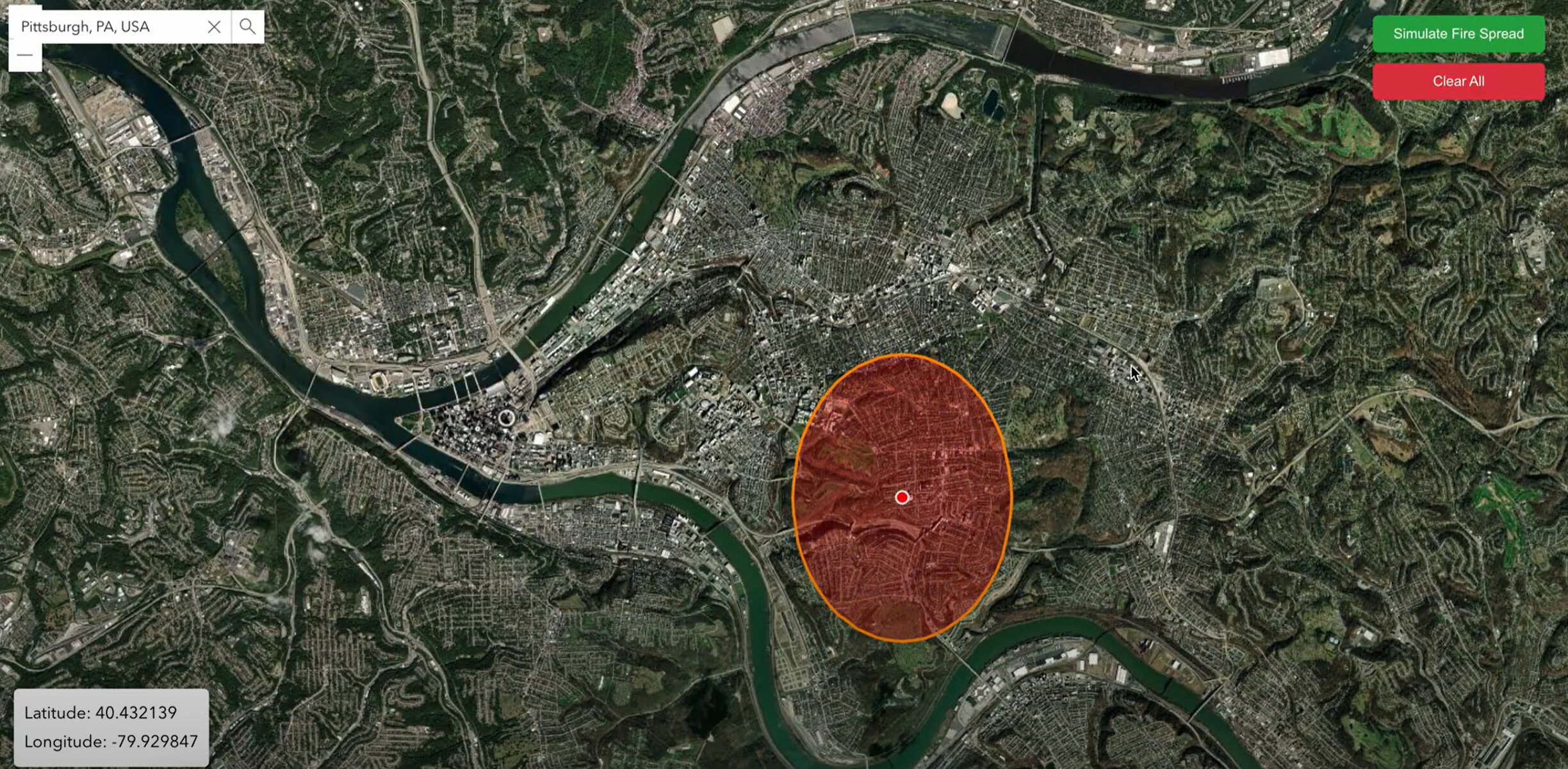
Developed ML model for fire-spread prediction in urban districts using geospatial data.
Created interactive visualization dashboard integrating simulation with predictive
algorithms.
Conversational AI carbon tracker with real-time collective impact counter.
Natural language logging replaces tedious dropdown menus — inspired by
Indore's proven behavior change model.
AI
Claude Sonnet 4
FastAPI
Backend
React
Frontend
PythonFastAPIReactAnthropic AI
102024
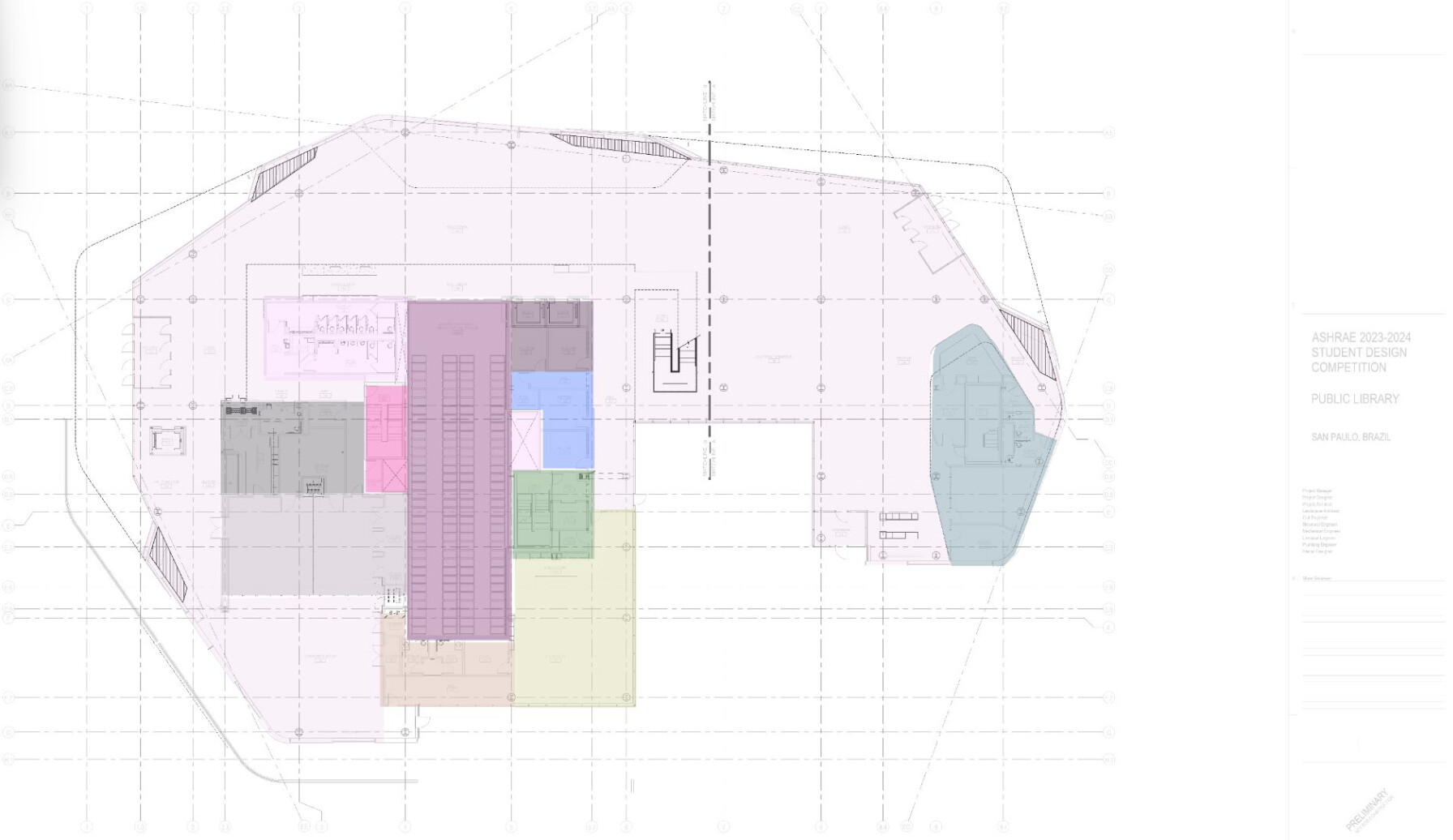
ASHRAE Library Design
São Paulo, Brazil · Climate Zone 2A · 3-Story Public Library
Comprehensive HVAC system design integrating VRF-DOAS with renewable energy,
achieving 45% energy reduction through facade optimization and smart zoning strategies.
Carnegie Mellon University · Full-Stack Web Application
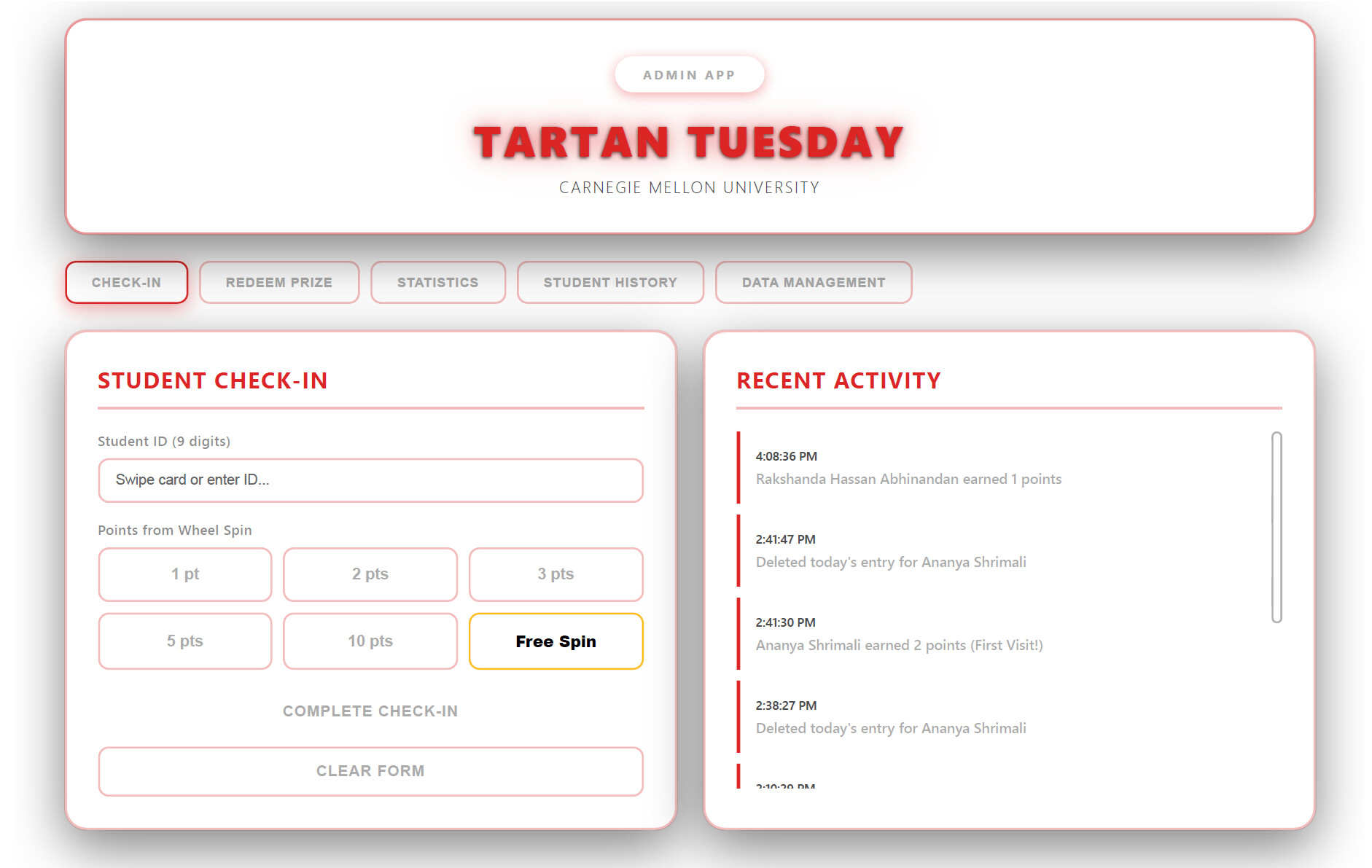
Built React + Google Apps Script web application for student engagement program
serving 200+ weekly participants. Real-time cloud sync, duplicate detection,
point tracking, and Excel import/export functionality.
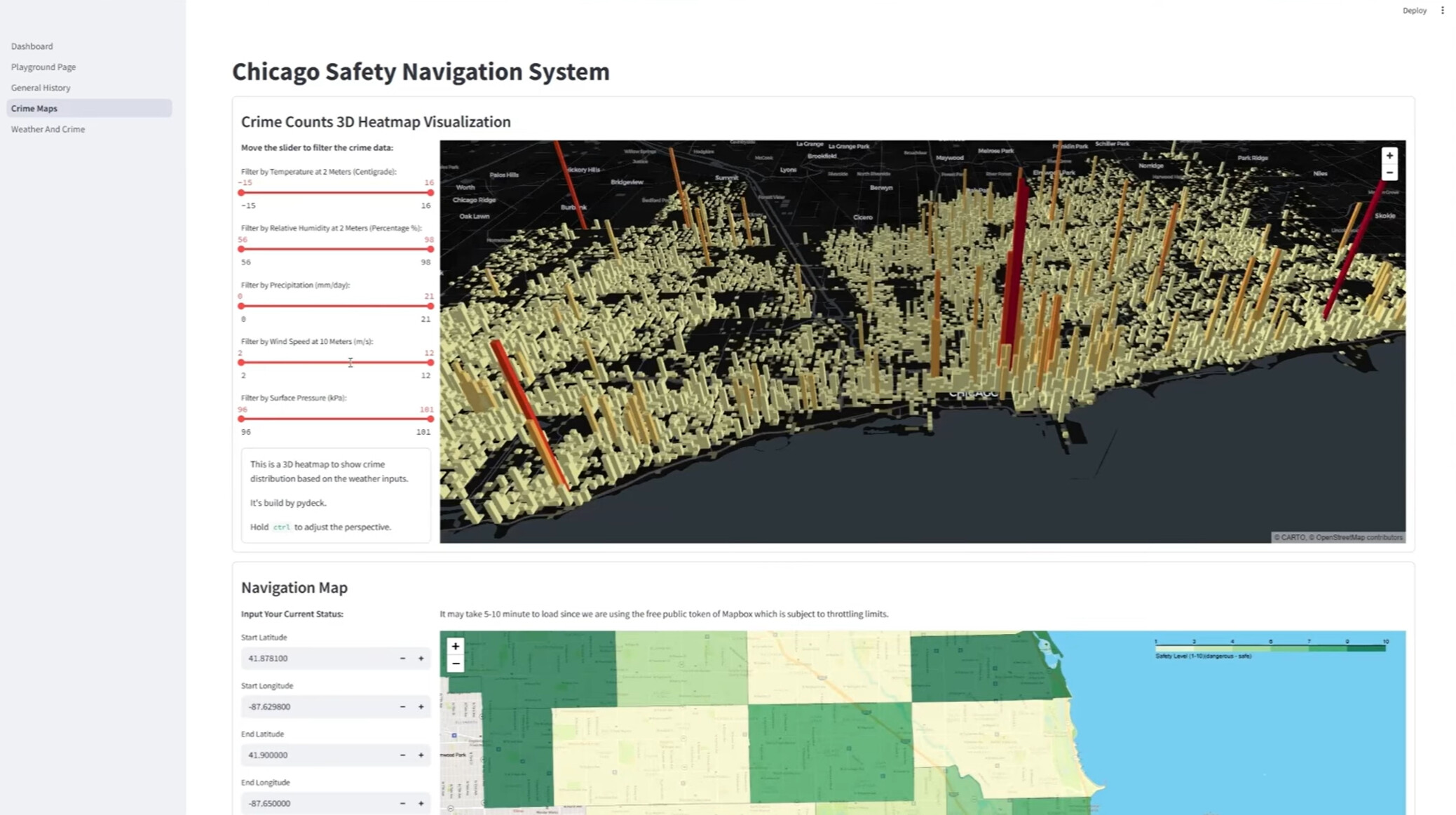
Built full-featured Python dashboard using Pandas, NumPy, Altair, Pydeck, and Streamlit.
Interactive geospatial visualizations and time-series analysis of 100,000+ data points.
100K+
Data Points
Python
Stack
GeoViz
Interactive
PythonPandasStreamlitGeospatial Viz
132025
SolarSync Shutters
Arduino Servo Control · IntelEnv 2025
Parametric window shutter system using 16 Arduino-controlled servos
that dynamically respond to daylight conditions. Eliminates manual blind operation.
16
Servos
Arduino
Mega
Dynamic
Daylight
ArduinoParametric DesignSustainable DesignIoT
142025
The Seasons of Nature
LED Strip Animation · Pausch Bridge Lighting Programming · Team B(ee)
Python-generated animated LED display (228×8 pixels) simulating seasonal
cycles — bee pollination, fall color transitions, winter aurora, and cherry blossoms.
Interactive mobile flashcard app for LEED Green Associate exam preparation.
100 mock exam questions with flip animations, progress tracking, and local persistence.
100
Questions
Expo
SDK 54
Mobile
Cross-Platform
React NativeTypeScriptExpoAsyncStorage
162026
VibeCheck
Next.js · Gemini AI · iTunes API · 15113 Capstone
Context-aware music discovery app that reads implicit browser signals — time, weather,
device hints, and listening history — then uses Google Gemini to generate a mood "vibe card"
and surface three playable tracks. No mood surveys required.
Gemini
LLM Core
JSON
Structured Output
Privacy
First Design
Next.jsReact 19TypeScriptGoogle GeminiiTunes API
Daylight + Lighting
01Ongoing
Multi-objective Daylight Optimization
Deep Floor Plate O2R · Gulf Tower, Pittsburgh
Parametric simulation workflow identifying geometric thresholds where layout depth
and facade transparency meet residential daylighting standards (LEED v4 sDA ≥55%).
100+
Configurations
sDA
≥55% Target
3
Phases
DaylightingHB-RadianceParametric Simulation
022025
Farmhouse - VR Daylighting
Academic Workshop · Parametric Daylighting
Intensive daylighting workshop exploring spatial quality through annual metrics,
glare analysis, and view studies.
sDA
Metric
ASE
Analysis
DGP
Glare
DaylightingClimateStudioGlare Analysis
032025
Shaping Daylight Workshop
Parametric Daylighting
Annual daylight metrics and parametric shading optimization.
sDA
Metric
ASE
Analysis
DGP
Glare
DaylightingGlare Analysis
042025
Environmental Performance Simulation
Climate Studio & IESVE · Daylighting & Energy
Daylighting analysis + secondary school energy optimization. 54.5% EUI reduction
through parametric envelope and lighting strategies.
57.1%
sDA
54.5%
EUI Reduction
IESVE
Simulation
Climate StudioIESVEDaylighting
052025
SolarSync Shutters
Arduino Servo Control · IntelEnv 2025
Automated window shutters responding to daylight. Energy efficiency through adaptive control.
16
Servos
Arduino
Mega
Dynamic
Daylight
IoTDaylight Responsive
062025
The Seasons of Nature
LED Strip Animation · Pausch Bridge Lighting Programming
Python-generated 228x8 LED animations simulating seasonal cycles with generative art.
228x8
LED Array
4
Seasons
Python
Animation
Lighting DesignGenerative Art
Energy + HVAC + Carbon
012024
ASHRAE Library Design
São Paulo, Brazil · VRF-DOAS
Comprehensive HVAC system design achieving 45% energy reduction with renewable energy
integration.
45%
Energy Saved
157
kWh/m² EUI
398k
kWh Solar
VRF-DOASEnergy Analysis
022024
Small Office HVAC Analysis
San Francisco, CA
Comparative HVAC system analysis recommending mini-split VRF for 33% energy savings.
33%
Energy Saved
54
kBTU/ft²
VRF
Selected
Load CalculationsERV Sizing
032025
Building Performance Modeling
Pittsburgh & Miami · Dual-Climate Analysis
37 parametric energy models across two climate zones. OFAT optimization achieving
5.6% and 8.8% EUI reductions.
37
Models
8.8%
Best Reduction
eQUEST
Software
eQUESTEnergy ModelingASHRAE
042025
Environmental Performance Simulation
Climate Studio & IESVE · Energy Optimization
Secondary school energy optimization achieving 54.5% EUI reduction
through parametric envelope and HVAC strategies.
54.5%
EUI Reduction
IESVE
Simulation
HVAC
Optimization
IESVEEnergy Modeling
052026
Carb-Off
AI Carbon Tracker · 15113
Conversational AI carbon tracker with real-time collective impact counter.
Inspired by Indore's behavior change model.
AI
Claude Sonnet 4
Carbon
Tracking
React
Frontend
Carbon TrackingAnthropic AI
Data-Driven Design
01Ongoing
Environmental Justice Analysis
Louisiana Cancer Alley · GIS
GIS spatial analysis with kernel density and demographic correlations.
GIS
Analysis
Python
Scripting
Model
Builder
GISPythonGeospatial
02Ongoing
Multi-objective Daylight Optimization
Simulation Data Pipeline · Interactive Visualization
Automated simulation pipeline and interactive data visualization tool for
multi-objective daylight optimization across 100+ parametric configurations.
100+
Configurations
Python
Pipeline
sDA/ASE
Metrics
PythonHB-RadianceData Visualization
032025
Urban Fire Risk Prediction
Harvard HPAIR Winner
ML model for fire-spread prediction in urban districts using geospatial data.
Winner
HPAIR
ML
Prediction
GIS
Analysis
Machine LearningGeospatial
042025
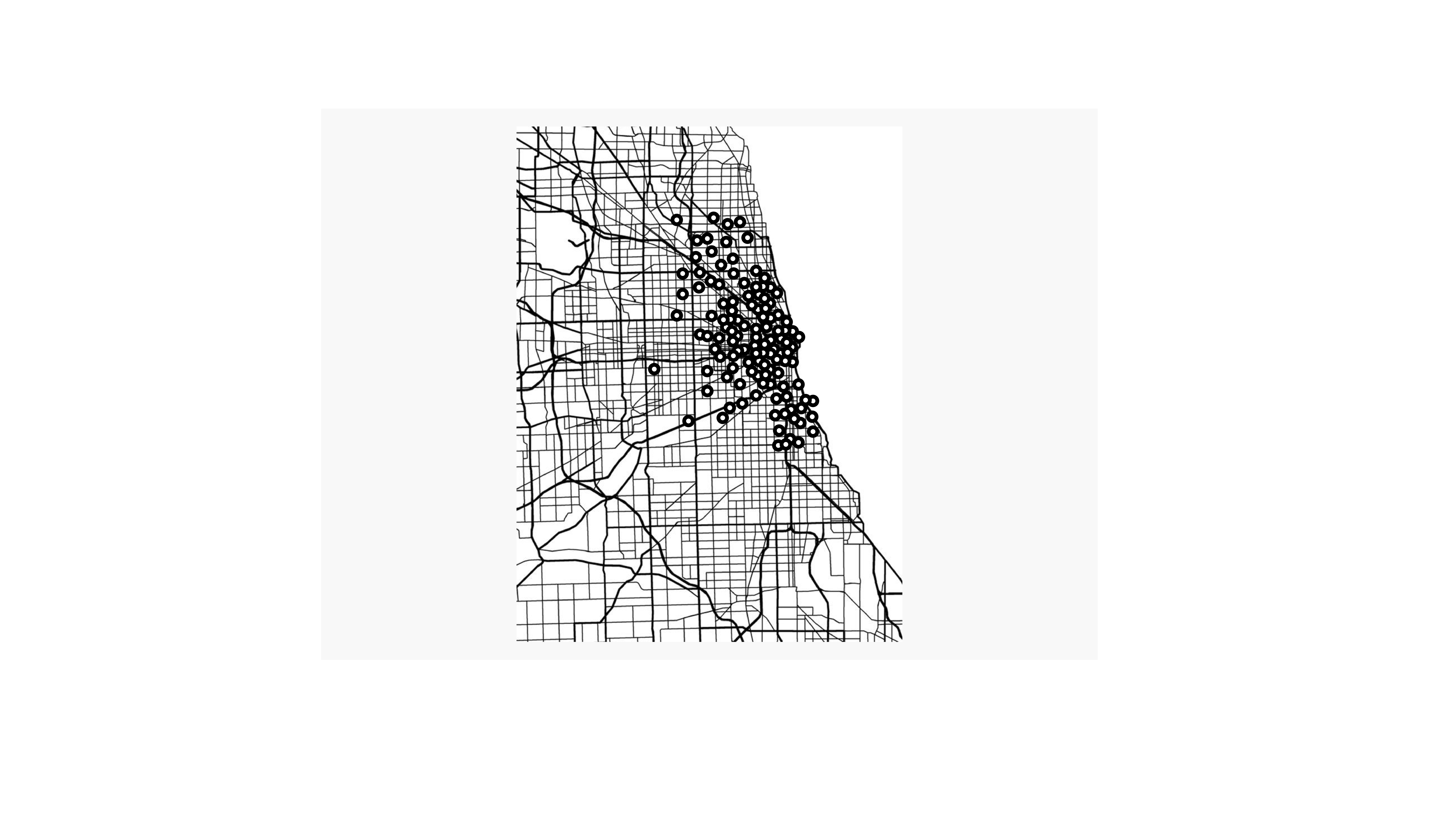
Chicago Drug Data Dashboard
Interactive Data Science
Python dashboard with interactive geospatial visualizations analyzing 100K+ data points.
100K+
Data Points
Python
Stack
GeoViz
Interactive
PythonStreamlitData Visualization
Programming
012025
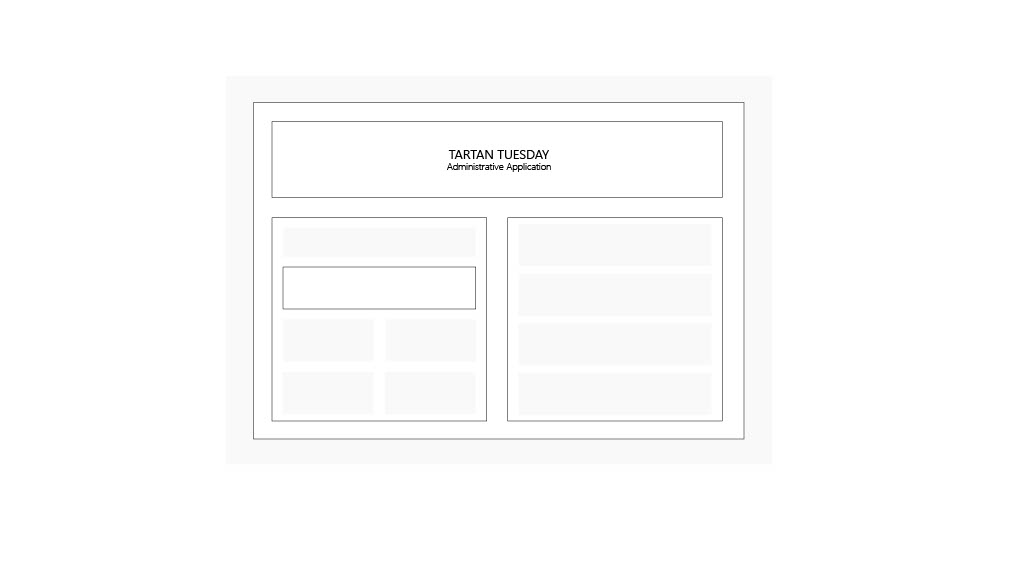
Tartan Tuesday Management System
Full-Stack Application
React frontend with Google Apps Script backend serving 200+ weekly participants.
200+
Users
React
Frontend
Cloud
Backend
ReactGoogle Apps ScriptAPI Integration
022025
Chicago Drug Data Dashboard
Python Web Application
Streamlit-based dashboard with geospatial visualizations and real-time filtering.
100K+
Data Points
Streamlit
Framework
Interactive
Real-time
PythonStreamlitPandas
032026
Carb-Off
AI Climate Coach · 15113
Conversational AI carbon tracker with real-time collective impact counter.
FastAPI backend with React frontend powered by Claude Sonnet 4.
AI
Claude Sonnet 4
FastAPI
Backend
React
Frontend
FastAPIReactAnthropic AI
042025
SolarSync Shutters
Arduino Servo Control · IntelEnv 2025
Parametric window shutters with 16 Arduino-controlled servos responding to daylight.
16
Servos
Arduino
Mega
C++
Language
ArduinoC++IoT
052025
The Seasons of Nature
LED Strip Animation · Pausch Bridge Lighting Programming
Python-generated 228x8 LED animations simulating seasonal cycles with generative art.
228x8
LED Array
4
Seasons
Python
Animation
PythonGenerative Art
062026
LEED GA Flashcard Study App
React Native · Expo · 15113
Mobile flashcard app for LEED GA certification with flip animations and progress persistence.
100
Questions
Expo
SDK 54
TypeScript
Language
React NativeTypeScriptExpo
072026
VibeCheck
Next.js · Gemini AI · iTunes API · Capstone
Context-aware music discovery web app using passive browser signals and LLM structured output
to recommend mood-matched tracks — no explicit input required.
Next.js
App Router
2
API Routes
Privacy
First
Next.jsTypeScriptTailwind CSSGoogle Gemini
AI + Deep Learning
012026
Cognitive Architecture Engine
Biologically-Grounded Digital Twin · PyTorch + RAG
A ~300K parameter neural network modeling 13 brain regions and 9 neurotransmitter
systems, with ChromaDB RAG memory and a 5-level × 4-tier output control matrix.
300K
Parameters
13
Brain Regions
20
Output Modes
PyTorchRAGChromaDBGemini 1.5 ProFastAPI
022025
Urban Fire Risk Prediction
Harvard HPAIR Winner · ML Geospatial
ML model for fire-spread prediction using geospatial data and simulation-based analysis.
Winner
Harvard HPAIR
ML
Prediction
GIS
Analysis
Machine LearningPythonGeospatial
032026
Carb-Off
AI Carbon Tracker · Conversational AI
Conversational AI carbon tracker with real-time collective impact counter.
AI
Conversational
NLP
Logging
Real-time
Impact
AINLPCarbon Tracking
042026
VibeCheck
Structured LLM Output · Context-Aware Music AI
Gemini-powered music recommender that converts passive browser context into a strict JSON
"vibe card," then maps keywords to playable tracks via iTunes. Includes deterministic
fallback inference when the API is unavailable.
Gemini
Flash LLM
JSON
Strict Schema
Fallback
Resilience
Google GeminiStructured OutputNext.jsTypeScript
Architectural Design
012023
Museum of Event 1971
Bangladesh Liberation War Memorial · Thesis
Phenomenological architecture translating historical events into a 1.2 km
experiential journey through 12 emotional zones. Awarded "Best Thesis 2023".
1.2km
Journey
12
Emotional Zones
80%
Landscape
PhenomenologyMemorialSerial Vision
022022
Tesseract
Mixed-Use Development · Downtown Kolkata
Climate-responsive high-density development with 80 units, porous form for
Venturi-effect ventilation, and 15+ community activity nodes. Top 5 in External Jury.
80
Apartments
12+
Floors
100%
Cross-Vent
Mixed-UseClimate-ResponsiveCommunity
032022
Social Nexus
Tianducheng Ghost City · International Winner
Adaptive urban design transforming a Chinese ghost town through grid-based community
activation. 16 activity typologies in a 54-hour competition.
Winner
International
16
Activity Types
54hr
Competition
Urban DesignCommunityAdaptive
042022
La Gracieux
Cannes Film Festival Pavilion · Top 30
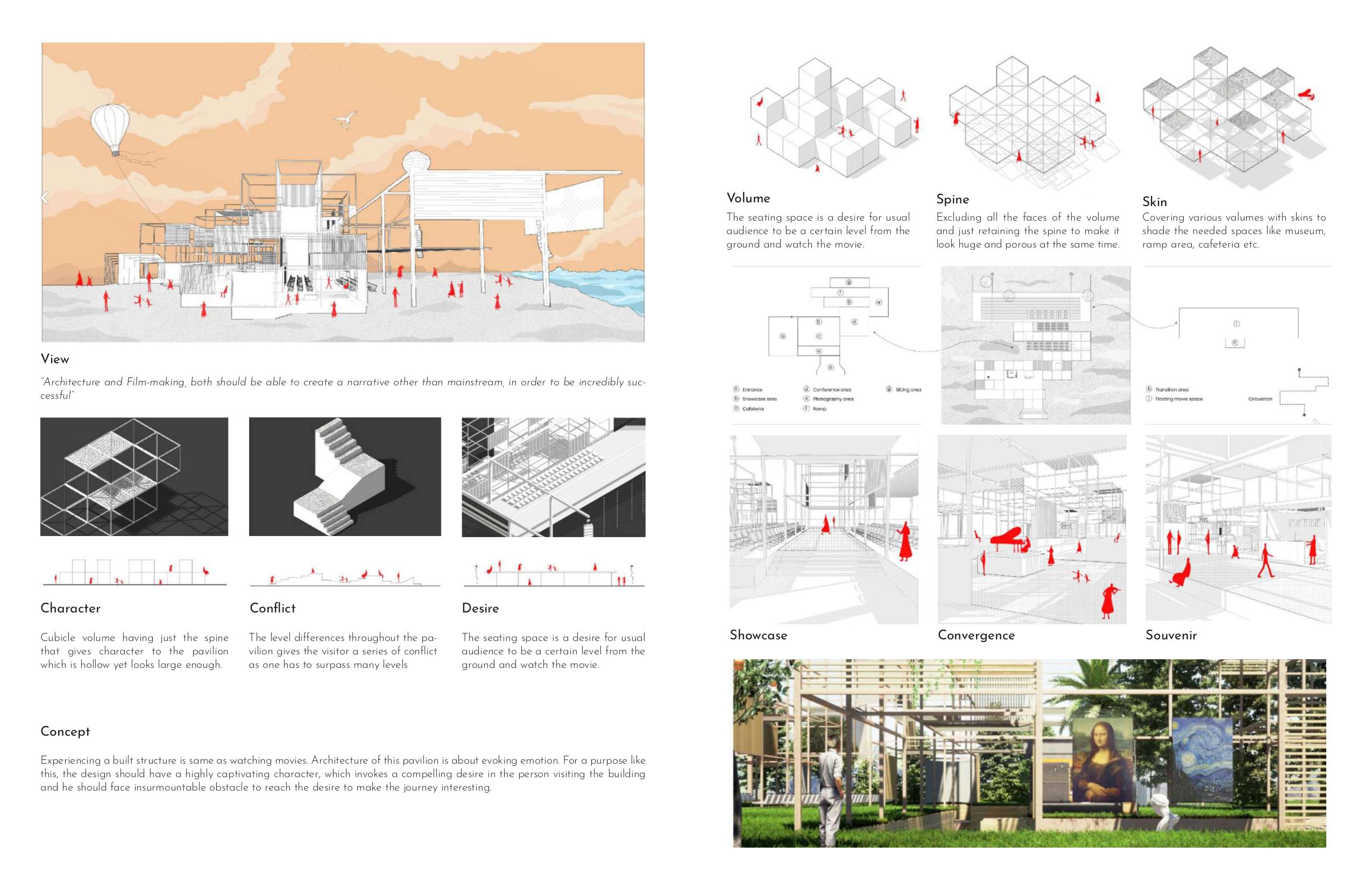
Temporary beachfront pavilion translating filmmaking narrative into architecture
through Character, Conflict, and Desire.
Top 30
International
Cannes
France
Temp
Structure
TemporaryNarrativeFestival
052020
Fractal
Modular Housing for Migrant Workers · IGBC Shortlisted
Hexagonal prefabricated housing for pandemic-displaced migrant workers.
Scalable, sustainable, self-assembled in 4-6 hours.
IGBC
Shortlisted
4-6 hrs
Assembly
100+
Scalable
PrefabricationPandemic ResponseSustainable
Get In Touch
Available for computational design roles, building performance analysis positions,
and collaborative research opportunities. Let's connect!
Multi-objective Daylight Optimization for Deep Floor Plate O2R Conversions
Project Overview
Type: Master's Thesis — Computational Building Performance Duration: Spring 2026 (Ongoing) Location: Pittsburgh, PA — Gulf Tower Case Study Advisor: Prof. Dr. Yiqun Pan Scope: Pre-Design & Schematic Design Phase
Context: Office Floor Plate Typologies
Office building floor plates have evolved through several shapes over time. While I, U, L,
and H typologies have seen successful residential conversions, deep rectangular floor plates
remain the most challenging — and are the focus of this thesis.
Case Study: Gulf Tower, Pittsburgh
Art Deco high-rise (1932) with a rectangular deep floor plate (~192 ft × 132 ft) in
Downtown Pittsburgh, with floor plate depths of ~60 ft on one side and ~45 ft on the other.
Currently proposed for office-to-residential conversion with funded development backing.
Problem Statement
One of the primary technical barriers to converting deep floor plate office buildings into
residential spaces is daylighting performance in interior dark zones. Office buildings feature
deep floor plates and central service cores that create areas unsuitable for residential living.
Achieving residential standards (LEED v4 sDA ≥55%) is difficult in zones more than
30–35 feet from exterior windows.
Ref: Jiyoon Lee in How to Tailor 50-story Office, Harvard GSD 2023
Hypothesis
The feasibility of converting deep-plan office buildings into residential spaces is determined
by the specific geometric threshold beyond the standard 45 ft where layout depth and facade
transparency intersect to meet minimum daylighting autonomy standards.
Methodology — Phase 1 (Completed)
Developed an early-stage parametric workflow to understand the maximum livable daylight
threshold achievable through combinations of unit depth and facade transparency.
Unlike typical office daylighting studies that simulate the entire floor plate as one zone,
this approach subdivides into individual dwelling units — each with different depth,
orientation, ceiling height, and WWR.
Methodology — Phase 2 (Ongoing)
Developed the O2R Daylight Advisor — an interactive decision framework
that ingests HB-Radiance simulation output and lets architects explore multi-objective
daylight optimization in real time. The tool has four integrated views:
Feasibility Assessment — Set inherited building constraints (orientation,
min WWR, max unit depth) and instantly see which configurations achieve LEED v4 compliance
(sDA ≥55%, ASE ≤10%)
Cost-Tier Comparison — Interventions grouped by renovation cost to find
the point of diminishing returns where higher glazing spend no longer improves sDA
Parallel Coordinates — Brush-filter across all 10 input parameters
simultaneously to discover non-obvious facade transparency combinations
Orientation Advisor — Facades ranked by average sDA with best-performing
configuration for each, guiding which side to prioritize for habitable rooms
Based on tool results, creating a schematic residential unit layout along with
facade transparency recommendations for optimum daylight performance.
Expected Outcomes
Facade transparency recommendations: WWR 70–90%, VT up to 0.70, SHGC tuning (Solarban 70XL candidate)
Floor plate layout strategies achieving higher spatial daylight autonomy beyond the assumed 45 ft threshold
An interactive decision framework for architects in early-stage O2R conversion design
Tools & Technologies
Rhino, Grasshopper, RhinoPython, HB-Radiance, Python, Interactive Data Visualization
Tartan Tuesday Management System
Overview
Full-stack web application serving 200+ weekly participants with real-time attendance tracking,
point management, and prize redemption.
Key Features
Real-time cloud synchronization with Google Sheets API
Duplicate detection and point tracking system
Excel import/export functionality
Responsive design for desktop and mobile
Tools
React, JavaScript, Google Apps Script, Google Sheets API, XLSX.js
Urban Fire Risk Prediction
Overview
Winner of Harvard HPAIR Impact Challenge 2025. ML model for fire-spread prediction
using geospatial data and simulation-based analysis.
Methodology
Geospatial data collection and processing
Machine learning model training on historical fire data
Interactive dashboard for risk visualization
Tools
Python, Machine Learning (Scikit-learn), GIS Analysis, Data Visualization
Chicago Drug Data Dashboard
Overview
Interactive data science web application analyzing 100,000+ drug-related data points
with geospatial visualizations and time-series analysis.
Key Features
Interactive geospatial visualizations using Pydeck
Time-series analysis with Altair charts
Real-time data filtering and exploration
Tools
Python, Pandas, NumPy, Altair, Pydeck, Streamlit
ASHRAE Design Competition: São Paulo Public Library
Project Overview
Building Type: Three-story public library Location: São Paulo, Brazil Climate Zone: 2A (Warm, Humid) Service Life: 50 years Team: Anisha, Ananya, Kansi, Shruti
Climate Characteristics
High temperature and humidity year-round, especially in summers.
DBT comfort range: Winter (71°F–78°F), Summer (76°F–82°F).
High humidity levels throughout the year drive the need for dedicated dehumidification strategies.
Performance Achievements
45% energy reduction (284 to 157 kWh/m²)
397,800 kWh/year solar generation
Operational carbon: 101 kgCO₂/m²
Primary HVAC System: VRF with DOAS
The Variable Refrigerant Flow (VRF) system with Dedicated Outdoor Air System (DOAS) was selected for
its
flexibility for future space modifications, individual zone control for occupant comfort, and quiet
operation
essential for a library environment — achieving 41–66% energy cost reduction
compared to conventional systems.
System Components
DOAS-VRF Integration: Efficient temperature control through accessible ducted
air distribution
Energy Recovery Ventilators (ERVs): Handle ventilation and humidity in
high-occupancy areas (reading zones, study areas)
Desiccant Dehumidifiers: Critical for São Paulo's humid climate, ensuring
stable humidity without over-reliance on cooling
Overhead Diffusers: Ceiling-mounted for even conditioned air distribution
Sidewall Grilles/Linear Diffusers: For perimeter zones near windows and heat
sources
Zoning Strategy
Space-based zoning across reading areas, study zones, circulation, and administrative spaces.
VRF outdoor unit placement optimized for system efficiency with multiple indoor units distributed
per functional zone.
Photovoltaic System
Annual Generation: 397,800 kWh/year
System Capacity: 93 kW installed (92.8 kW calculated)
Panels: 232 panels @ 400W each (1.7 m² per panel)
Total Cost: 372,000 BRL (93 kW × 4,000 BRL/kW)
Avg Solar Radiation: 5.88 kWh/m²/day
Peak Month: September — 6.37 kWh/m²/day (34,886 kWh)
Additional Green Features
Green roof potential, bio-wall integration, and solar-assisted cooling enhancement
complement the core HVAC strategy for a holistic low-carbon building approach.
Tools & Technologies
ClimateStudio, Energy Modeling, ASHRAE Standards, PVWatts, VRF-DOAS Design
HVAC System Selection & Energy Use Estimation
Overview
Comprehensive HVAC system selection and energy use estimation for a small coworking
office in San Francisco, CA. The building includes a coworking area, private rooms,
and shared recreational spaces divided into five thermal zones. The project evaluates
four HVAC system types, selects the optimal system through comparative analysis,
performs detailed load calculations, sizes an Energy Recovery Ventilator, and quantifies
energy savings through a baseline-vs-VRF comparison in Climate Studio.
Team: Ananya Shrimali, Migel Shehu, Visha Ahmad Course: 48-798 Environmental Performance Simulation Location: San Francisco, CA (mild climate, 250+ sunny days/year) Software: Climate Studio, RenewAire CORES Calculator
Part A — HVAC System Determination
Four systems were evaluated for the small office: Ductless Mini-Split, VAV, Geothermal Heat Pump,
and Water Source Heat Pump (WSHP). Each was assessed on energy efficiency, cost, maintenance,
occupant comfort, and scalability.
Ductless Mini-Split (Selected)
Energy Efficiency: High — individual zone control optimizes use
Costs: High initial (multiple indoor units), but straightforward installation
Thermal analysis conducted in Climate Studio using San Francisco International Airport
weather data. A baseline ASHRAE model was modified for better energy efficiency. Peak
heating and cooling loads were calculated for all five thermal zones.
Peak Loads by Thermal Zone
Zone 1 (Coworking): Heating 9.689 | Cooling 8.834 kBtu/h
Zone 2 (Conference): Heating 4.869 | Cooling 21.916 kBtu/h
Zone 3 (Coworking): Heating 9.922 | Cooling 10.932 kBtu/h
Zone 4 (Breakroom): Heating 0.05 | Cooling 32.756 kBtu/h
Zone 5 (Core): Heating 8.097 | Cooling 6.431 kBtu/h
Refrigerant: R-410A or R-32 for eco-friendly operation
Part C — Energy Recovery Ventilator (ERV)
ERV sized using the RenewAire CORES calculator with ASHRAE 90.1 Standards
and 62-2016 ventilation standards for the San Francisco location.
Selected ERV: RenewAire HE 10IN
Airflow Range: 250–1,100 CFM (meets the 770.52 CFM requirement)
Ventilation Type: Static plate, heat and humidity transfer
Summer Total Effectiveness: 48.2%
Winter Total Effectiveness: 65.9%
Summer Enthalpy Recovery Ratio: 48.1%
Winter Enthalpy Recovery Ratio: 65.8%
Winter Load Reduction: 19,795 BTU/h (from 30,072 to 10,277)
Part D — Baseline vs. VRF Energy Comparison
Baseline Results
Site EUI: 107 kBTU/ft²
Op. Carbon: 35 lbCO²/ft²
Energy Cost: $4/ft²
Savings vs. Baseline: None
Baseline EUI: 81 kBTU/ft²
VRF System Results
Site EUI: 54 kBTU/ft²
Op. Carbon: 18 lbCO²/ft²
Energy Cost: $2/ft²
Savings vs. Baseline: 33%
Energy Saving Strategies
External Shading Devices: Horizontal on south facade, vertical on east/west — increased savings by 30%, reaching 66% total (EUI 27 kBTU/ft²)
Improved Insulation: Upgraded wall, roof, and floor insulation — EUI dropped to 52 kBTU/ft² (36% savings)
Reduced Infiltration: Sealing air leaks to lower heating/cooling loads
LED Lighting: Up to 73% savings compared to traditional lighting
Smart Systems: Thermostats and occupancy sensors for further optimization
Tools & Technologies
Climate Studio, ASHRAE 90.1 Standards, ASHRAE 62-2016, RenewAire CORES Calculator,
VRF System Modeling, Load Calculations, Mitsubishi Electric PUMY-P60
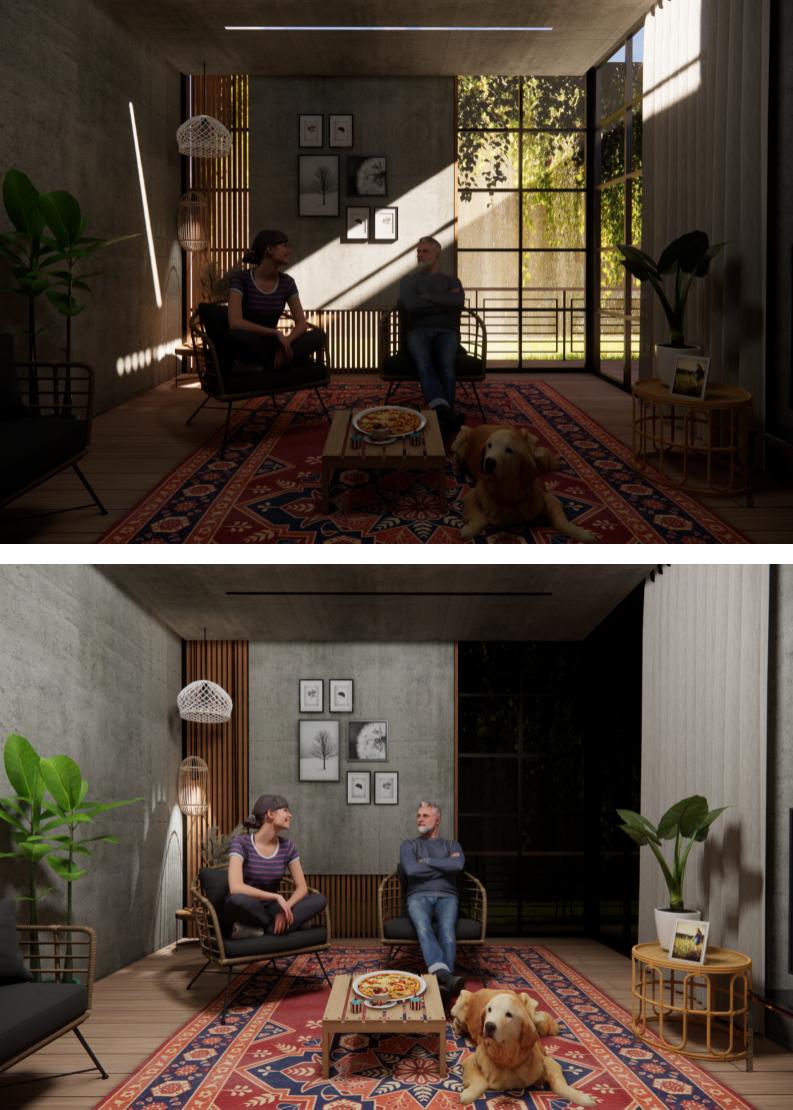
Farmhouse Living: A Nostalgia Storytelling
Overview
This project explores how daylight can be orchestrated to evoke emotional memories
and recreate nostalgic experiences. The design reimagines a family farmhouse gathering
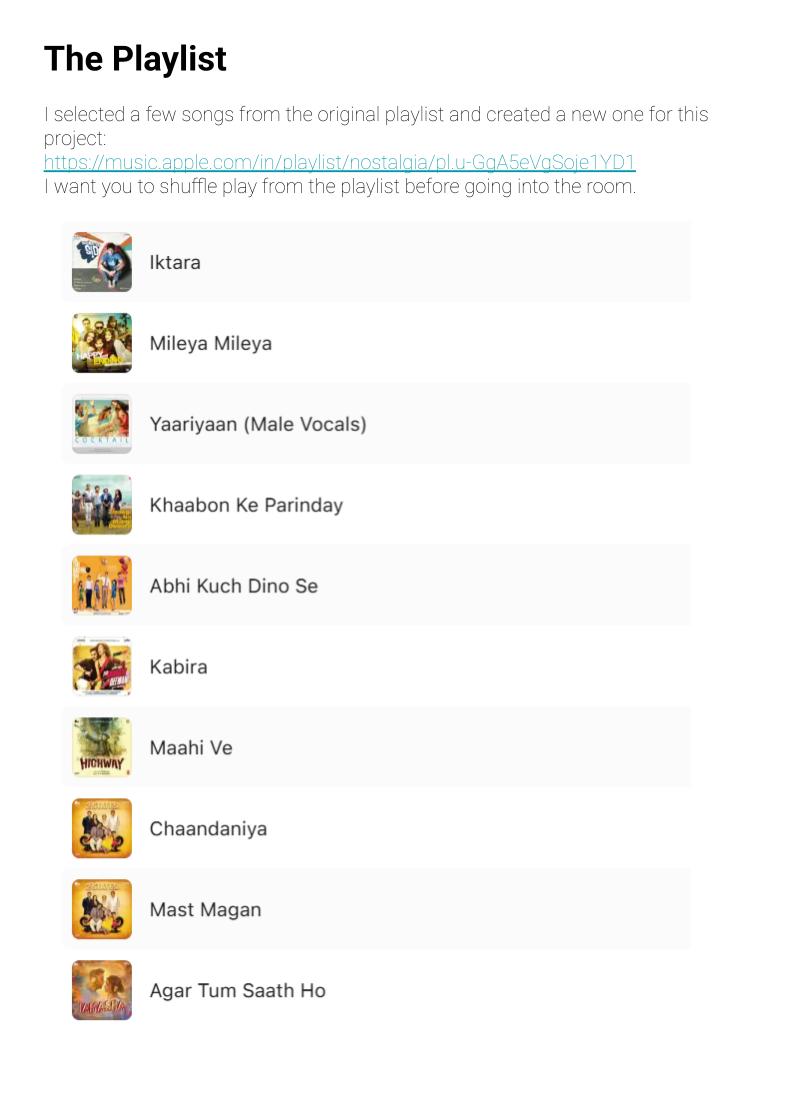
space in Central India, translating personal memories and a carefully curated music
playlist into spatial lighting experiences using evidence-based daylighting metrics.
Design Concept
The space recreates cherished childhood memories of summer visits to a family farmhouse,
where two families would gather to enjoy ice cream sundaes while listening to a shared
playlist. The design hypothesis: daylight quality and distribution can be choreographed
to parallel the emotional arc of music, creating spatial "verses," "choruses," and "intros"
that correspond to different lighting qualities throughout the room.
Daylighting Performance Metrics
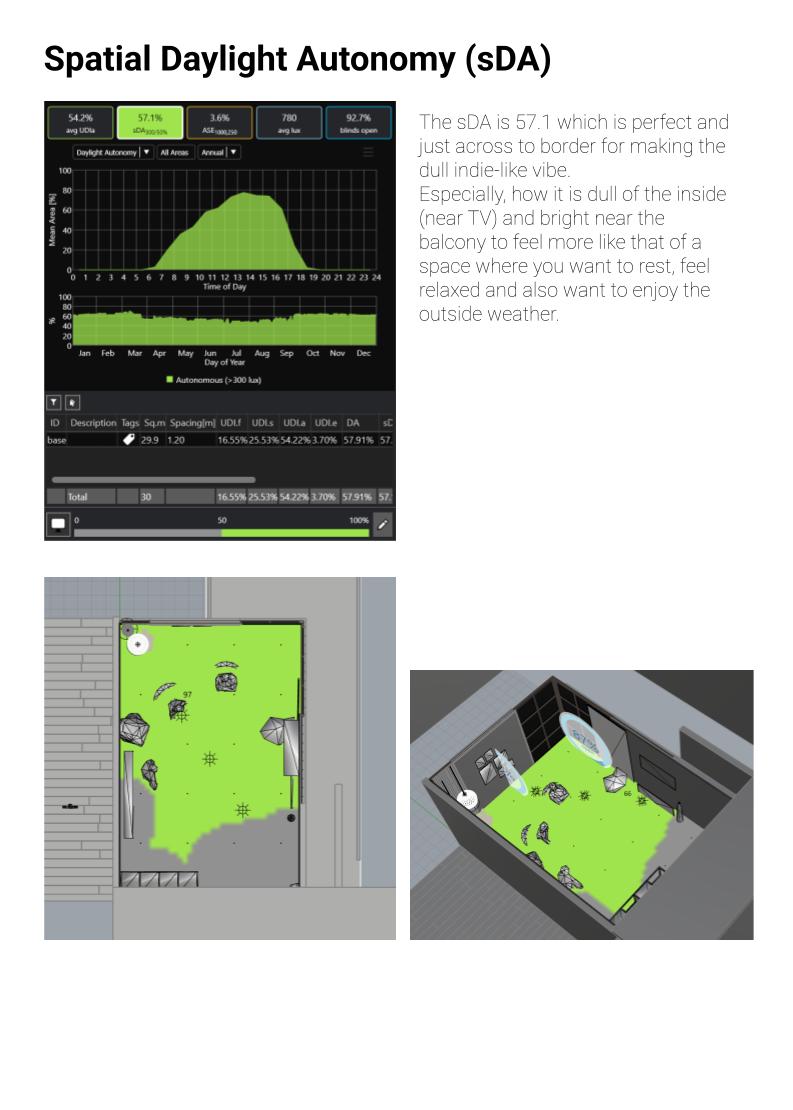
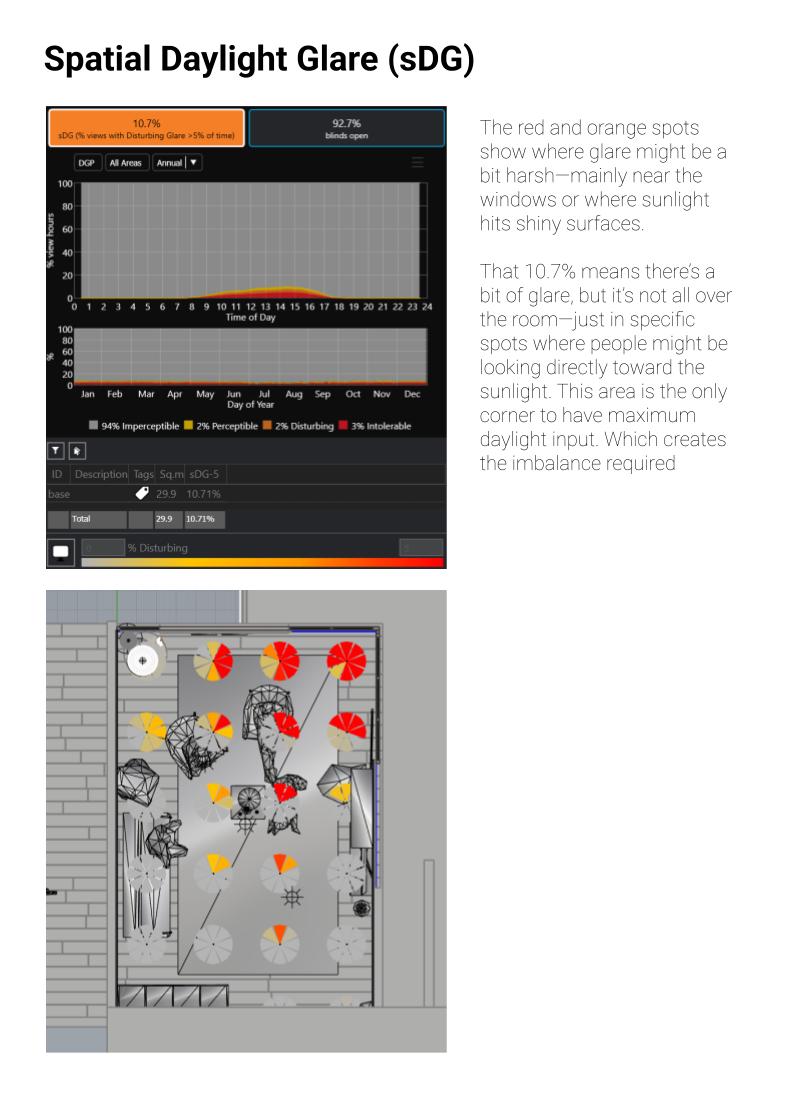
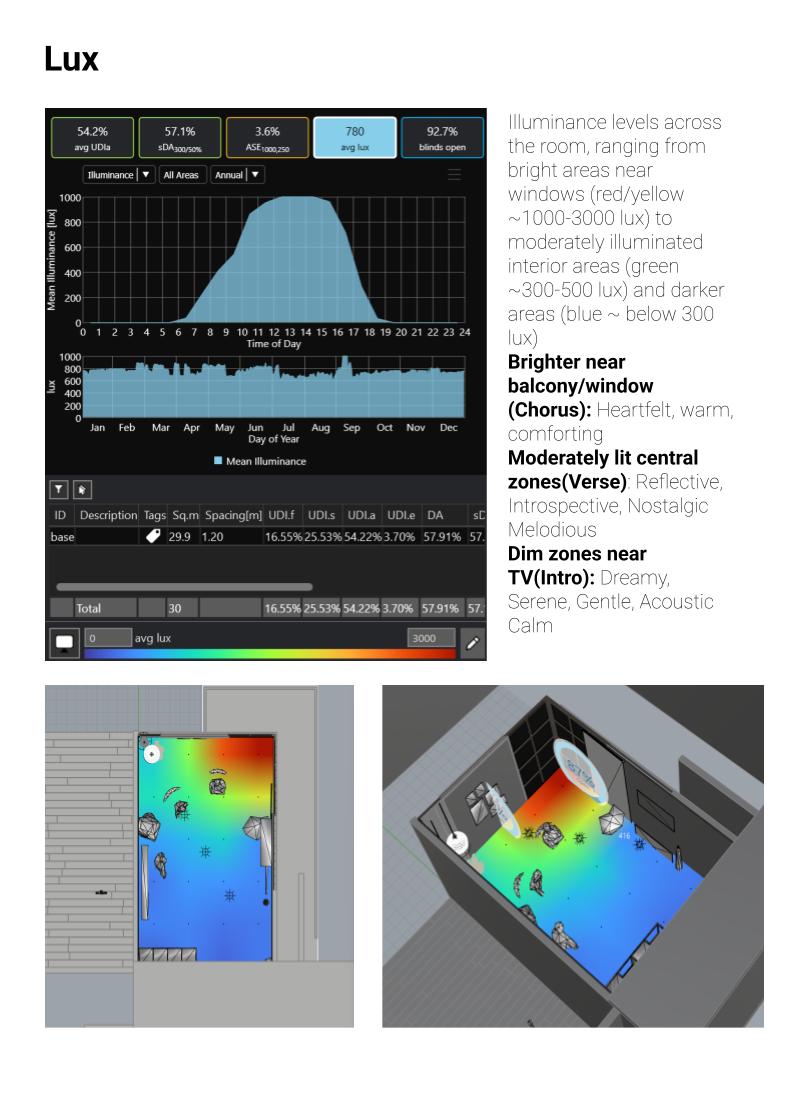
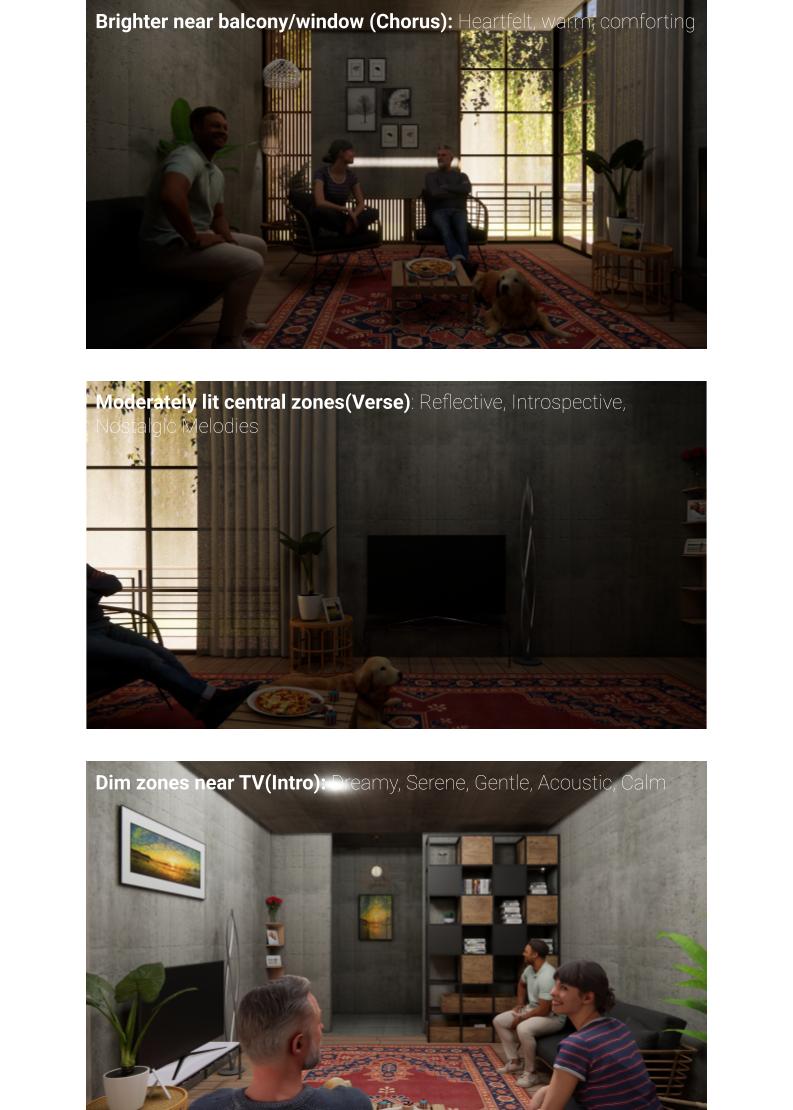
Spatial Daylight Autonomy (sDA): 57.1% — deliberate light imbalance, bright near balcony transitioning to subdued lighting near TV area
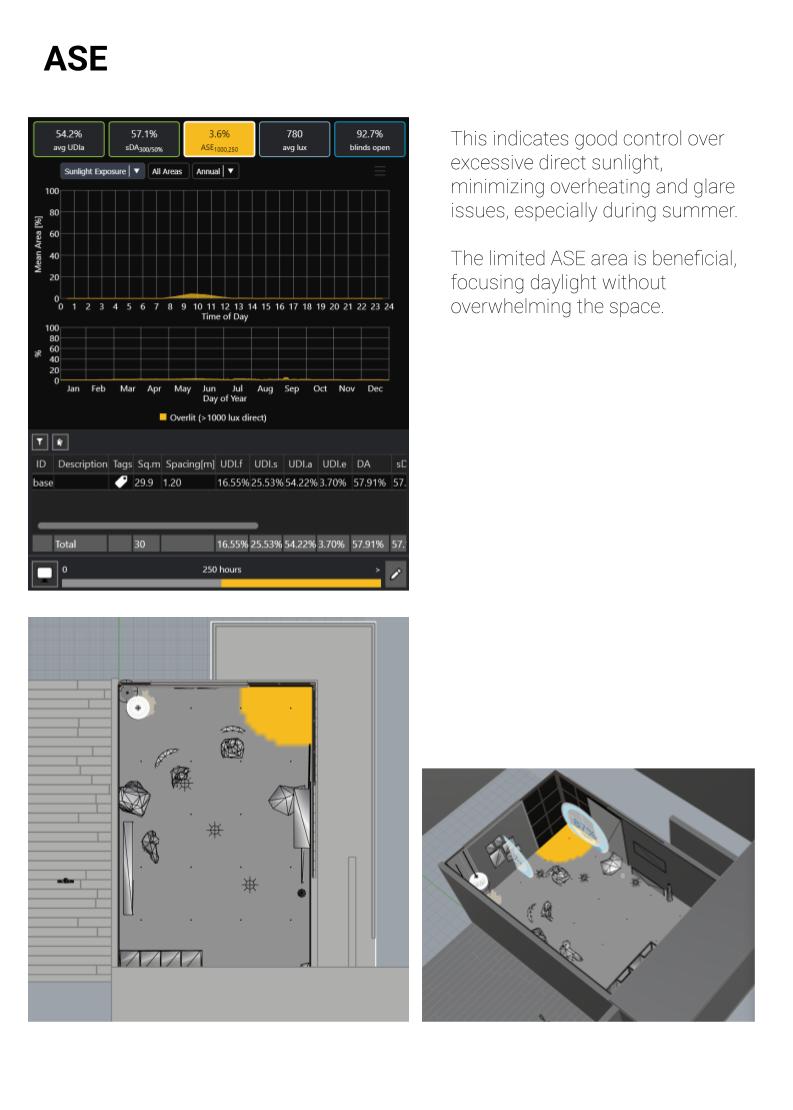
Annual Sunlight Exposure (ASE): 3.6% — excellent glare control minimizing overheating and excessive direct sunlight
Spatial Daylight Glare (sDG): 10.7% — strategic glare positioning creates intentional "imbalance" near windows
Illuminance Distribution: 300-3000 lux range across three distinct lighting zones
Musical Lighting Zones
The design translates a Bollywood-inspired playlist into architectural form, mapping
musical characteristics to lighting qualities across three zones:
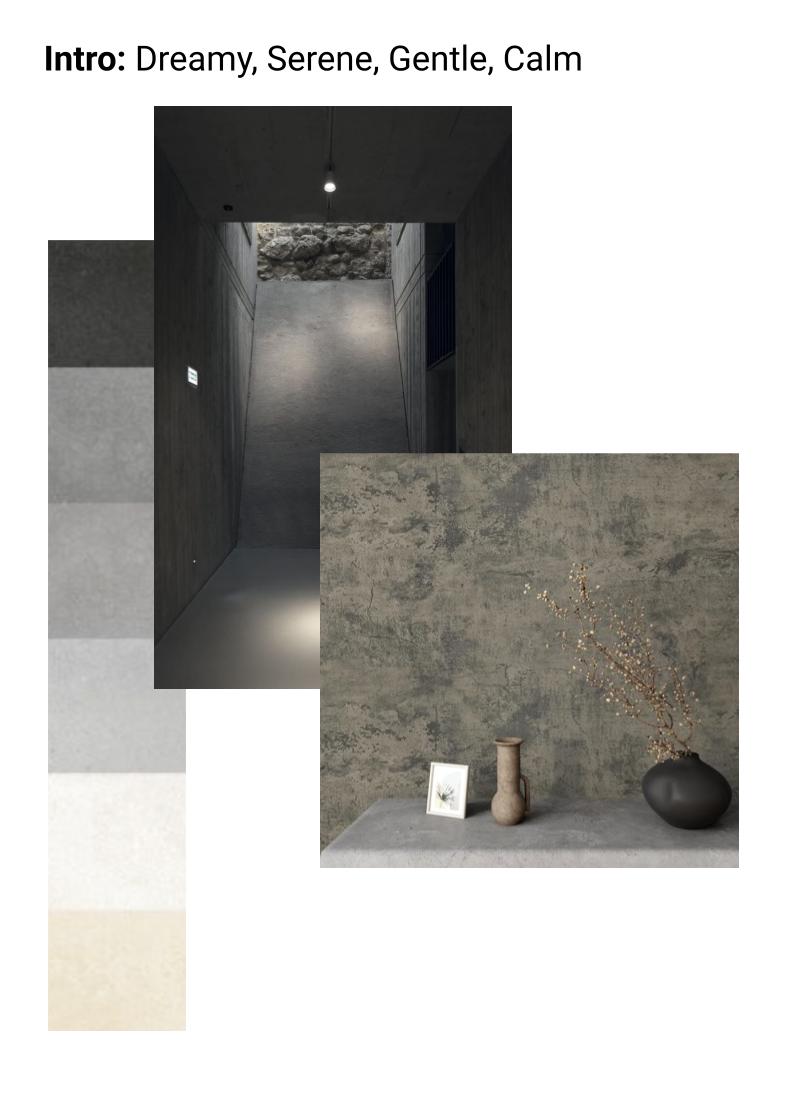
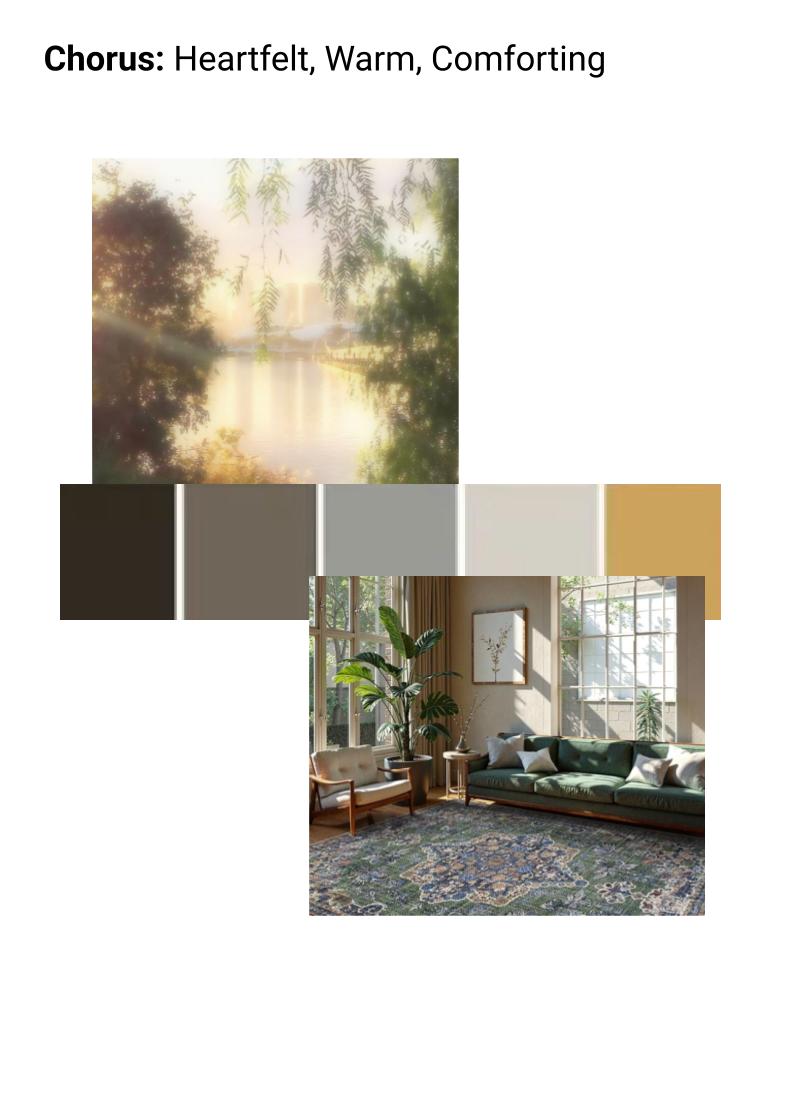
Intro Zone (near TV): Dim, dreamy environment below 300 lux — acoustic, gentle intros mapped to serene, dim entry lighting
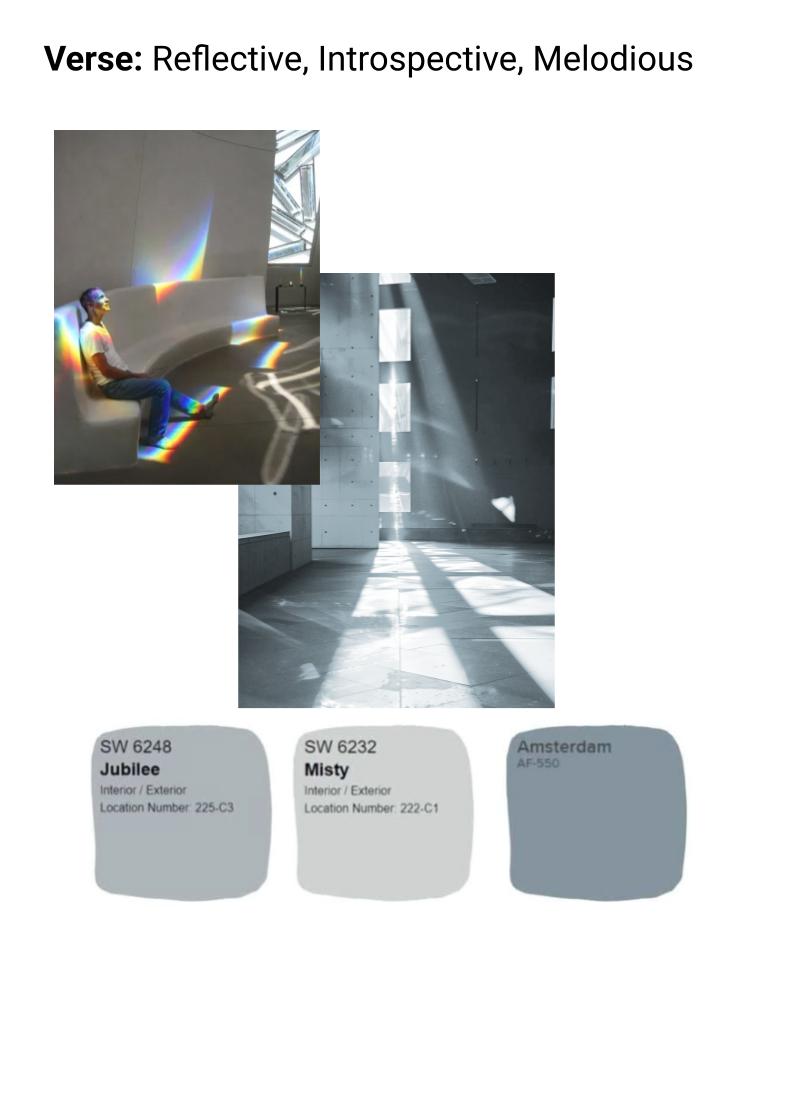
Verse Zone (central): Moderately lit transitional space at 300-500 lux — reflective, melodious verses mapped to soft spectral light play
Chorus Zone (near balcony): Bright, warm space at 1000-3000 lux — heartfelt, warm choruses mapped to comforting light with views to nature
Design Narrative
Material palette includes exposed concrete, warm wood screens, Persian rugs, and
strategic glazing oriented toward greenery, reinforcing the indoor-outdoor connection
central to the farmhouse memory. The compact single-room approach reflects authentic
memory — the families always gathered together in one space, honoring the intimacy
and togetherness central to the nostalgic experience.
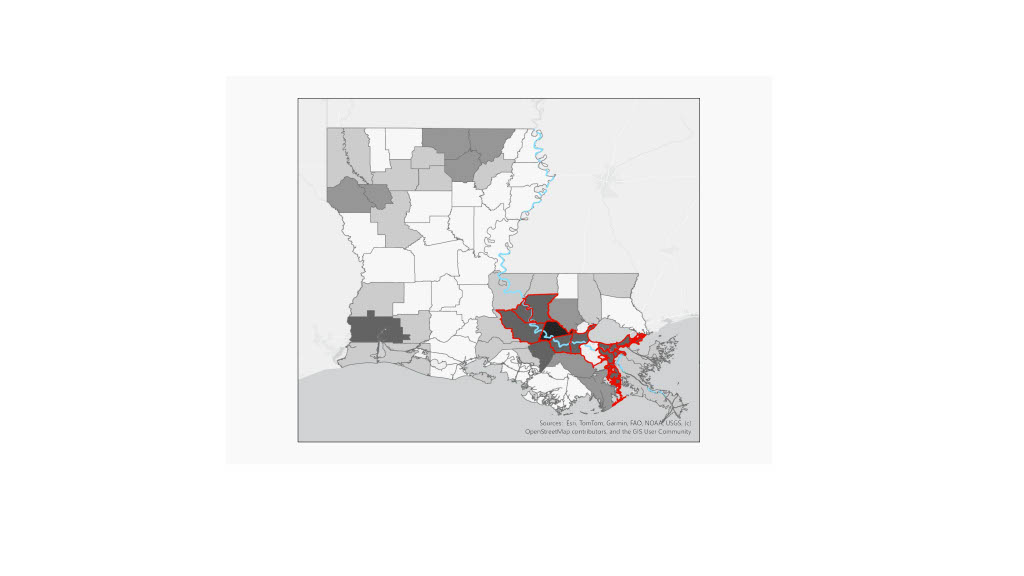
A spatial analysis of industrial burden, race, income, and poverty across Louisiana parishes.
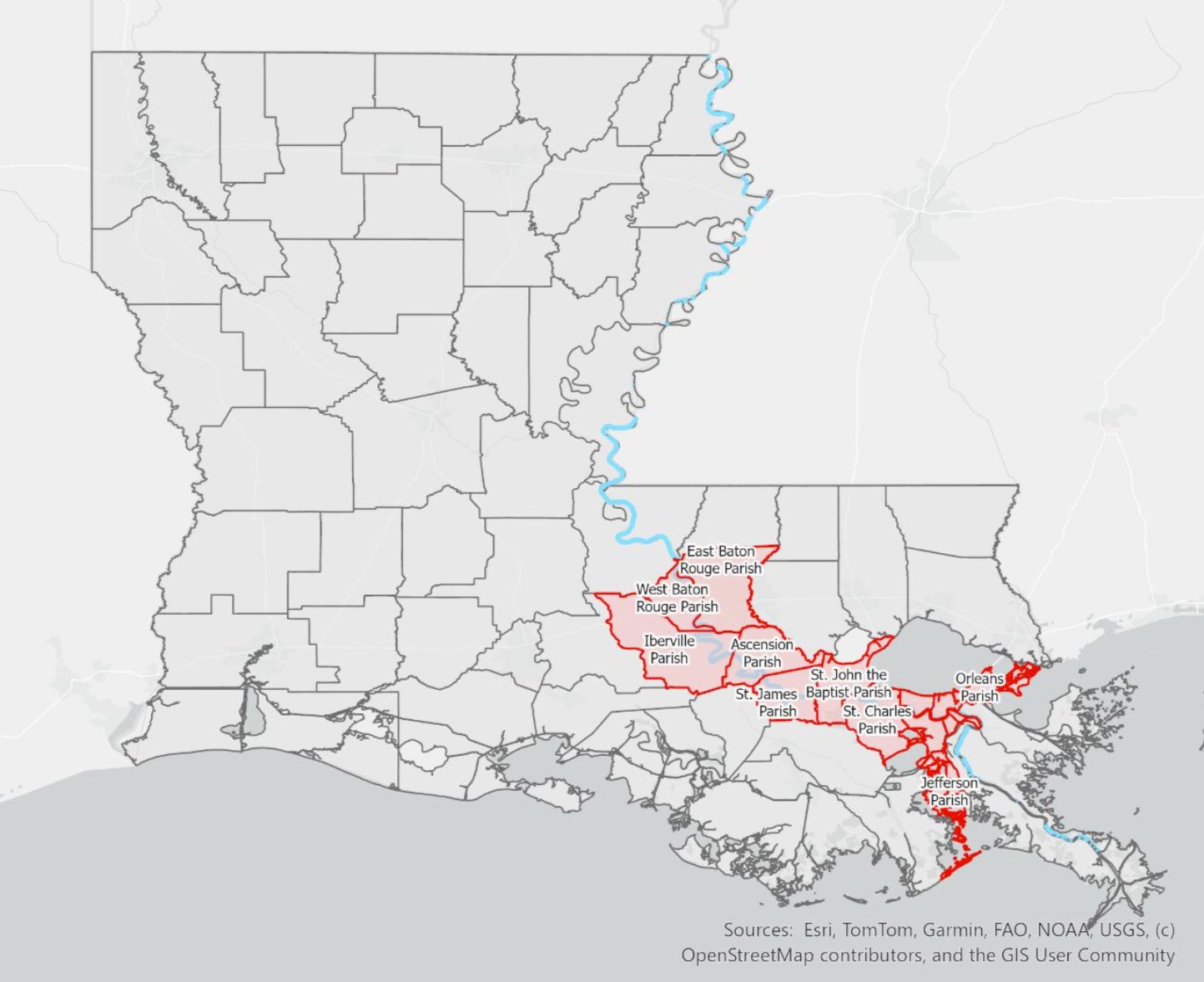
The 85-mile corridor along the Mississippi River between Baton Rouge and New Orleans contains
over 150 petrochemical facilities concentrated in predominantly Black, low-income communities.
This project investigates how historical land use decisions, industrial zoning practices, and
racialized housing patterns created disproportionate environmental exposure.
Key Findings
Racial Disparity: Black residents within 1-3 miles of TRI facilities represent 34.58% of the population, exceeding the state average of 30.83%
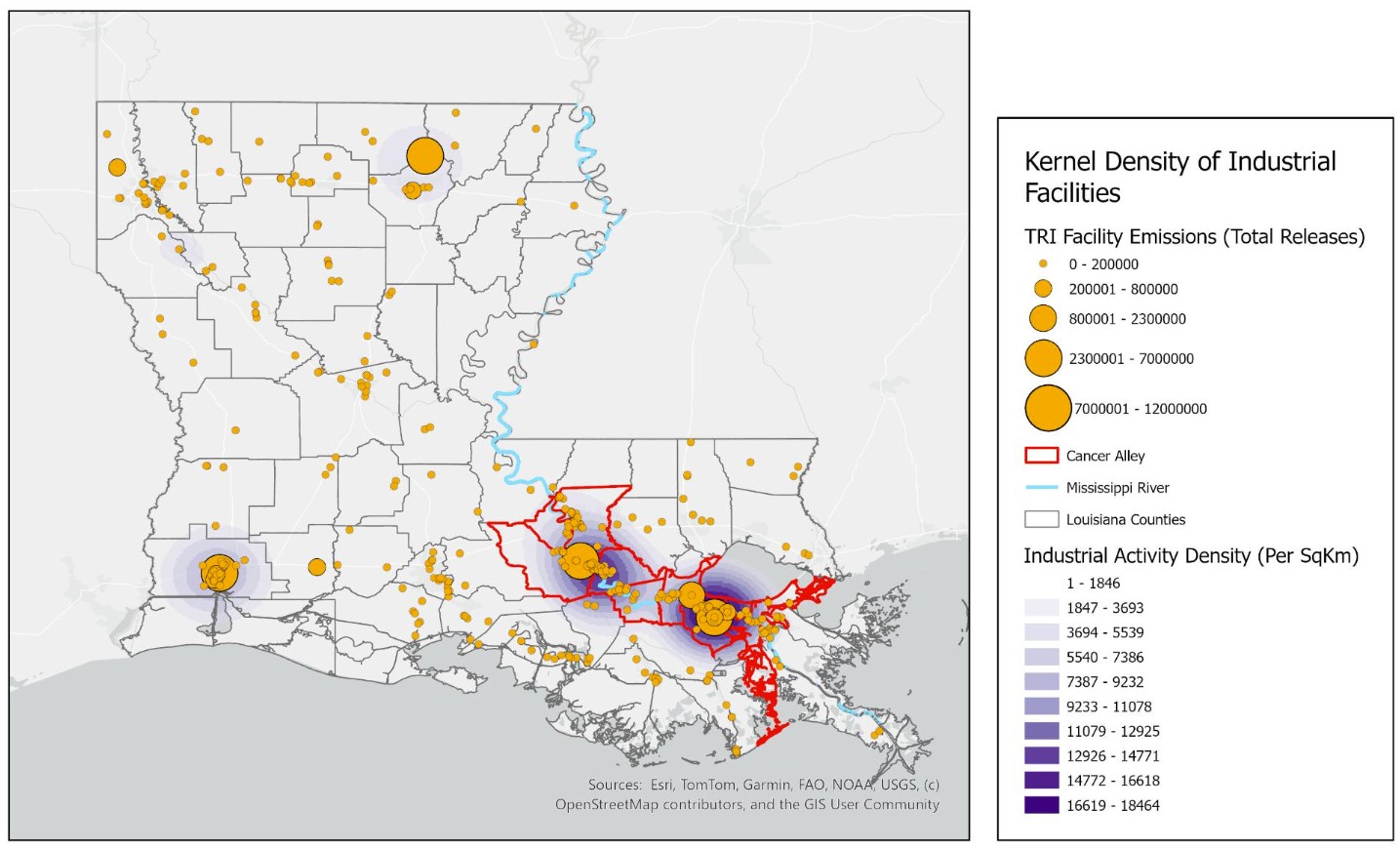
Industrial Hotspots: Kernel density analysis reveals the most intense facility clusters in Ascension, St. James, St. John the Baptist, and St. Charles parishes
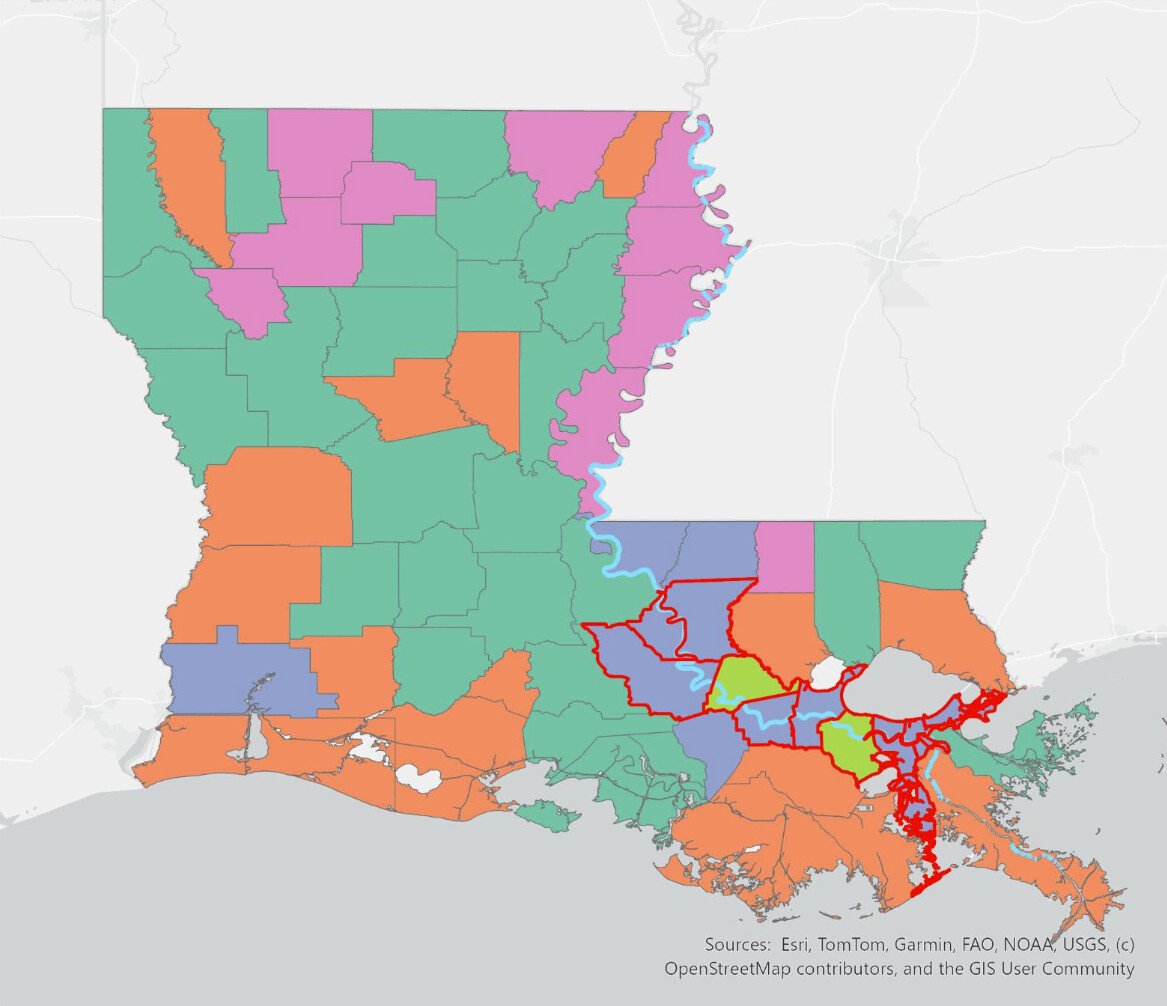
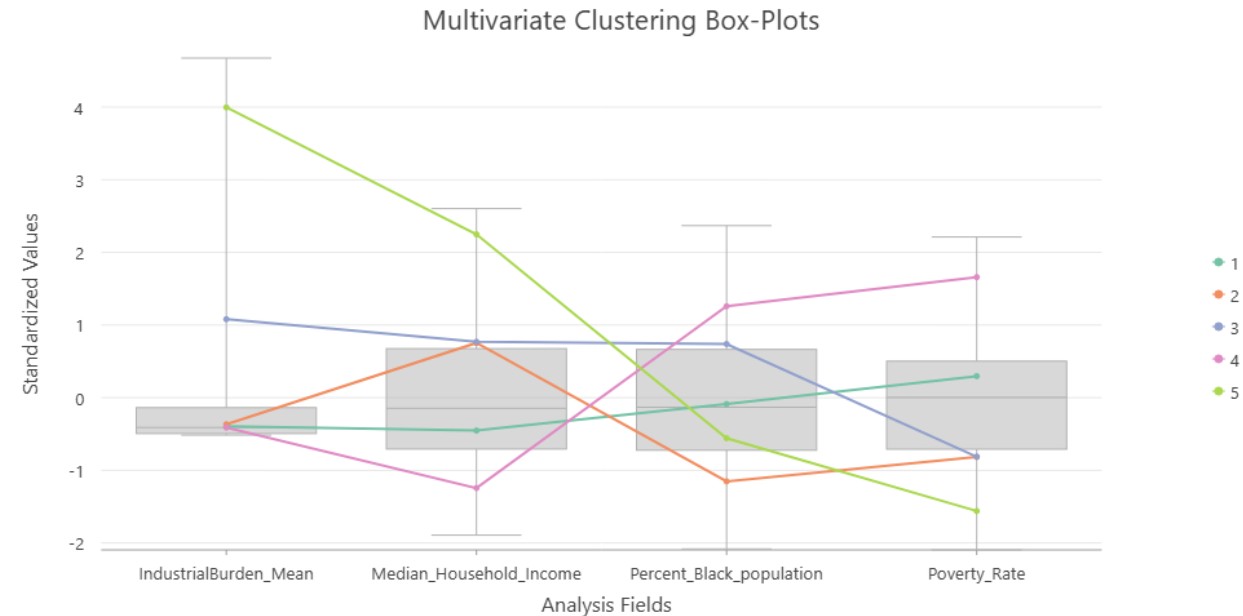
Multivariate Clustering: Five-cluster analysis shows Cancer Alley as a hotspot where environmental burden and racial inequity intersect most strongly
Core Conclusion: Environmental injustice is driven more by racial inequality than by purely economic disadvantage
Demographic Analysis
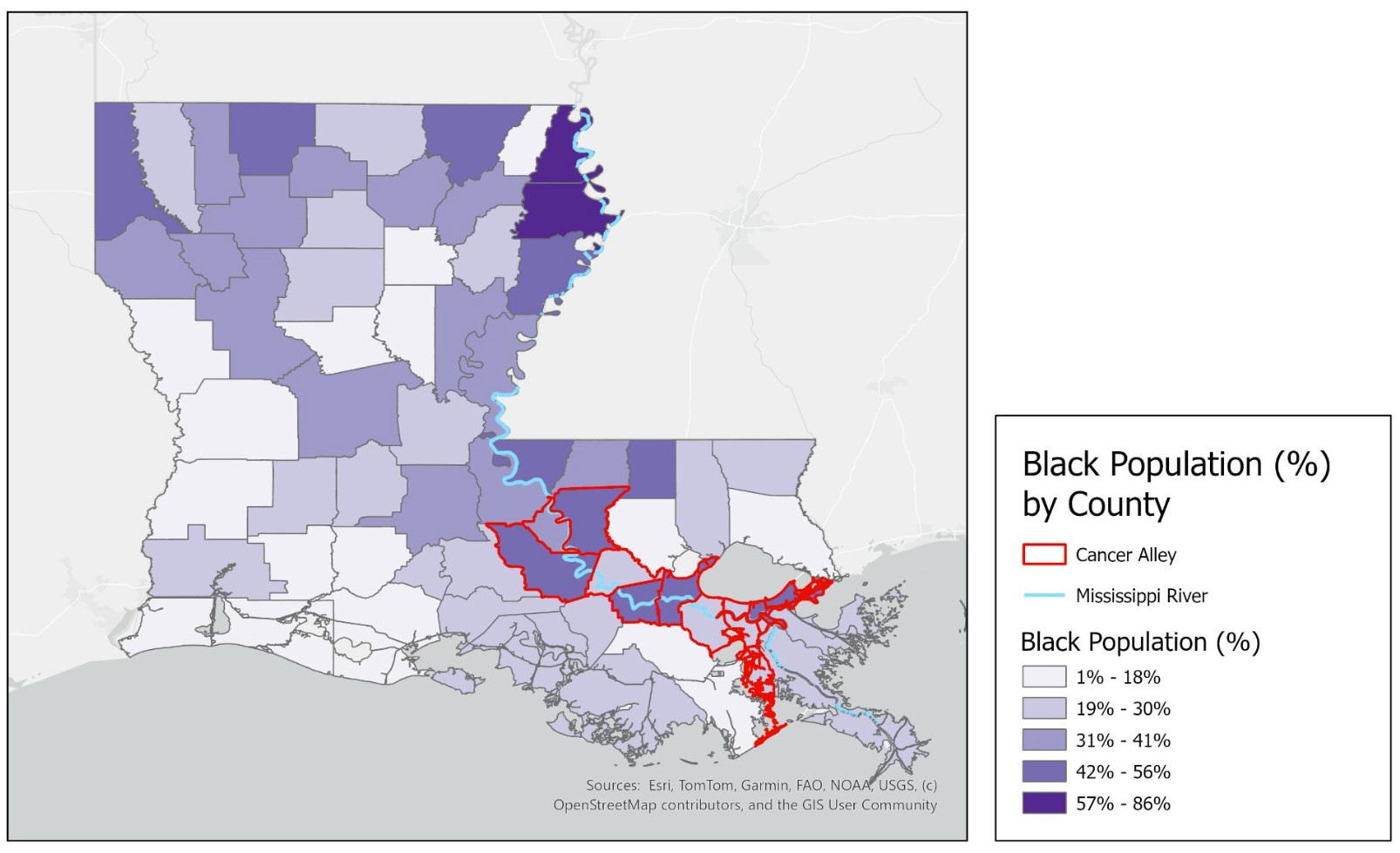
Choropleth mapping of racial composition reveals that parishes with higher Black population
percentages overlap with regions of intense industrial activity. Within Cancer Alley,
East Baton Rouge, St. John the Baptist, St. James, and Iberville show noticeably elevated
percentages, underscoring environmental justice concerns.
Economic Vulnerability
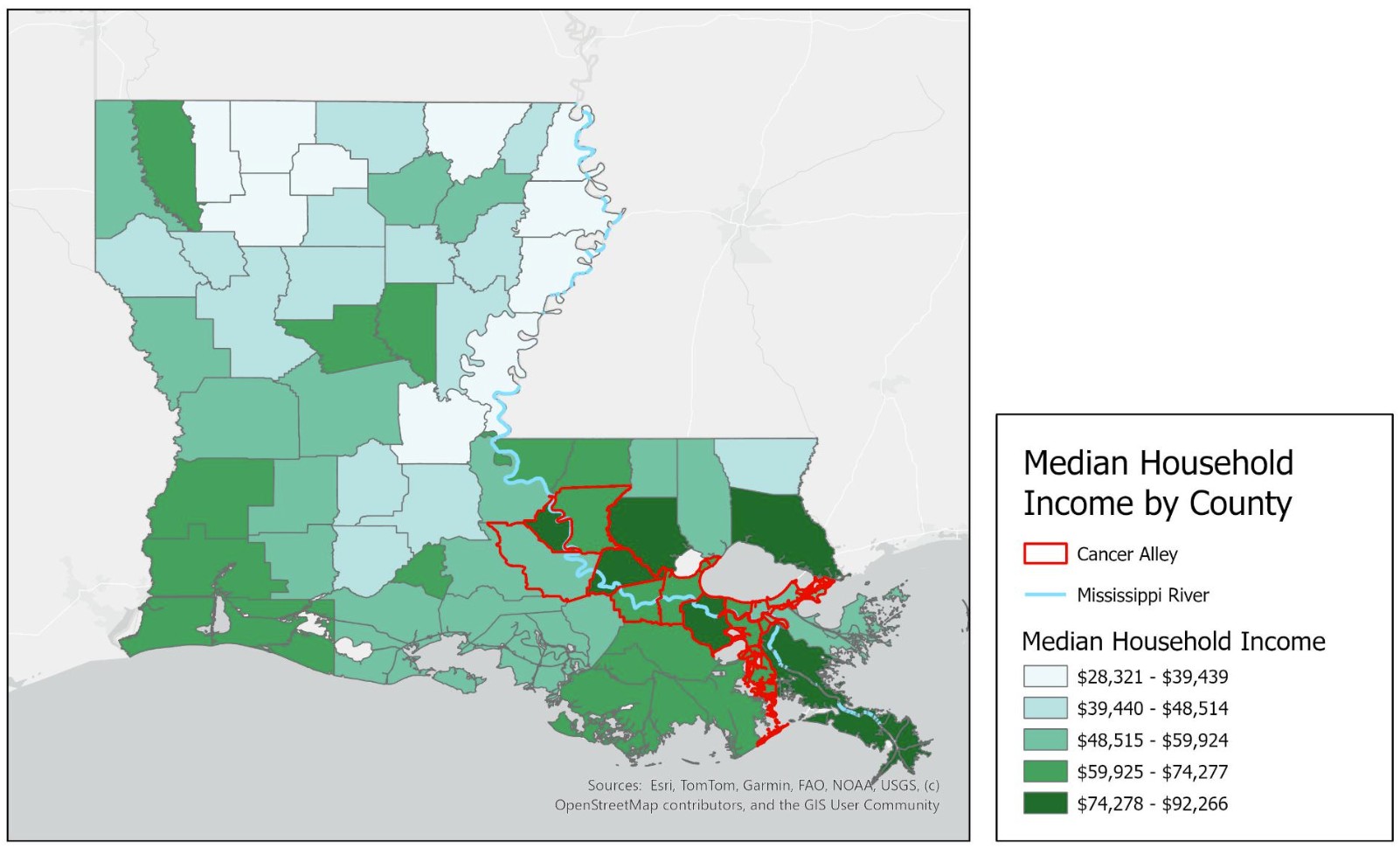
Lower-income concentrations appear in northeastern and central parishes ($28,000-$40,000),
while Cancer Alley parishes show moderate to moderately high income levels but remain
surrounded by lower-income regions. Despite major industrial corridors, many Mississippi
River communities fall below statewide upper income ranges.
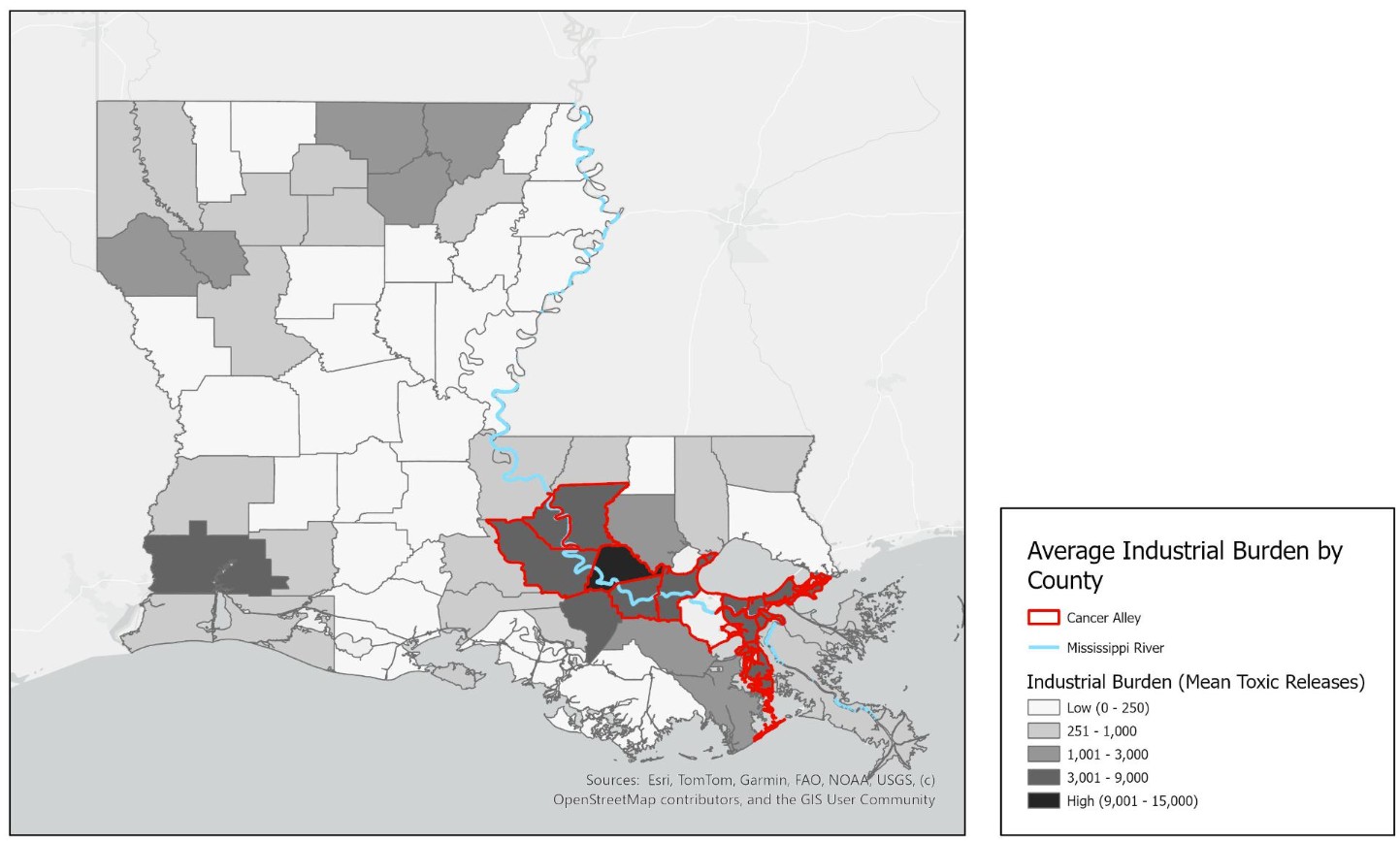
Industrial Burden Analysis
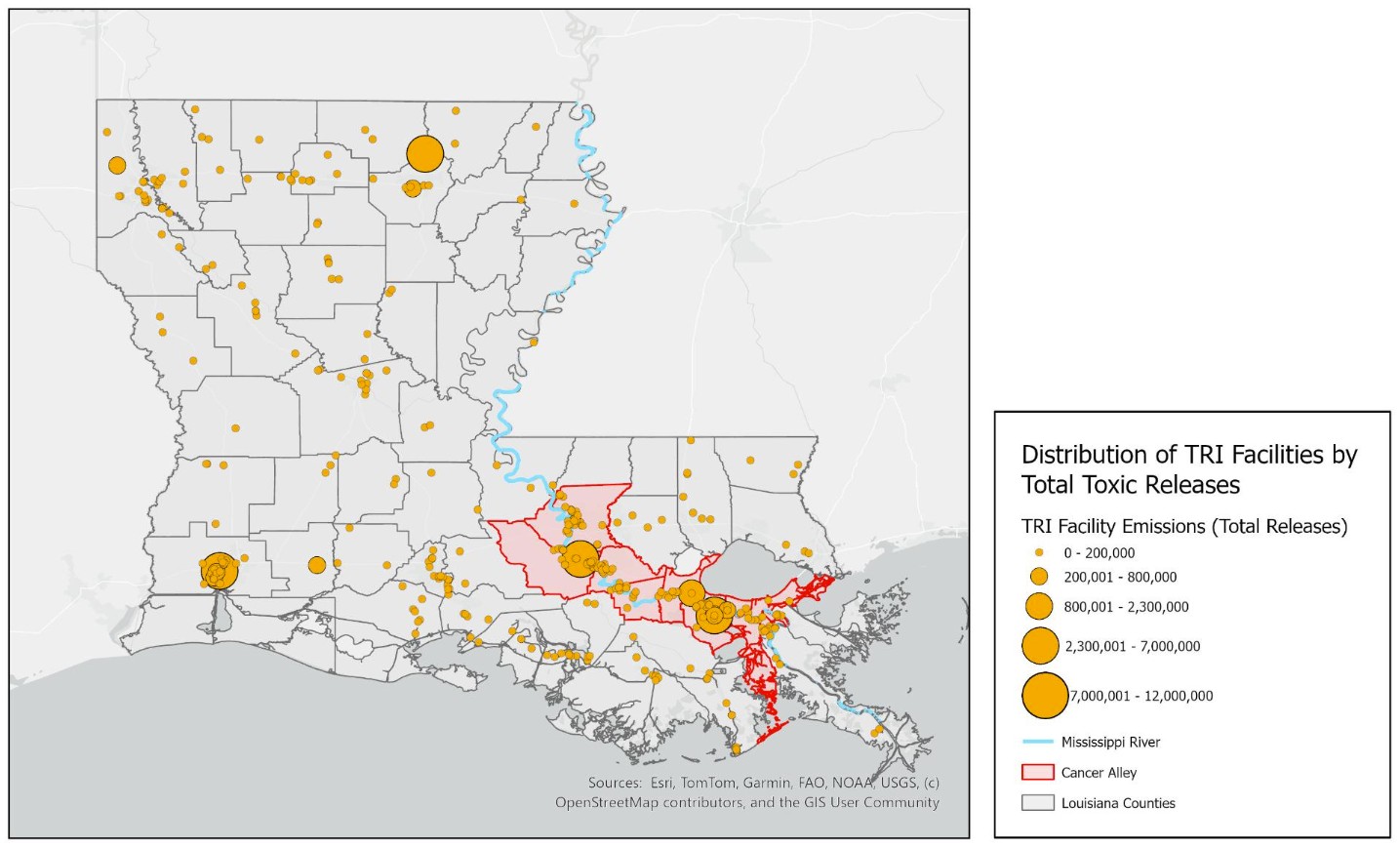
The largest emission sources are heavily clustered along the Mississippi River corridor.
Cancer Alley parishes exhibit both high facility density and the largest total-release
values statewide, while rural and northern parishes show substantially lower cumulative
toxic burden.
Kernel Density Estimation
Hotspot analysis reveals the most intense industrial clusters concentrated in the
Mississippi River corridor, particularly in Ascension, St. James, St. John the Baptist,
St. Charles, and Jefferson parishes. The spatial alignment of dense facility clusters
with Cancer Alley underscores the disproportionate environmental burden carried by this region.
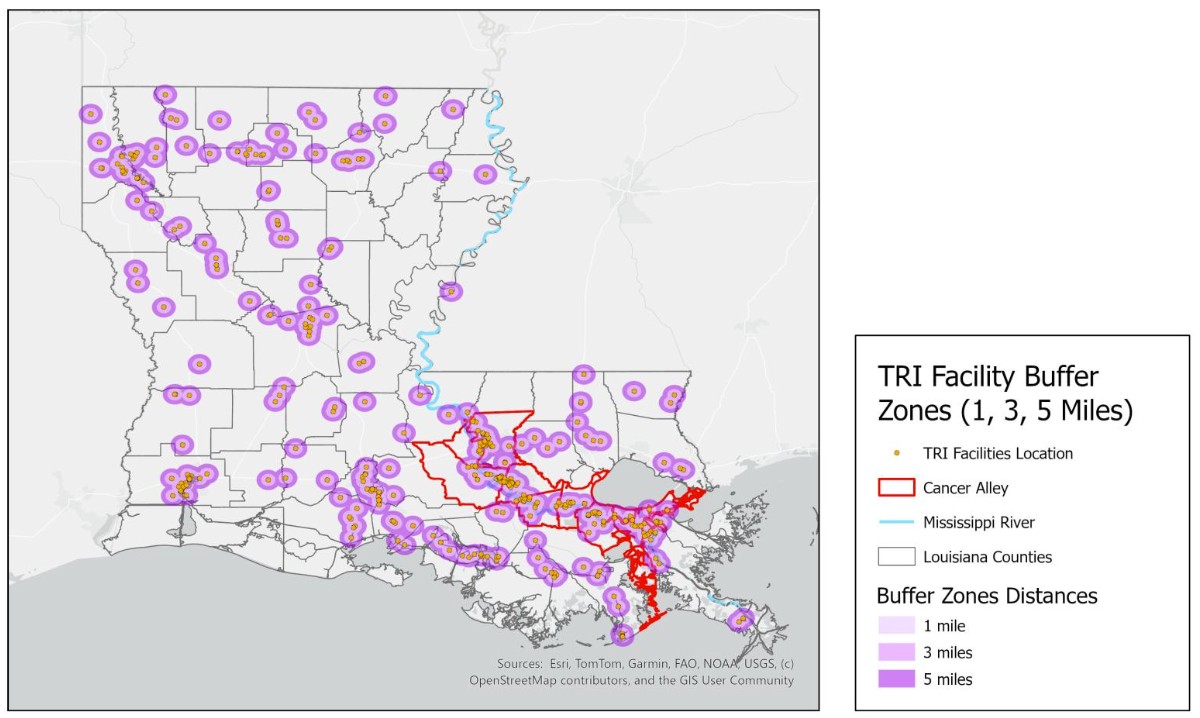
Exposure Proximity Analysis
0-1 mile buffer: 208,925 residents, 33.38% Black population
1-3 mile buffer: 851,877 residents, 34.58% Black population (highest)
3-5 mile buffer: 878,981 residents, 32.76% Black population
Louisiana overall: 4,621,025 residents, 30.83% Black population
Multivariate Environmental & Social Risk Clustering
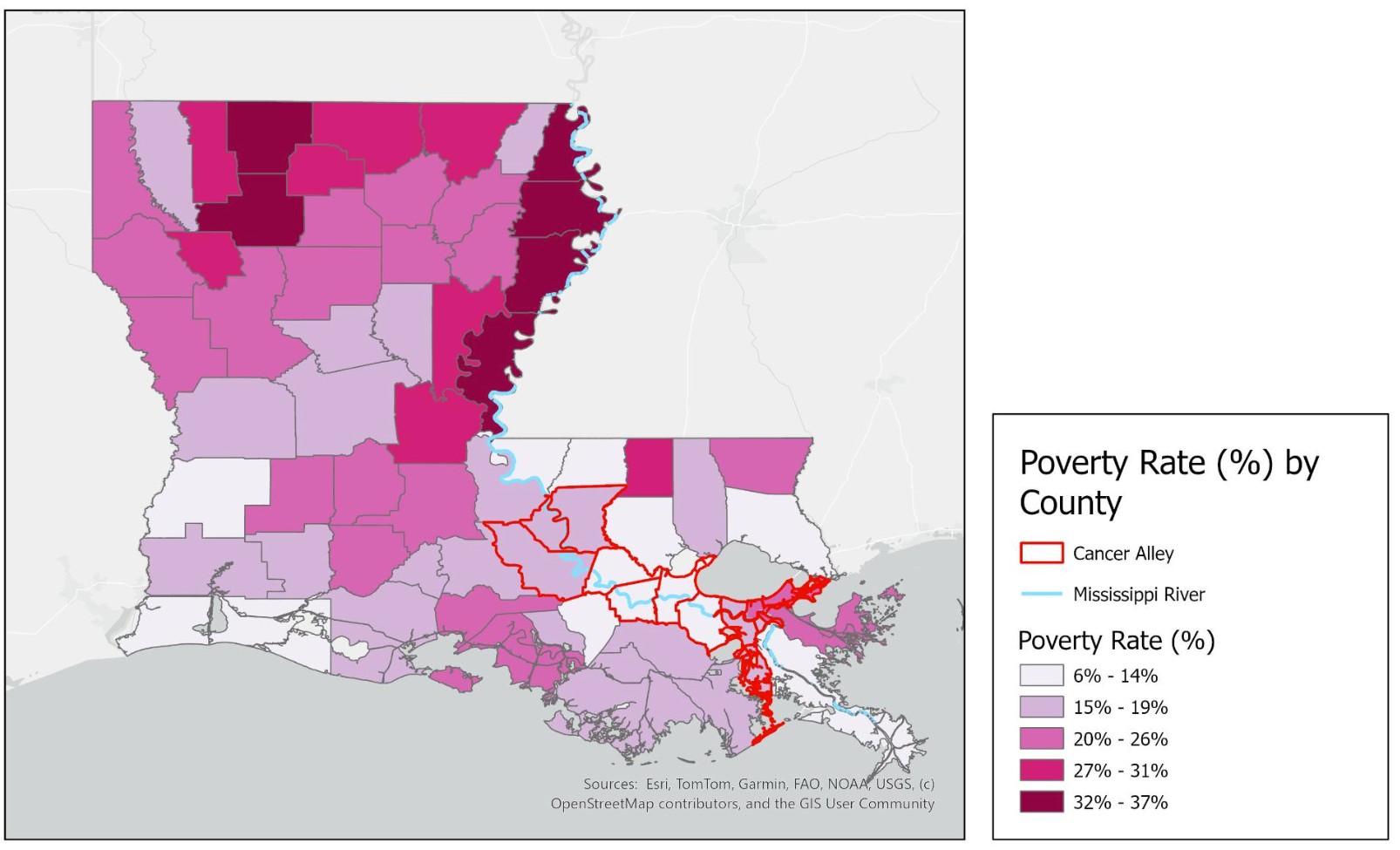
Integrated analysis combining industrial burden (mean toxic releases), poverty rate,
median household income, and percent Black population across all Louisiana counties
produces a five-cluster risk classification. Cancer Alley parishes consistently fall
into the highest and moderate risk clusters, confirming that the region is not only an
industrial landscape but also where environmental burden and racial inequity intersect
most strongly.
Data Sources
Louisiana Counties Boundary Dataset, ACS Race Demographics, ACS Median Household Income,
ACS Poverty Variables, US Major Rivers Polyline Dataset, EPA Toxic Release Inventory (TRI)
"Don't just track actions. See them add up with thousands of others, in real-time."
Carb-Off is a conversational AI carbon tracker inspired by Indore's proven behavior
change model — the city that went from average cleanliness to #1 in India for 7
consecutive years through visible progress and collective identity.
Why Existing Apps Fail
Tedious Logging: Apps like Cool the Globe require navigating 1000+ dropdown
menus
Meaningless Impact: Saving 2kg CO2 alone feels pointless
No Personalization: Same generic actions for everyone
Result: 80% abandonment within week 1
Our Solution
Conversational AI: Text your actions naturally, like talking to a friend
Personal Baseline: 2-minute onboarding calculates YOUR specific footprint
Live Collective Counter: Watch your actions join a global total that updates
minute-by-minute
Cited Numbers: Every emission factor traces to EPA, DEFRA, or peer-reviewed
research
The Indore Story
In 2016, my hometown Indore was an average city in terms of cleanliness. By 2023,
it was the cleanest for the 7th year running. The secret wasn't fancy technology —
it was visible progress (everyone could see rankings update in real-time) and
collective identity (your actions joined something bigger). 3.5 million people
changed behavior using this exact model, sustained for 7+ years.
How It Works
Onboarding: Tell the AI where you live, how you commute, what you eat,
and your energy habits. It calculates your personal carbon baseline in 2 minutes.
Logging: Type naturally — "I took the bus today and had a veggie burrito for lunch"
—
and the AI calculates your savings with tangible equivalencies.
Collective Impact: Watch the live counter tick up as your savings join
hundreds of others in real-time.
Why the LLM Is Not a Gimmick
The LLM handles three hard problems: intent parsing ("biked to work" → round trip
or one way?),
contextual calculation (auto-fills distance from user profile), and
ambiguity resolution (asks natural clarifying questions). Critical rule:
the LLM classifies and communicates — it NEVER generates carbon numbers. Every number
traces to a cited emission factor from EPA 2024, DEFRA 2024, or Poore & Nemecek 2018.
Key Features (V0)
Conversational AI onboarding in 2 minutes — no forms
Natural language action logging — no dropdowns
Real-time collective counter updating every 5 seconds
25+ emission factors sourced from EPA/DEFRA with citations
Tech Stack
Backend: FastAPI (Python), Claude Sonnet 4 (Anthropic AI), in-memory database
(SQLite-ready) Frontend: React (vanilla — no build step), mobile-first responsive design,
real-time polling Data: 25+ emission factors across food, transport, home energy, and lifestyle
categories
Tools & Technologies
Python, FastAPI, React, Anthropic Claude Sonnet 4, EPA/DEFRA Emission Data
Design iterations based on Climate Studio tools for a small office in Miami, FL.
Climate analysis informing form, orientation, and envelope strategies across
3 parametric iterations targeting passive cooling, solar shading, and natural ventilation.
Miami Climate Profile
Location: Miami International AP, USA (25.79°N, -80.32°W, Elev. 11 m)
Building Performance Modelling — Secondary School, Pittsburgh
Overview
Whole-building energy performance simulation using IES-VE 2024 for a secondary school
in Pittsburgh, PA (ASHRAE Climate Zone 5A). The study explores how site conditions, weather data,
building materials, internal loads, and operational schedules shape energy performance during
the design development phase. Starting from a PNNL baseline model, parametric simulations
across four categories achieved a 45.45% reduction in site EUI, from 33 to 15 kBtu/ft²/yr.
Software: IESVE (Integrated Environmental Solutions Virtual Environment) Standards: ASHRAE 90.1-2016, PNNL Secondary School model, LEEDv4 compliance Team: Team of 4 Instructor: Professor Yiqun Pan
1. Baseline Building Energy Model
The building is a two-floor secondary school prototype from the PNNL model dataset.
The first floor includes classrooms arranged in pods, a gym, auditorium, auxiliary gym,
kitchen, and cafeteria. The second floor has additional classrooms, offices, and a library
media center. Pod-based layout with classrooms in corners and central corridors.
Baseline Envelope Properties (CZ5)
Roof: PRM CZ5 Ins Above Deck — R-15 insulation, Metal Deck (R-total 3.41, U-0.067)
Four categories tested using One-Factor-At-A-Time (OFAT) methodology: envelope geometry,
envelope thermal properties, internal loads, and operational schedules. Each iteration
built on the previous best result.
Guidelines: DF recommended 60–85% for secondary schools; LPD should be 25–30% below ASHRAE 90.1
Reduced lighting → less heat → decreased cooling loads (slight trade-off: increased heating in cold months)
3. Best Design Model Results
Parametric Optimization Flow — Step by Step
Step 1 — WWR 25%: EUI → 20.9
Step 2 — Roof (baseline maintained): EUI → ~20.9
Step 3 — Wall R-19: EUI → 20.9
Step 4 — Slab (max insulation): EUI → 20.8
Step 5 — Glazing (non-metal, Low-E): EUI → 19.0
Step 6 — Lighting (DF 60%, LPD 0.80): EUI → 15.0
Total Reduction: 33.0 → 15.0 kBtu/ft²/yr (54.5% improvement)
Best Case Energy Performance
Annual Energy: 6,622.160 mBtu/yr
Site EUI: 15.0 kBtu/ft²/yr
Electricity: 82.6% | Natural Gas: 17.4%
Peak Heating: 340 kBtu/h (January)
Peak Cooling: 940 kBtu/h (July)
Majority of energy use goes to space heating — expected for a heating-dominant Pittsburgh climate
4. Comparative Analysis
Baseline vs. Best Case
Baseline: 14,251.938 mBtu/yr | EUI 33 kBtu/ft²/yr
Best Case: 6,622.160 mBtu/yr | EUI 15 kBtu/ft²/yr
Improvement: 53.5% energy reduction, 54.5% EUI improvement
Significant reduction in electricity use through internal load optimization
Envelope changes (WWR, glazing) had the most impact on thermal properties
Tools & Technologies
IESVE 2024, ASHRAE 90.1-2016, PNNL Secondary School Model, LEEDv4 Compliance,
Parametric OFAT Analysis, Thermal Zoning, Energy Performance Metrics (EUI)
Museum of Event 1971 — Bangladesh Liberation War Memorial
Project Overview
Type: Thesis Project — Cultural/Memorial Architecture Duration: 4 Months Location: Taki, West Bengal, India (India-Bangladesh border on River Ichhamati) Recognition: Awarded "Best Thesis 2023" Inspirations: Louis I. Kahn, Charles Correa, Peter Zumthor, Juhani Pallasmaa
Design Philosophy
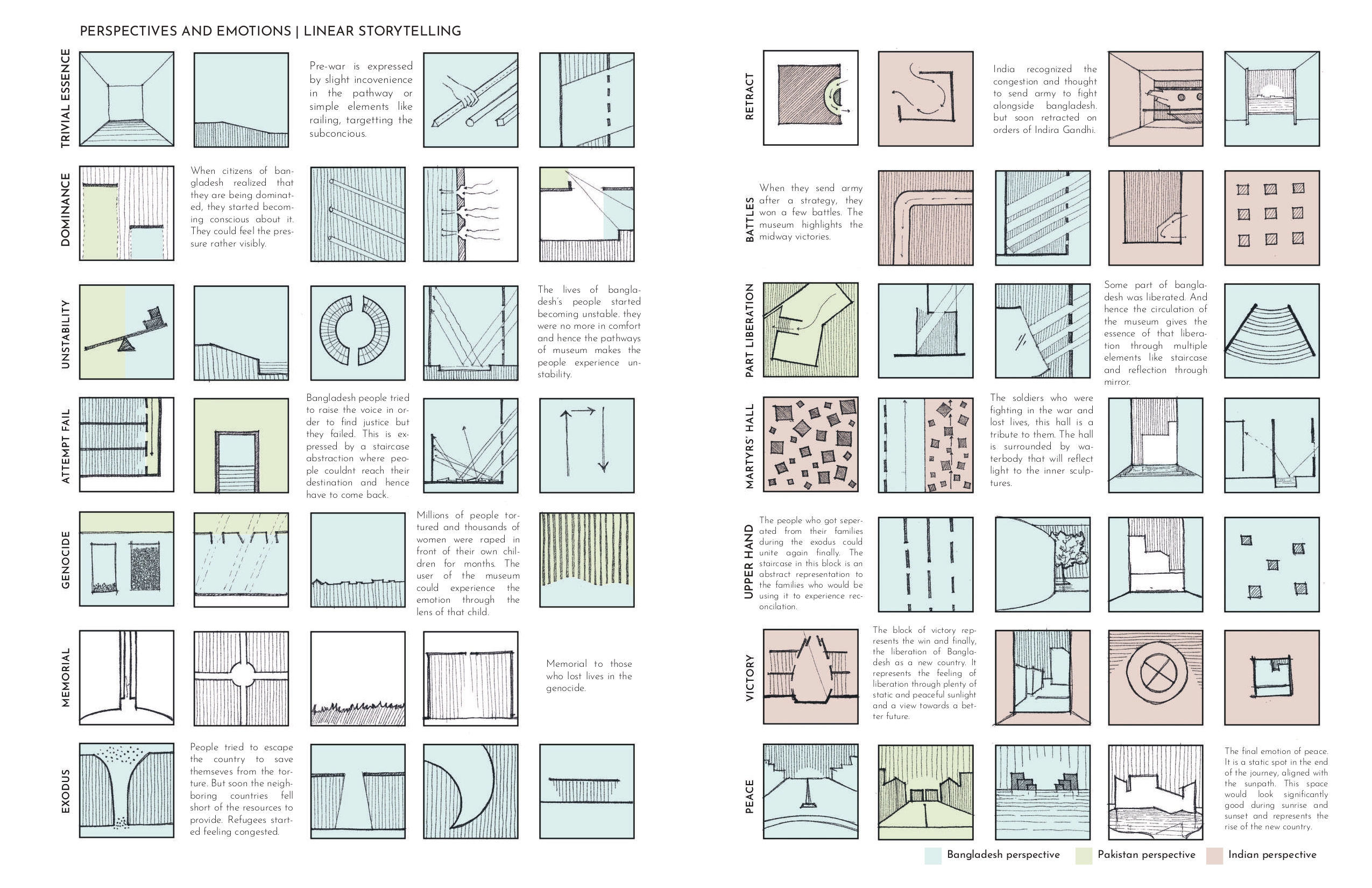
Architectural storytelling of the 1971 Bangladesh Liberation War through phenomenological design,
creating an experiential journey that transitions users through emotions chronologically as
historical events unfolded. The museum uses Gordon Cullen's Serial Vision — sequential discovery,
moments of surprise, and sensory manipulation through water, light, and shadow.
Site Selection — Strategic Criteria
Migration corridors along eastern Radcliffe line (India–East Pakistan border)
River border location — Ichhamati River acts as international boundary
Cultural significance — Durga Puja festival, December 16 boat memorial
(India-Bangladesh victory celebration)
Metropolitan accessibility — weekend getaway from Kolkata
Cross-border relations — shared remembrance strengthening ties
Key Metrics
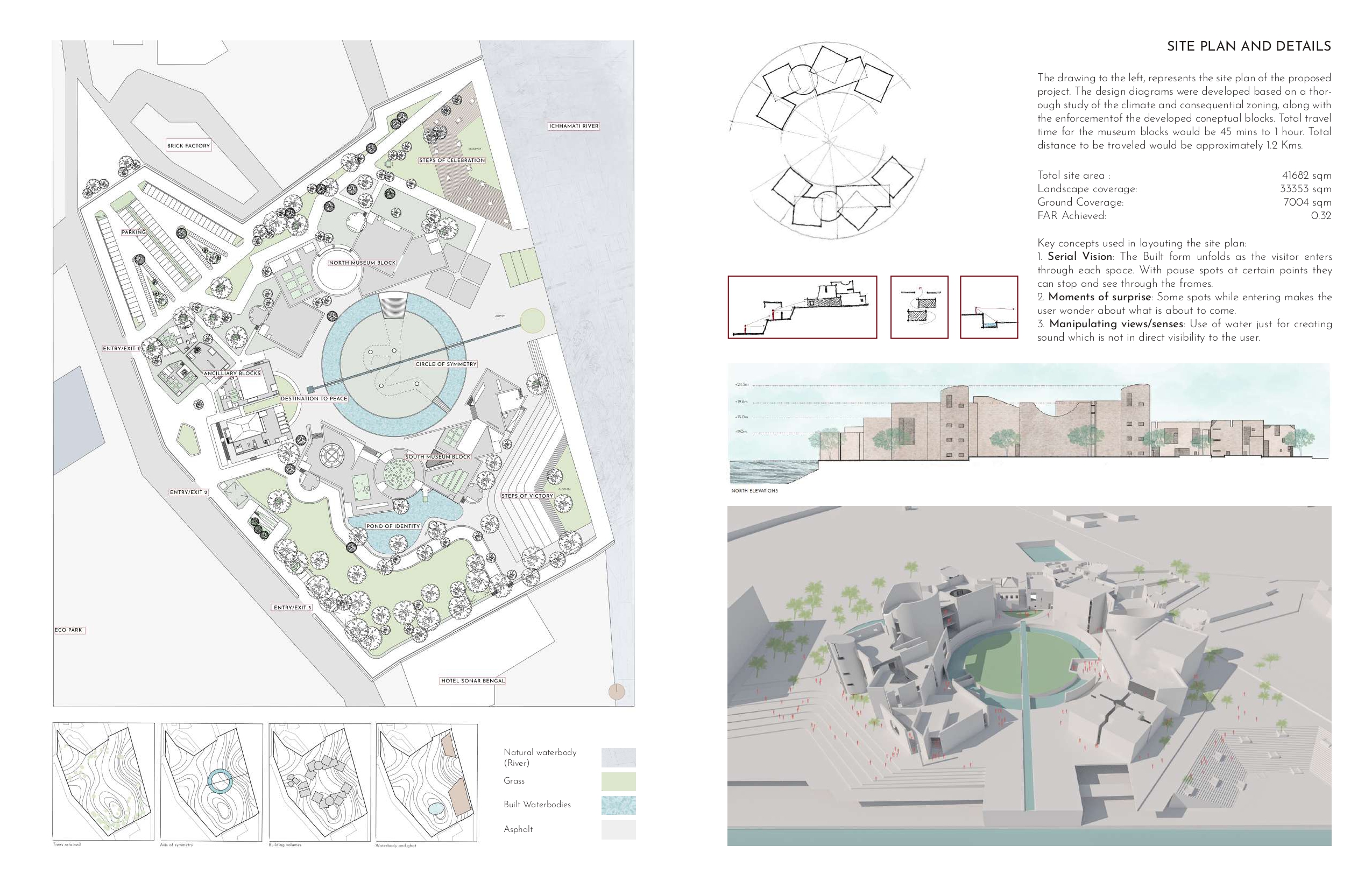
Total Site Area: 41,682 sqm
Landscape Coverage: 33,353 sqm (80%)
Ground Coverage: 7,004 sqm | FAR: 0.32
Total Travel Distance: 1.2 km
Journey Time: 45–60 minutes
Zones: 12 emotional zones across 2 museum blocks
North
Museum Block — Bangladesh Perspective (6 Blocks)
Narrative: Before the War → West Pakistan Dominance → Genocide → Awami League Win →
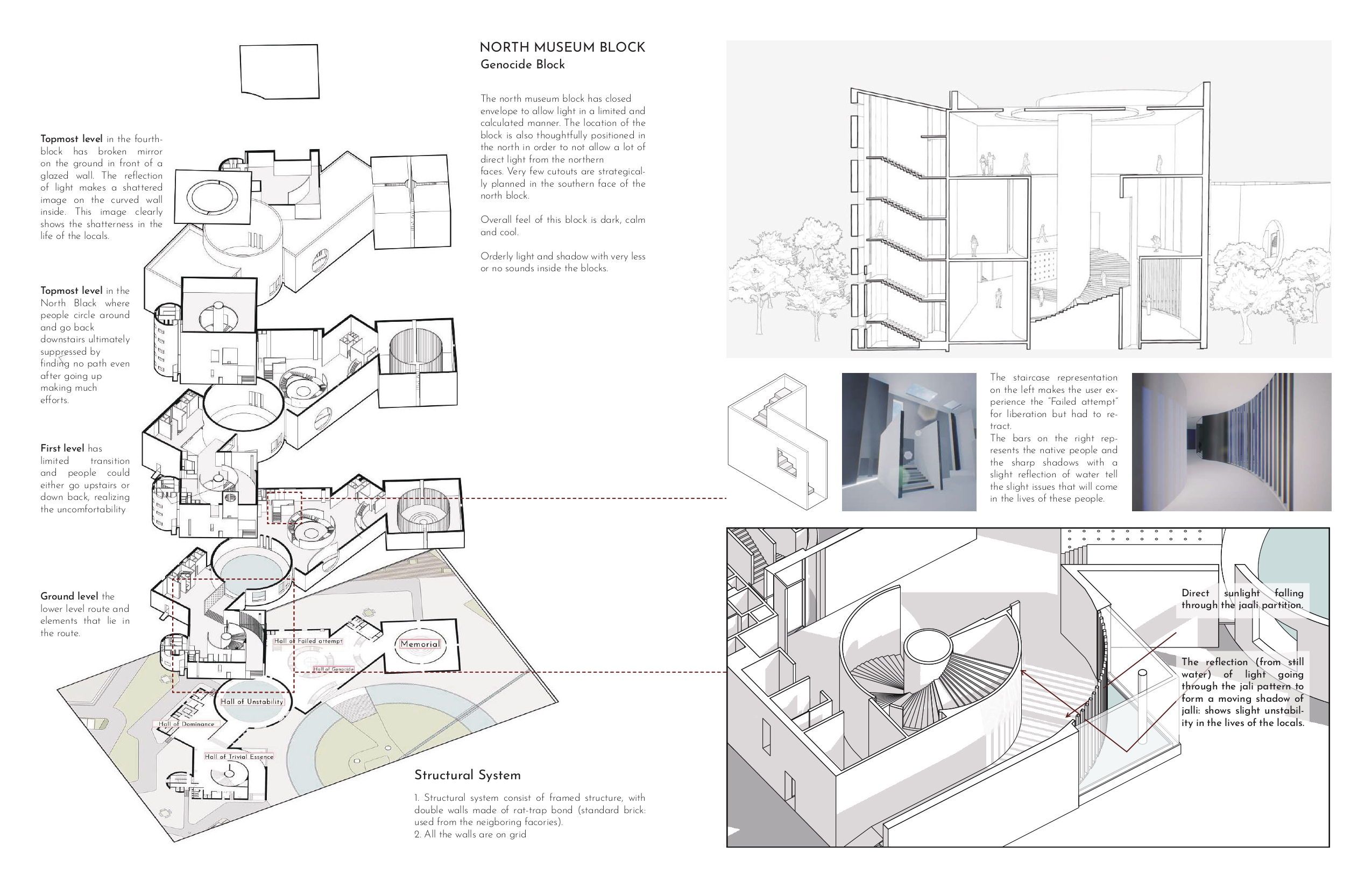
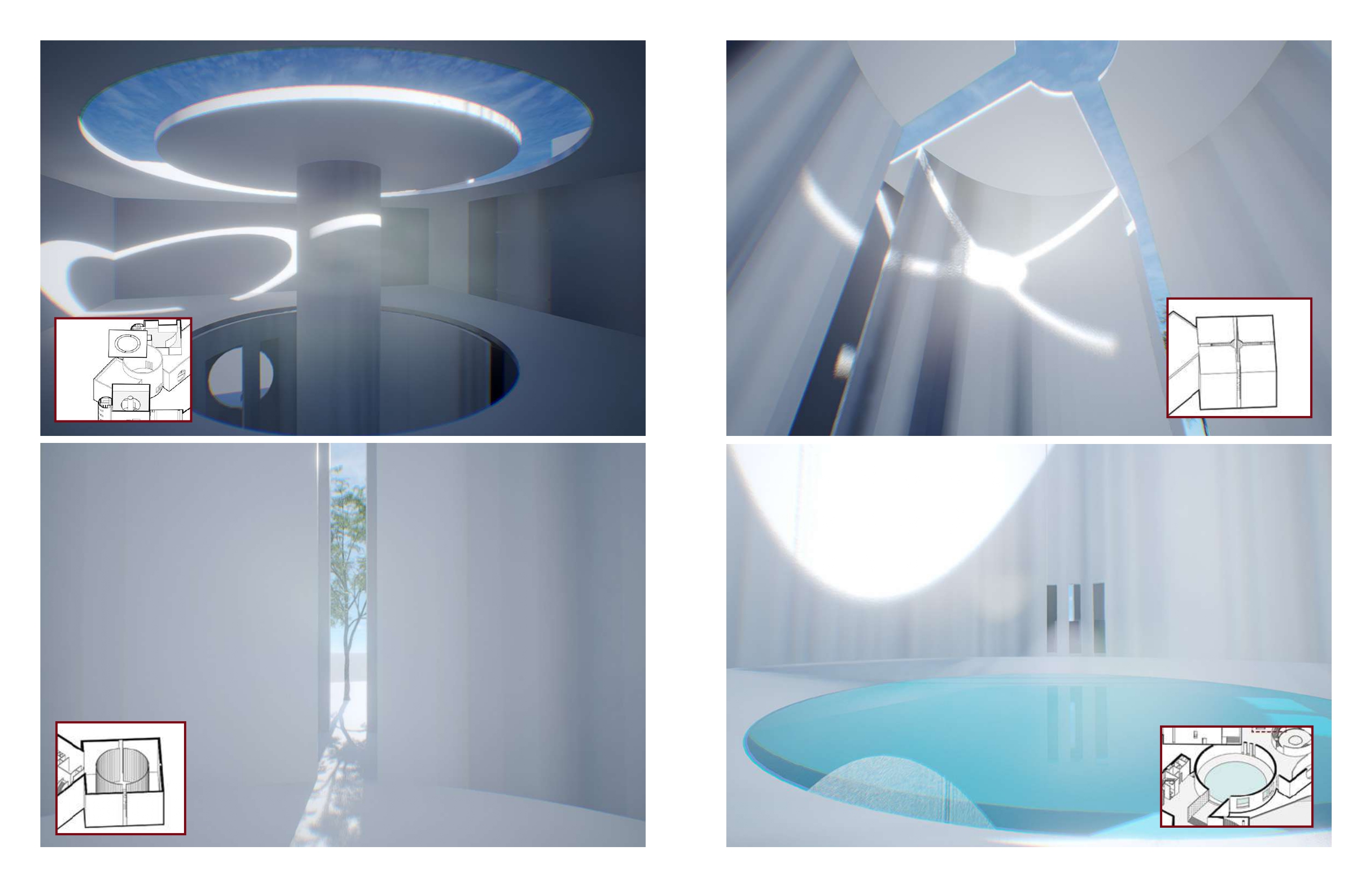
Liberation Attempt → Attempt to Escape Character: Closed envelope, limited calculated light, dark/calm/cool atmosphere Materials: Rat-trap bond double-wall system using local brick from neighboring
factories
North Block — Key Spaces
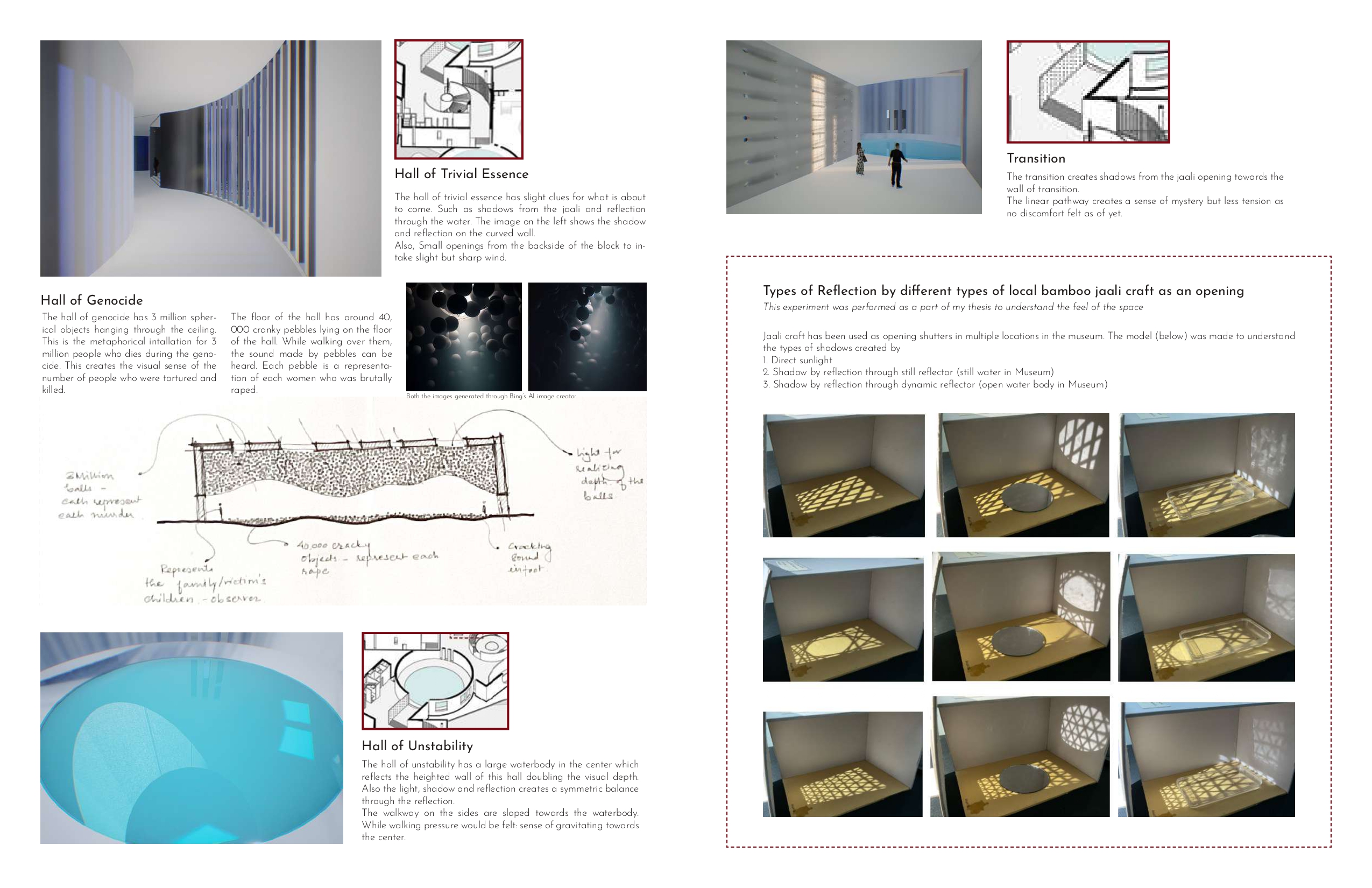
Hall of Trivial Essence: Bamboo jaali shadows with water reflection create
contemplative atmosphere
Hall of Dominance: Conscious pressure visualization through spatial compression
Hall of Unstability: Sloped walkways toward central water, gravitational pull
sensation
Hall of Genocide: 3 million hanging spherical objects (representing deaths) +
40,000 pebbles on floor (representing women assaulted)
Spatial Strategy: Failed circulation — stairs that lead nowhere, suppression
through dead-ends
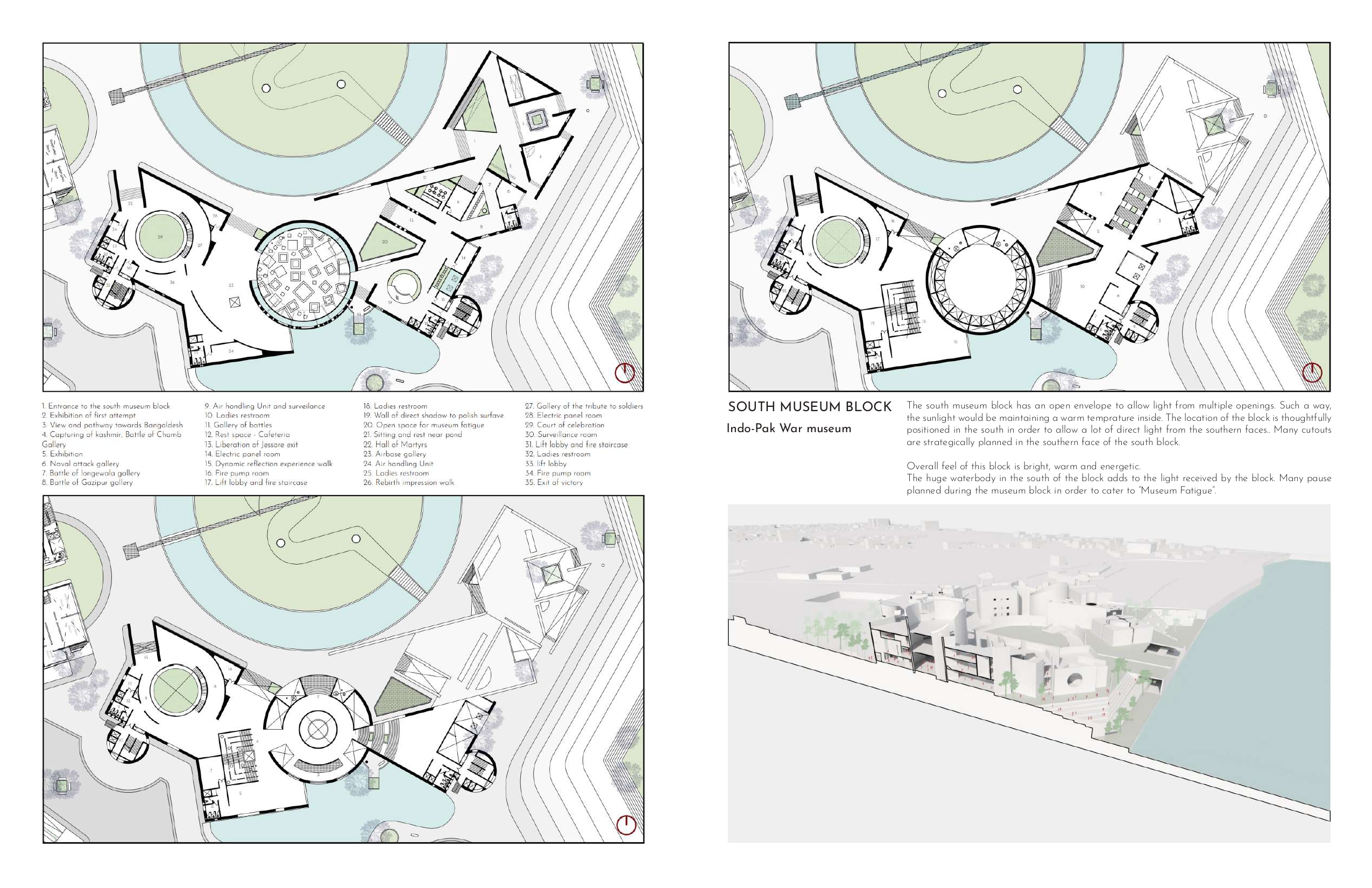
South
Museum Block — Indian Perspective (6 Blocks)
Narrative: Indian Support → Jessore Liberation → Upper Hand → Operation Python →
Battles → Victory Character: Open envelope, multiple light sources, bright/warm/energetic
atmosphere Strategy: Progressive liberation through increasing openness
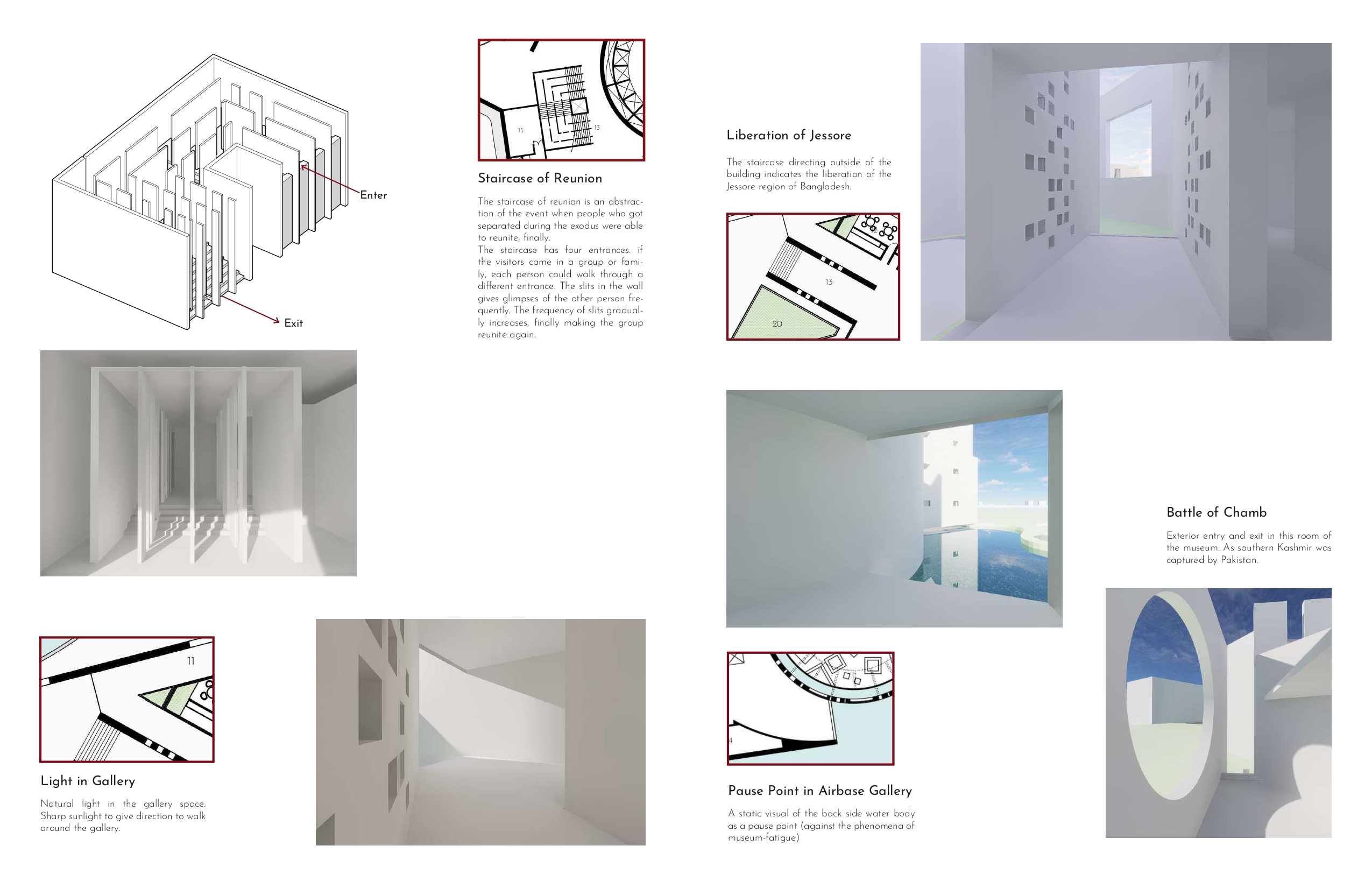
South Block — Key Spaces
Staircase of Reunion: 4 entrances with slits providing glimpses, frequency
increases to reunite families
Liberation of Jessore: Exterior staircase indicating geographical liberation
Battle of Chamb: Exterior entry/exit (Southern Kashmir captured by Pakistan)
Martyrs' Hall: Surrounded by waterbody reflecting light onto interior
sculptures
Gallery Spaces: Sharp sunlight for wayfinding, energetic progression
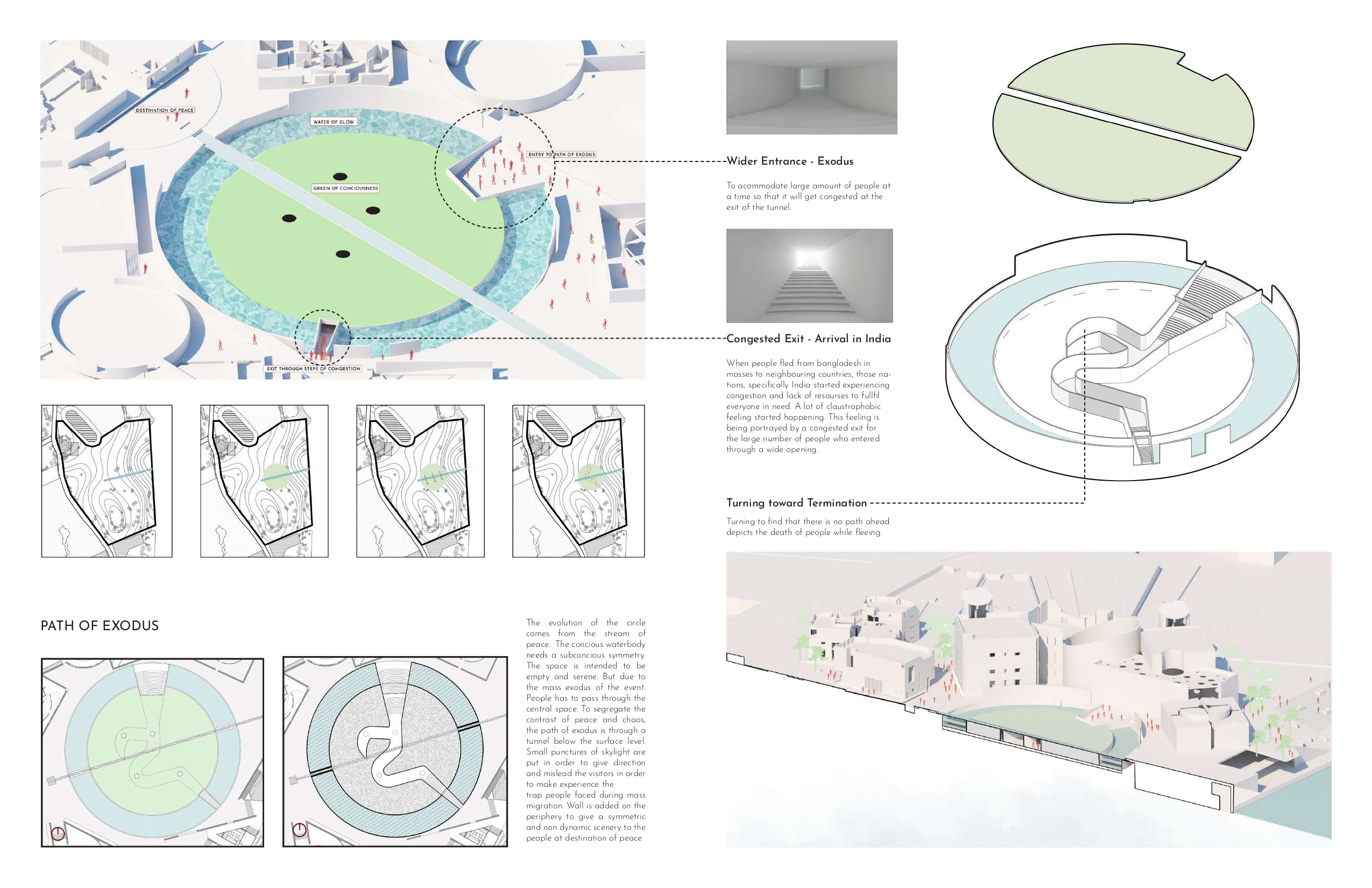
Central Space — Circle of Stillness (Path of Exodus)
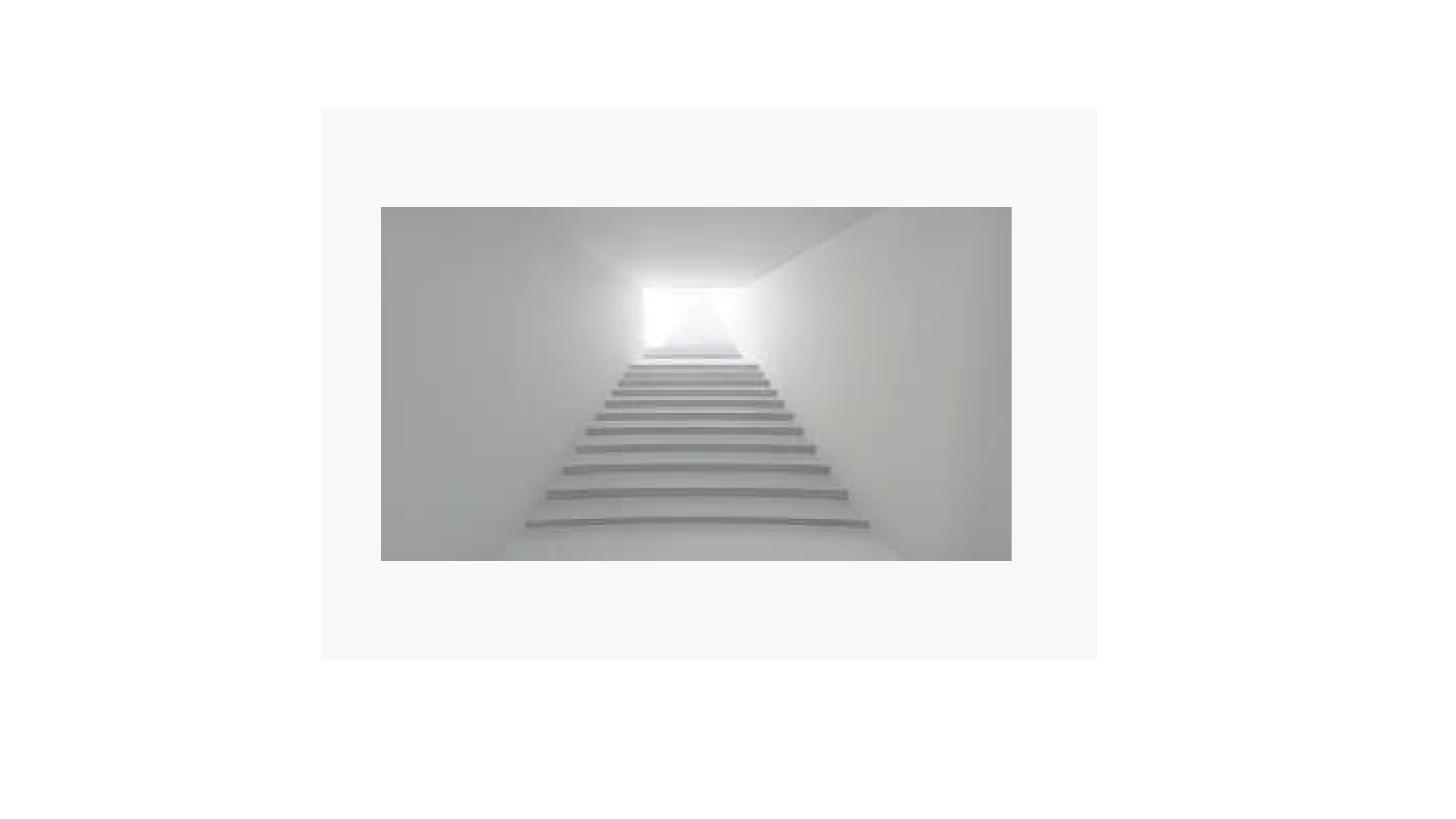
Below-grade tunnel separates chaos from peace (spatial segregation)
Wide entrance (mass exodus) → congested exit (arrival in India
with resource shortages)
Skylights that mislead direction — disorientation during migration
Dead-end branches — representing deaths during exodus
Perimeter wall: Symmetric, non-dynamic view for contemplation
Building Performance & Climate Response
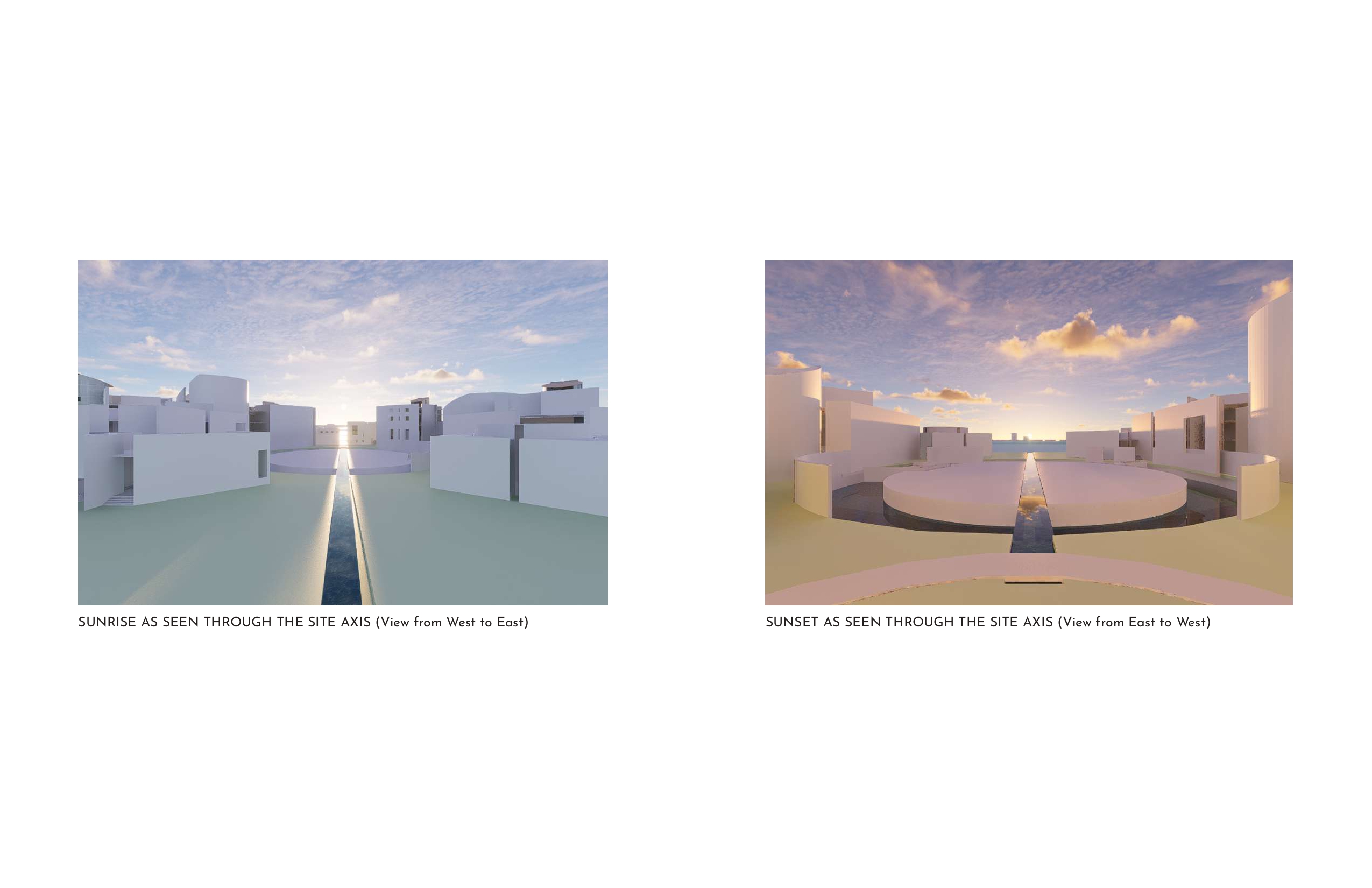
Solar orientation: East-west axis aligned with sunrise/sunset for symbolic "birth
of new nation" Sunpath optimization: Waterbody positioned to create reflections during key times
of day Natural ventilation: Open central space above grade with below-grade exodus tunnel
to separate thermal zones Daylighting: North Block (dark, controlled) vs. South Block (bright, open
envelope) Passive shading: Local bamboo jaali (lattice) creates dynamic shadow patterns —
direct sunlight, still water reflection, dynamic water reflections
Material Strategy
Structure: Framed structure with rat-trap bond double walls
Brick: Standard brick from neighboring local factories
Jaali Screens: Local bamboo craft — controlled light, cultural authenticity,
dynamic shadows, natural ventilation
Water Features: Still and dynamic bodies for reflection, sound, thermal
regulation, and symbolic meaning
Light & Shadow Studies
North Block (Dark Narrative): Minimal southern openings, strategic northern
placement, orderly shadows,
broken mirror reflections showing "shattered lives", jaali creates moving shadows through water
reflection.
South Block (Bright Narrative): Maximum southern exposure, large waterbody
amplifies light, multiple
pause points to combat museum fatigue, energetic warm atmosphere.
Experimental Work: Physical models testing bamboo jaali shadow patterns — direct
sunlight effects,
still water reflections, dynamic water reflections integrated into museum design.
Serial Vision — Design Methodology
Gordon Cullen's Serial Vision applied: existing view → emerging view → sequential discovery →
moments of surprise → sensory manipulation (water sounds without direct visibility).
Building heights correspond to emotional intensity of events. Sky captured in architectural frames.
Landscape enhanced through reflection.
Tools & Technologies
3D Modeling, Solar Analysis, Perspectival Framing, Rendering, Physical Model Making,
Phenomenological Design
Tesseract — Mixed-Use Development in Kolkata
Project Overview
Type: Studio Project — Mixed-Use (Commercial + Residential) Duration: 3 Months Location: Downtown Kolkata, India Climate: Hot-Humid Tropical Recognition: Top 5 in External Jury Critique
Design Concept — The Fourth Dimension
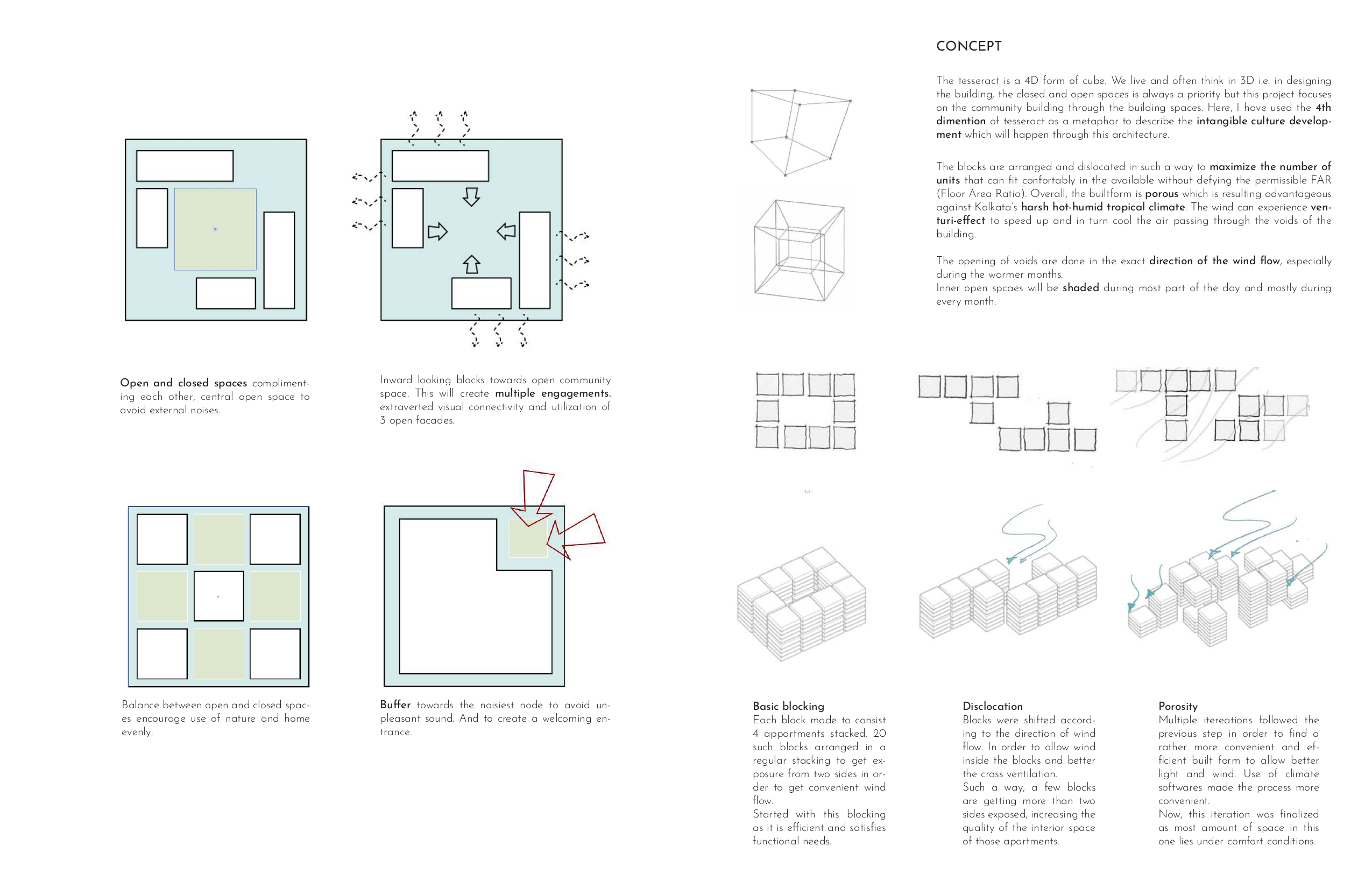
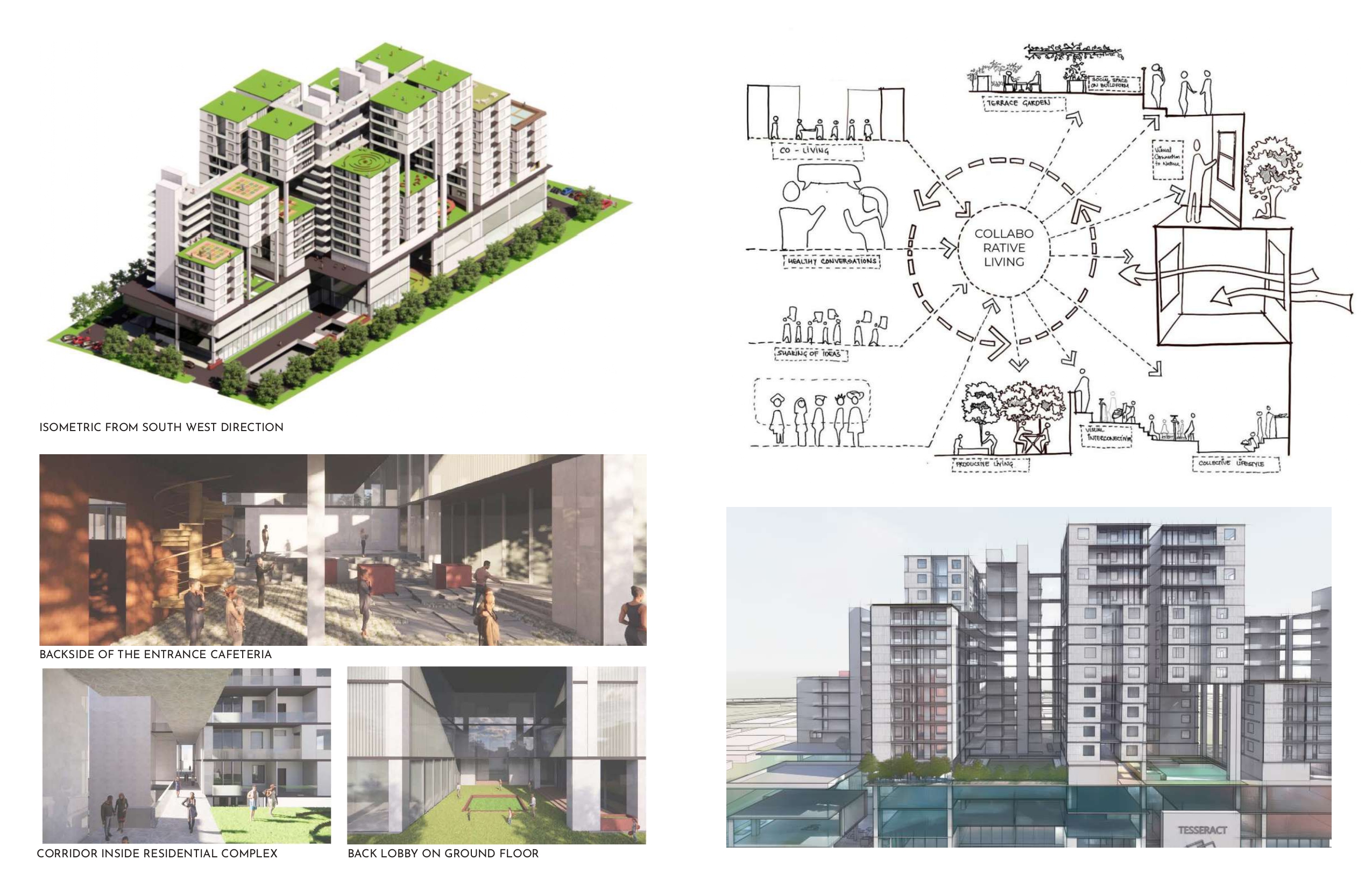
The "Tesseract" metaphor extends architecture beyond 3D (closed and open spaces) into a
4th dimension: intangible culture development through built form. The building acts as a
catalyst for community formation — physical networking as architecture's fourth dimension.
Climate-Responsive Form Development
Iterative Parametric Process
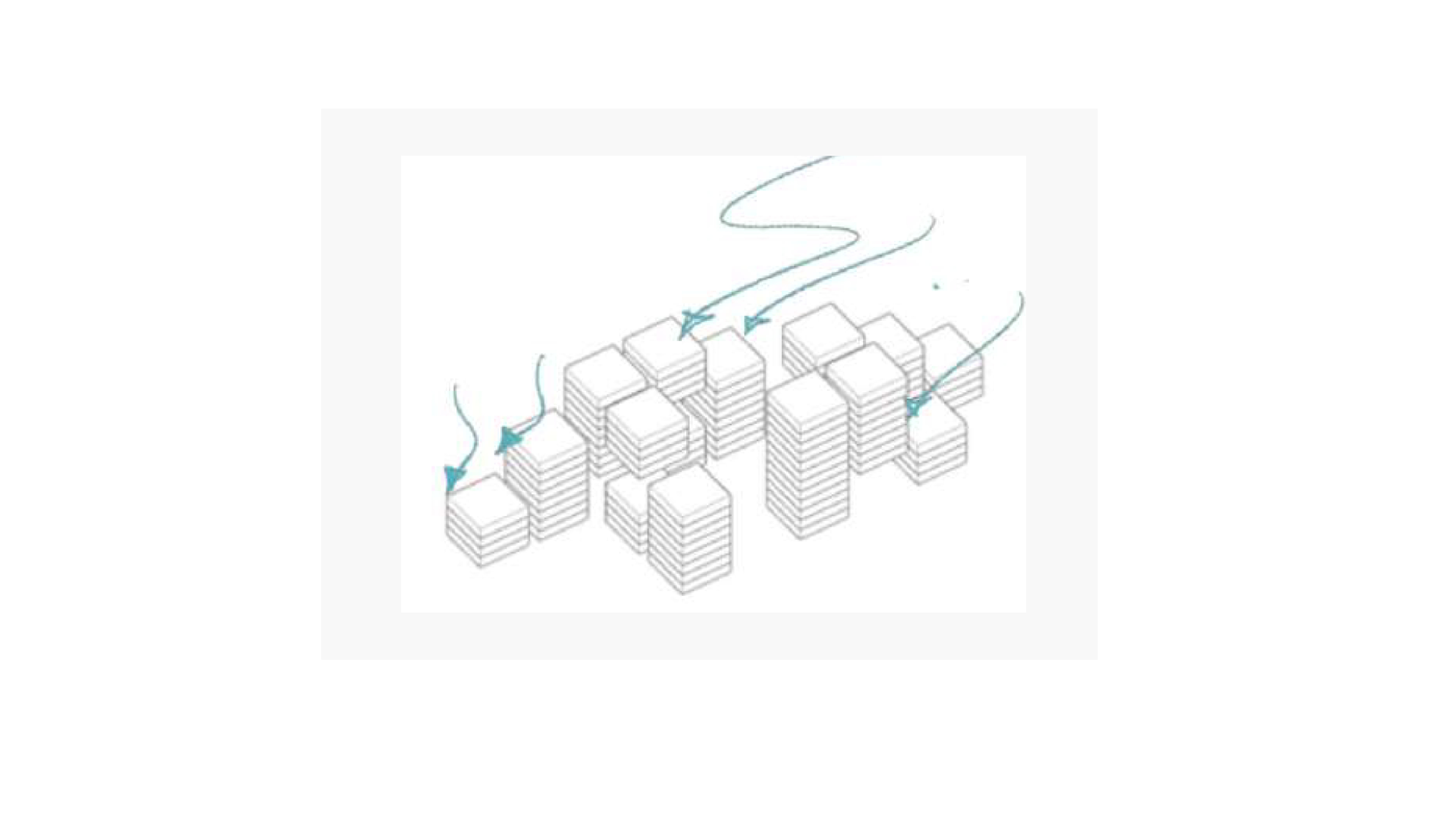
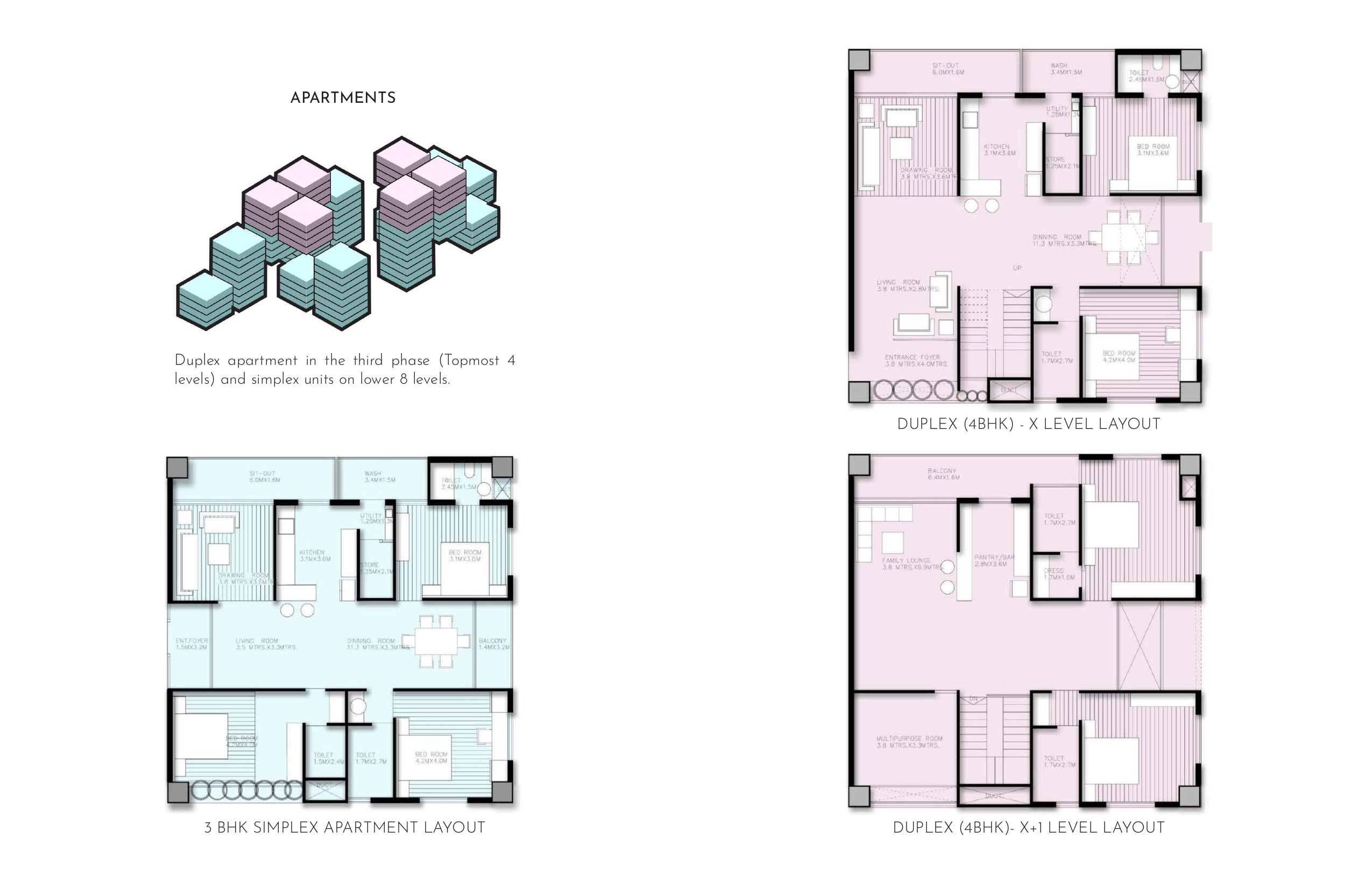
Step 1 — Basic Blocking: 4 apartments per block, 20 blocks total. Regular
stacking for two-sided exposure
Step 2 — Dislocation: Blocks shifted according to wind flow direction. Improved
cross-ventilation, some units gain 3+ facade exposures
Step 3 — Porosity (Final): Multiple climate software iterations. Venturi effect
optimization — wind speeds up through building voids. Most space falls within comfort zone
Wind Flow Strategy
Void openings aligned with prevailing wind direction (especially summer months).
Natural cooling through accelerated airflow. Inner open spaces shaded most of day
throughout year. Reduced mechanical cooling loads through passive ventilation.
Building Program
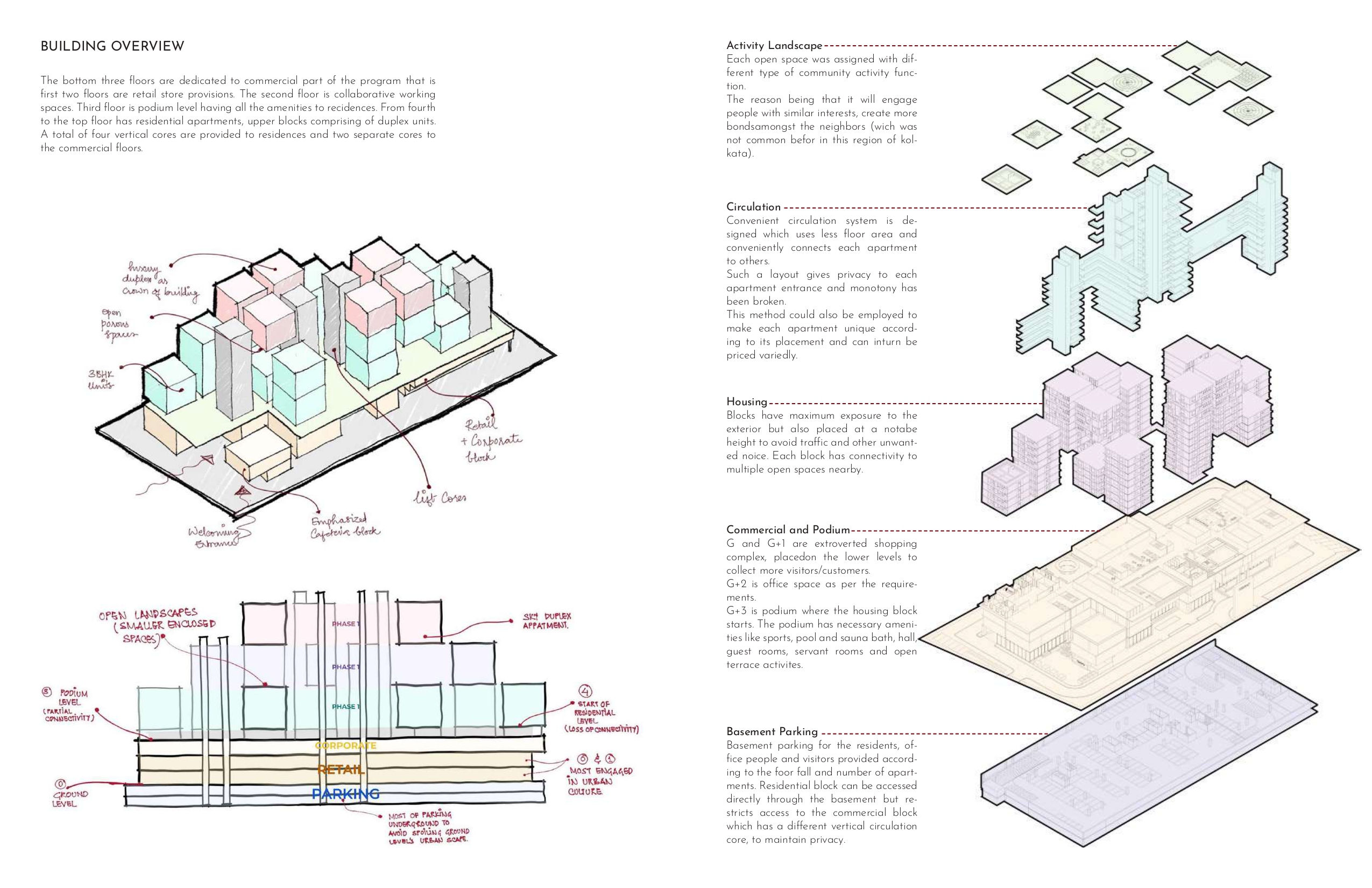
Vertical Stacking (12+ Floors)
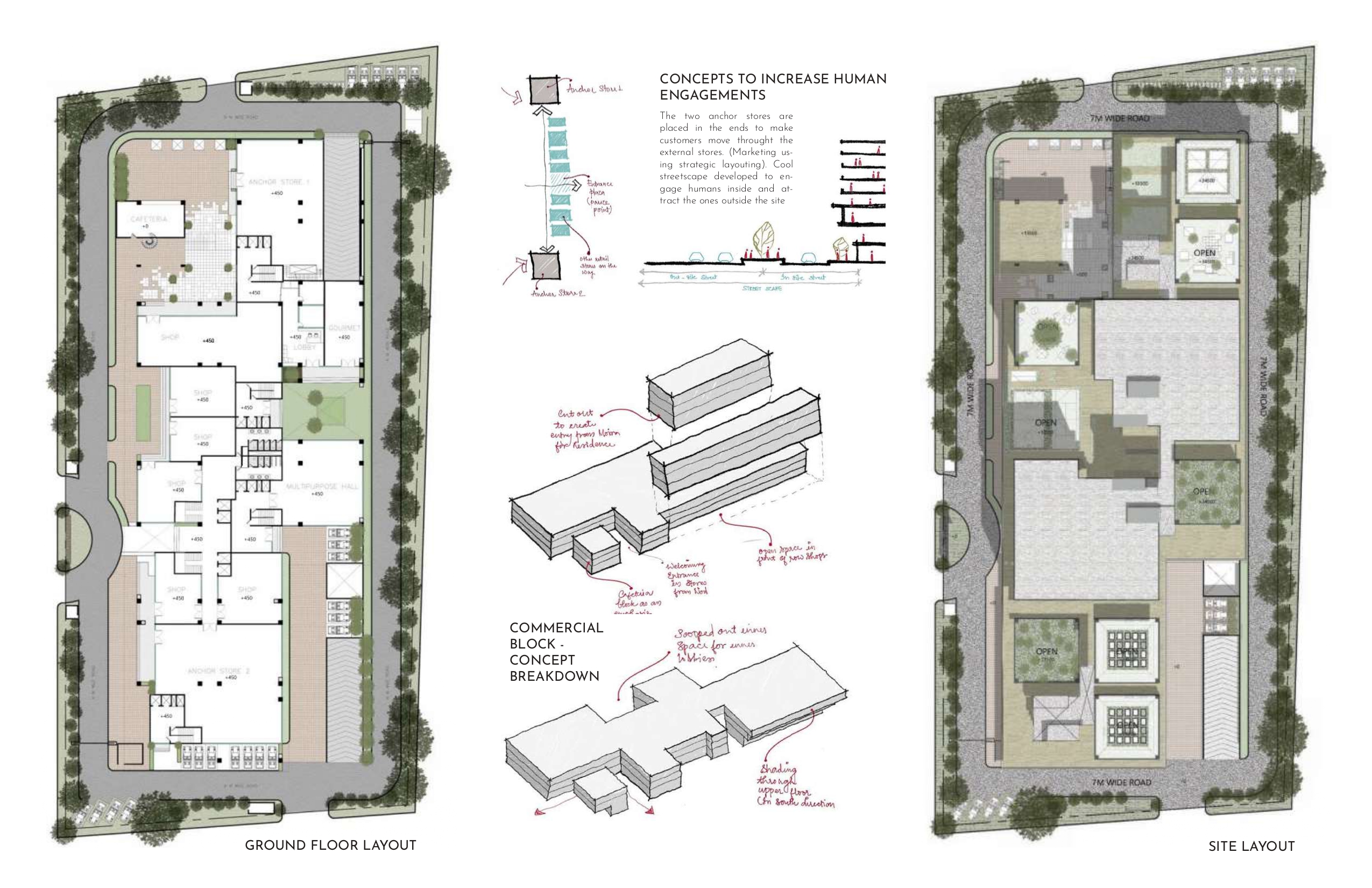
Basement: Parking for residents, office workers, and retail visitors. Direct
vertical access to residential (privacy maintained)
Ground + 1st Floor: Retail shopping complex — extroverted, street-facing. Two
anchor stores at opposite ends force movement through external shops
2nd Floor: Collaborative office/coworking spaces with flexible layouts
3rd Floor (Podium): Residential amenity deck — sports, pool, sauna, community
hall, guest rooms, open terraces
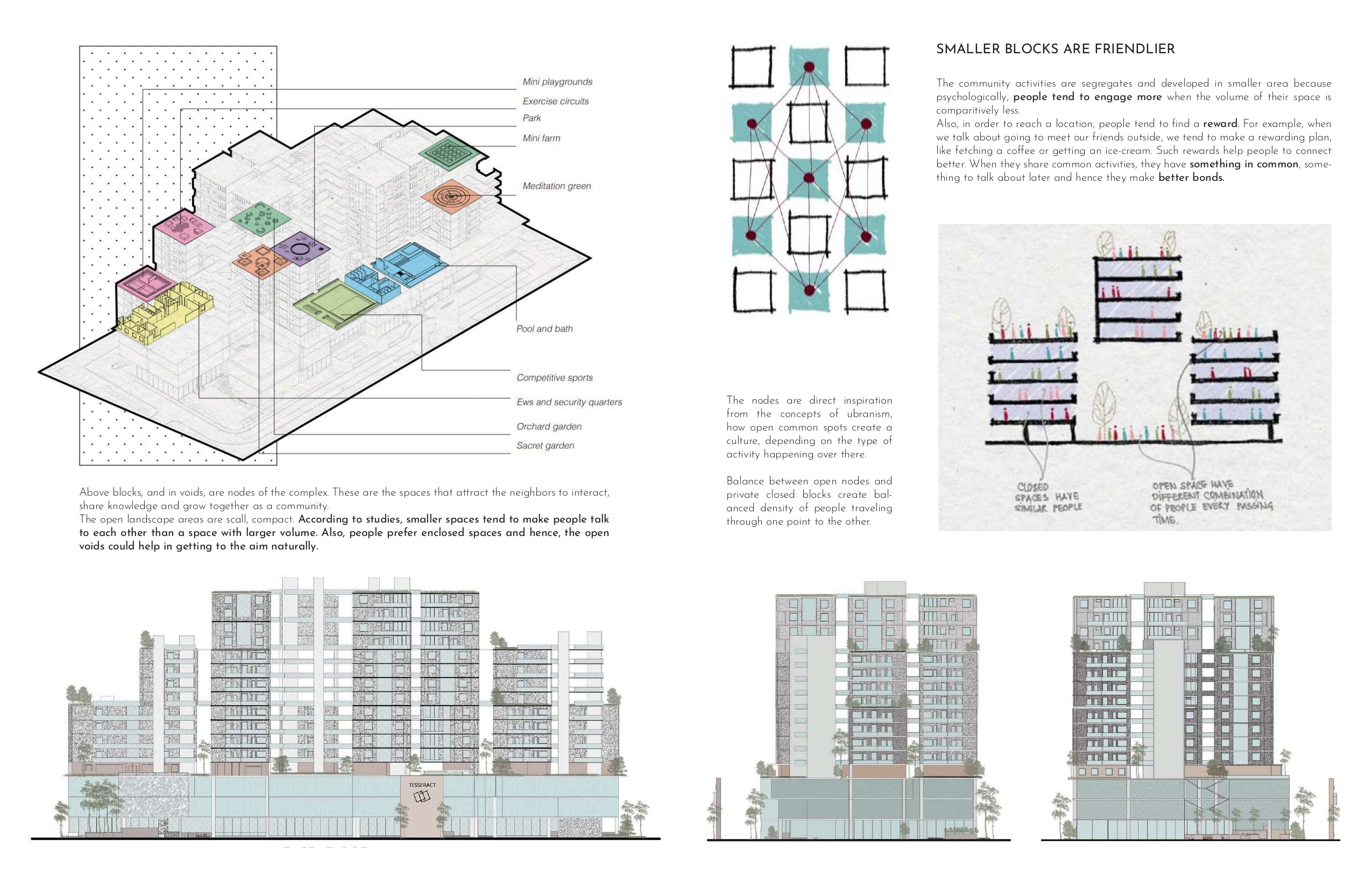
Smaller volumes = better engagement — research shows people interact more in
compact spaces.
Shared activities = common ground — similar interests create conversation and
bonds.
Reward-based destinations — coffee shops, gardens as "rewards" for social trips.
Multiple engagement points attract diverse residents.
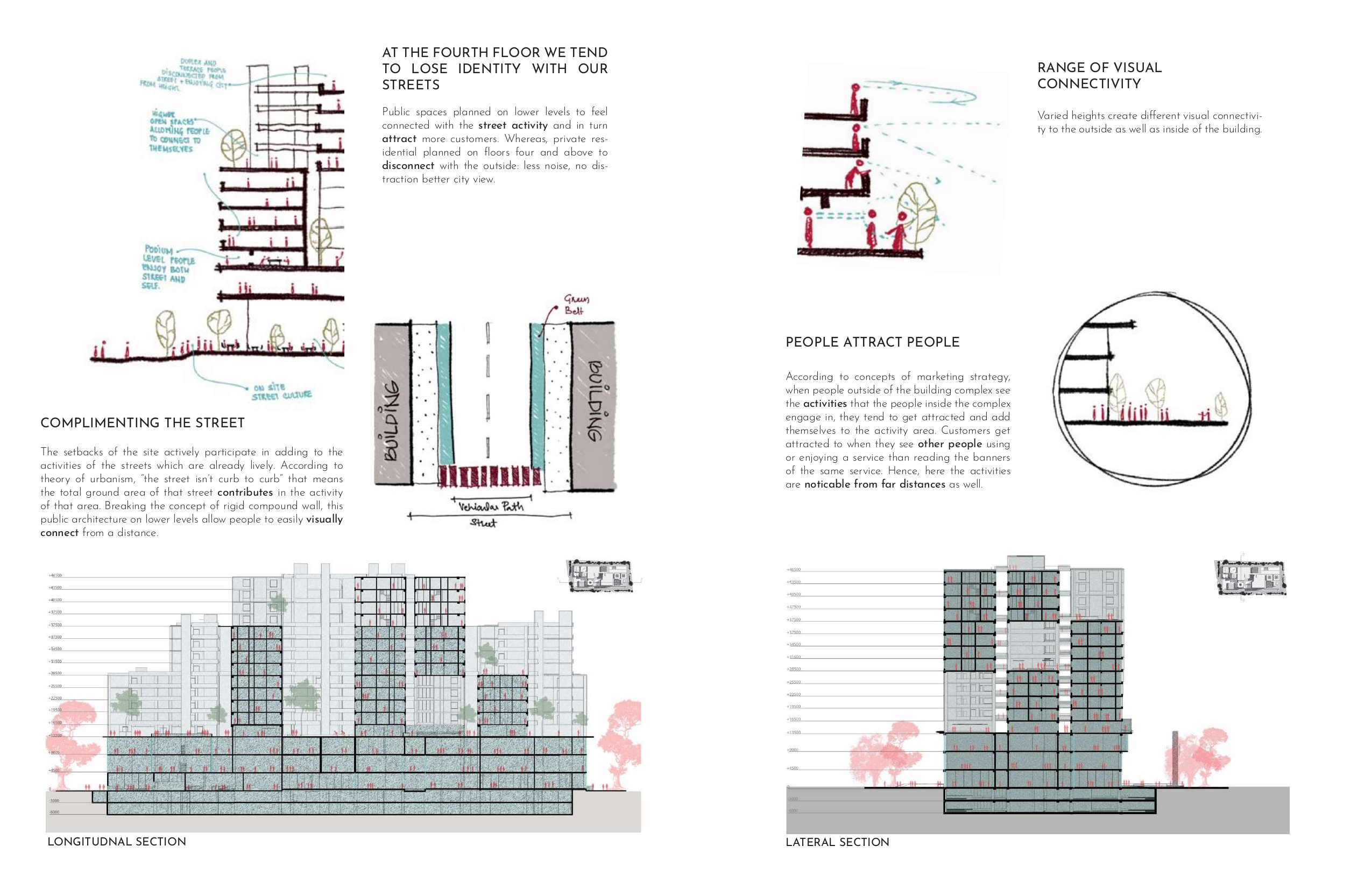
Urban Design — "The Street Isn't Curb to Curb"
Ground level: Setback activation with public architecture on lower levels, breaking
the rigid compound wall concept. "At 4th floor we lose identity with streets" — public spaces on floors 0–3 for
street connection, private residences floor 4+ for disconnect from noise. Marketing through visibility: When people see others enjoying services, they're
attracted — better than banners.
Building Performance
Thermal: Porous form reduces urban heat island. Wind acceleration through voids
(Venturi effect). Shaded central spaces throughout day
Ventilation: 100% of units with cross-ventilation (minimum 2 facades exposed)
Daylighting: Multiple facade exposures per unit. Open central voids prevent
deep, dark cores
Energy: Natural ventilation reduces mechanical cooling. Green roofs for thermal
mass. Solar panels on activity platforms
Sustainability Features
Passive: Wind-driven natural ventilation, solar orientation, green roofs,
vertical landscaping, urban farming, shaded outdoor spaces
Active: Solar panels, rainwater harvesting, gray water recycling,
energy-efficient lighting, smart building controls
Social: Affordable housing through efficient design, mixed-income potential,
community spaces foster social capital, local employment
Circulation & Privacy
Non-monotonous corridor layouts with private entrance zones per apartment. Visual variety breaks
repetition. 4 residential cores + 2 commercial cores (completely separate). Basement provides
direct access to residences only — privacy maintained between residential and commercial users.
Unique unit placements enable varied pricing flexibility.
Computational Design Process
Iterative optimization: Functional stacking (baseline) → wind-responsive
dislocation →
climate software validation → porosity refinement → activity space integration → final form. Tools: Climate analysis software (wind flow + comfort validation), 3D modeling
(Rhino/SketchUp),
daylighting analysis (shadow studies for void placement), conceptual CFD for Venturi effect
validation.
Tools & Technologies
Climate Analysis, CFD (Conceptual), 3D Modeling, Daylighting Analysis, Parametric Form
Development, Urban Design
Social Nexus — Tianducheng Ghost City Activation
Project Overview
Type: International Competition Duration: 54 hours (timed competition) Team: 3 members Location: Tianducheng, China (Parisian replica / "duplitecture") Recognition: International Winner — Docexdoce Competition Publication: Web publication
Problem Statement
Tianducheng is a Chinese suburb replicating Paris (including an Eiffel Tower replica), resulting in
ghost town conditions — used only as a photo backdrop with informal, unstructured living,
no cultural identity, and a small growing population with zero community engagement.
The challenge: create cultural identity through intangible daily activities rather than
iconic architecture replication.
Design Philosophy
"Culture does not make people, people make culture" — Chimamanda Ngozi Adichie
Replicating heritage buildings does not equal cultural authenticity. Cultural identity comes from
the intangible aspects of daily resident activities. Architecture serves as a catalyst, not the
solution.
The design responds through a simple, effective grid system with adaptive squares enabling
sense of ownership, developing community through three pillars: interaction, collaboration,
and creation.
Site Strategy — Central Park Transformation
Location: Central park at base of Eiffel Tower replica
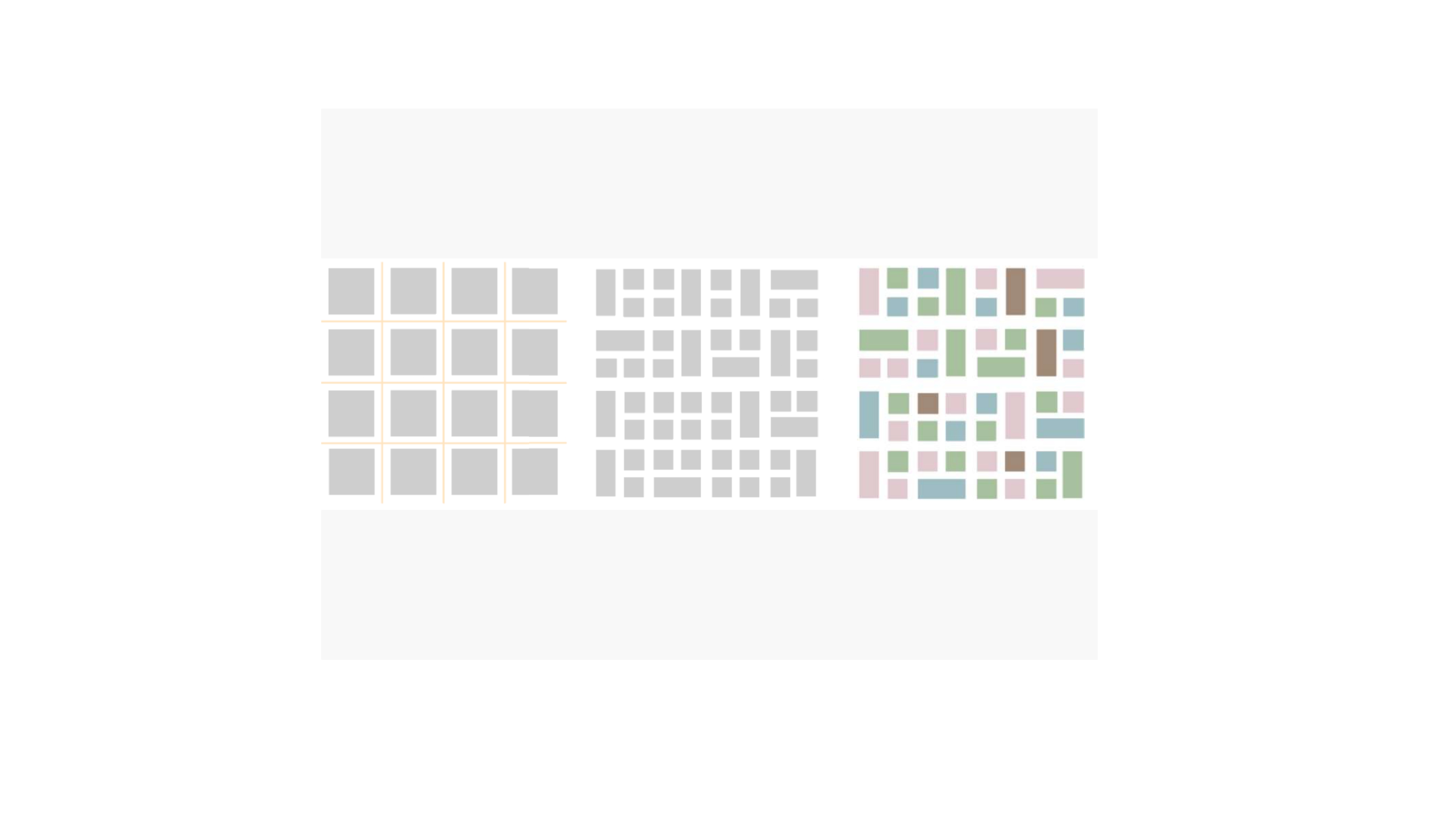
Step 1 — Baseline Grid: Simple pathways dividing park into regular squares
Step 2 — Shape Variation: Cut into different sized/shaped plots
Step 3 — Community Customization: Residents build collaborative environments in
each plot
Flexibility: Grid adapts to any combination of activities. No predetermined
program — residents choose functions based on community needs. Phased development possible
Community Ownership: Residents develop their own grids, creating territorial
ownership and pride in community-built environment
Social Psychology: Activities requiring interaction, collaboration, creation.
Similar interest groups form naturally. Shared activities = conversation topics = stronger bonds
Urban Strategy
Circulation: Grid pathways ensure connectivity with multiple access points to each
square.
Pedestrian-priority environment with flexible routing.
Landscape: Green infrastructure in every grid with varied topography, water
features, and native planting.
Infrastructure: Underground utilities, distributed water/power to each grid.
Modular infrastructure allows
phased development with sustainable drainage systems.
Expected Outcomes — Phased Development
Phase 1 (Immediate): Activity kickstart for residents, initial community
formation, testing of popular activity types
Phase 3 (Long-term): Established cultural practices, unique Tianducheng
identity (not Parisian replica), intangible heritage development, ghost town transformation
Tools & Technologies
Urban Design, Adaptive Grid Systems, Community Participation Design, Landscape Architecture,
Phased Development Strategy
La Gracieux — Cannes Film Festival Pavilion
Project Overview
Type: International Competition Team: 3 members Location: Plage Long Beach, Cannes, France Program: Festival pavilion + pop-up cinema Recognition: International Top 30 — Archasm Competition Publication: Web publication
Design Philosophy
"Architecture and filmmaking, both should be able to create a narrative other than
mainstream, in order to be incredibly successful."
Architecture and filmmaking are treated as parallel narrative mediums. Three elements of
storytelling — Character, Conflict, and Desire — are translated directly into
architectural form, creating a pavilion that visitors experience as a story unfolding.
Architectural Translation of Filmmaking
Character — The Spine: Cubicle volume with only structural spine retained.
Hollow yet looks large — visual trick through skeletal structure. Creates iconic silhouette on
beach, porous allowing views through. Minimal material, maximum presence
Conflict — Level Changes: Series of level differences throughout pavilion.
Visitors surpass many obstacles to reach destination. Ramps, stairs, platforms at varied
heights. Physical effort mirrors emotional investment in a film's plot
Desire — Elevated Seating: Cinema seating elevated from ground achieves viewer
desire to be "above" while watching. Panoramic views of beach + screen. The destination worth
the journey's effort
Spatial Organization
Showcase Space: Exhibition area for festival content at entry level
Convergence Zone: Social gathering and networking at mid-level
Souvenir Shop: Festival merchandise along the journey
Cinema Seating: Elevated viewing area — the "desire" destination
Support Spaces: Restrooms, storage, technical facilities
Volumetric Strategy
Volume: Create desire through elevated seating platform. Spine: Exclude all faces, retain only structural skeleton — maximum visual impact
with minimum material. Skin: Cover select volumes (museum, ramp, café) with tensile fabric for weather
protection while maintaining porosity.
Structural System
Frame: Triangulated truss system — lightweight steel, prefabricated components
Temporary construction: Designed for rapid assembly and complete disassembly
post-festival
Skin: Tensile fabric for shaded areas
Platforms: Timber decking for seating and walkways
Approach: Skeletal character visible from distance on beach →
Entry: Ground-level showcase space →
Ascent: Ramp creates gradual elevation + anticipation →
Convergence: Social gathering node at mid-level →
Souvenir: Commemorative stop before cinema →
Arrival: Elevated cinema seating with ocean view and sunset framing.
Climate Response — Coastal Environment
Sun: Tensile fabric skins provide targeted shade. Wind: Porous frame allows sea breeze through — natural ventilation. Rain: Protected areas under fabric skins. Heat: Elevated platforms catch sea breeze, thermal mass minimized for temporary
use. Views: Beach-facing transparency, city-facing enclosure. Elevated platforms frame
ocean + sunset.
Cultural Context
The Cannes Film Festival celebrates the collective effort of creative people. Audio-visual
experience
requires synchronization of senses. The pavilion becomes a "buildification" of story — spaces
transition through drama and sophistication phases, with architecture evoking emotion in parallel to
film.
Pandemic response architecture addressing the COVID-19 housing crisis for urban poor and migrant
workers.
During lockdown, millions of migrant workers were stranded in cities — unable to return home,
without
transportation, spending months in goods carrier trucks and streets with complete loss of income and
shelter.
Recognition: Shortlisted — IGBC (Indian Green Building Council)
Design Concept: "Fractal"
Named after the mathematical concept of self-similar patterns at any scale. The system works
identically
for a sole family or a dense community — scalable from 1 unit to 100+ units while maintaining
livability
at all scales. A flexible prefabricated initiative that blends in any context.
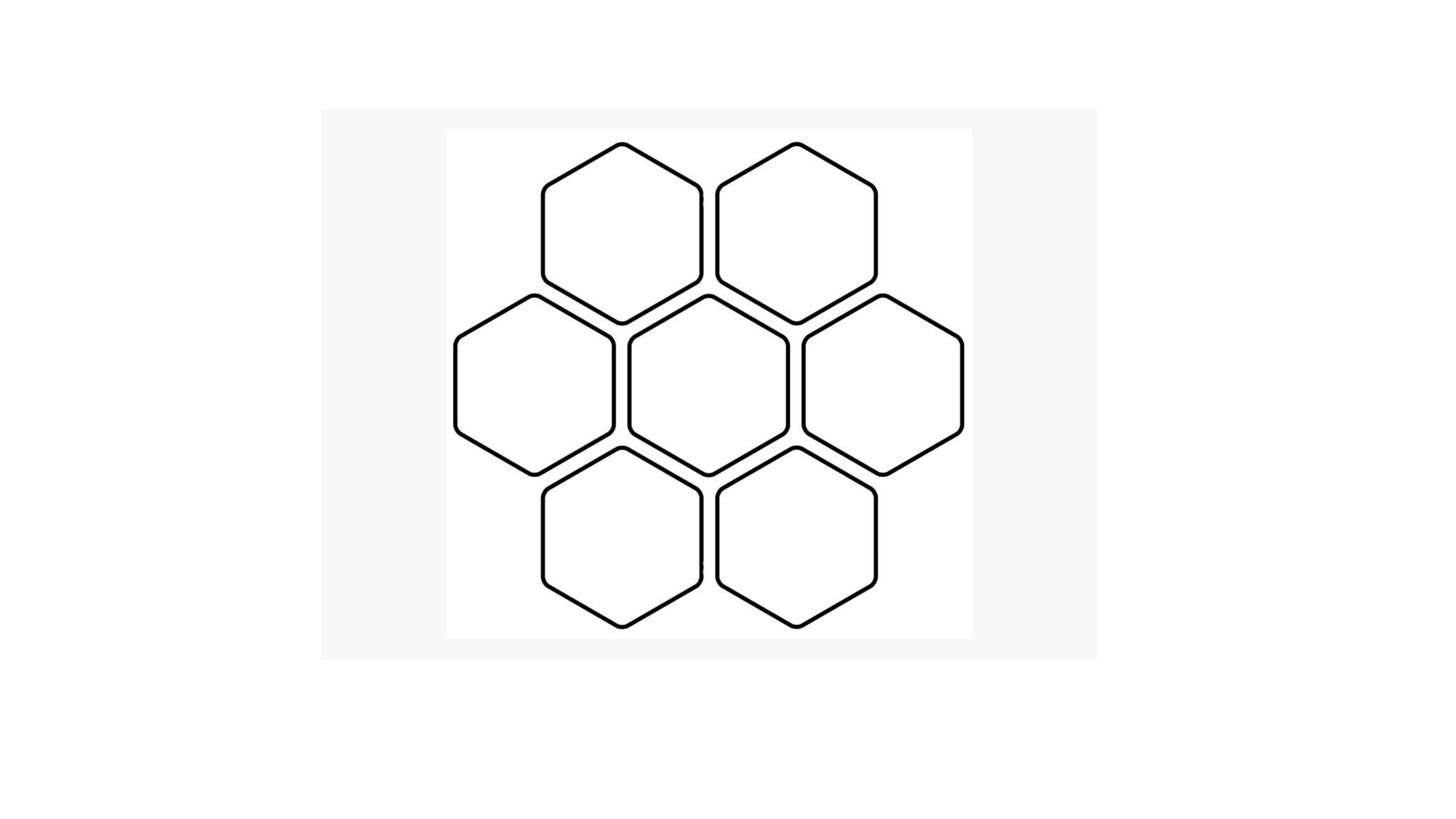
Why Hexagonal Geometry?
Psychological Benefits: Reduces feeling of "packed closeness," provides more
atmosphere
for 24/7 indoor stay, psychologically more comfortable shape, less claustrophobic than rectangular
boxes.
Functional Benefits: Optimized daylight exposure with more facade area per unit,
better
ventilation from multiple facade orientations, spatial efficiency fitting more units in same area,
circulation flexibility with no dead ends, and layout that promotes socialization.
Environmental Benefits: Maximum outer facade area for daylighting, better natural
ventilation
from multiple angles, reduced mechanical cooling needs, and integration of community gardens between
units.
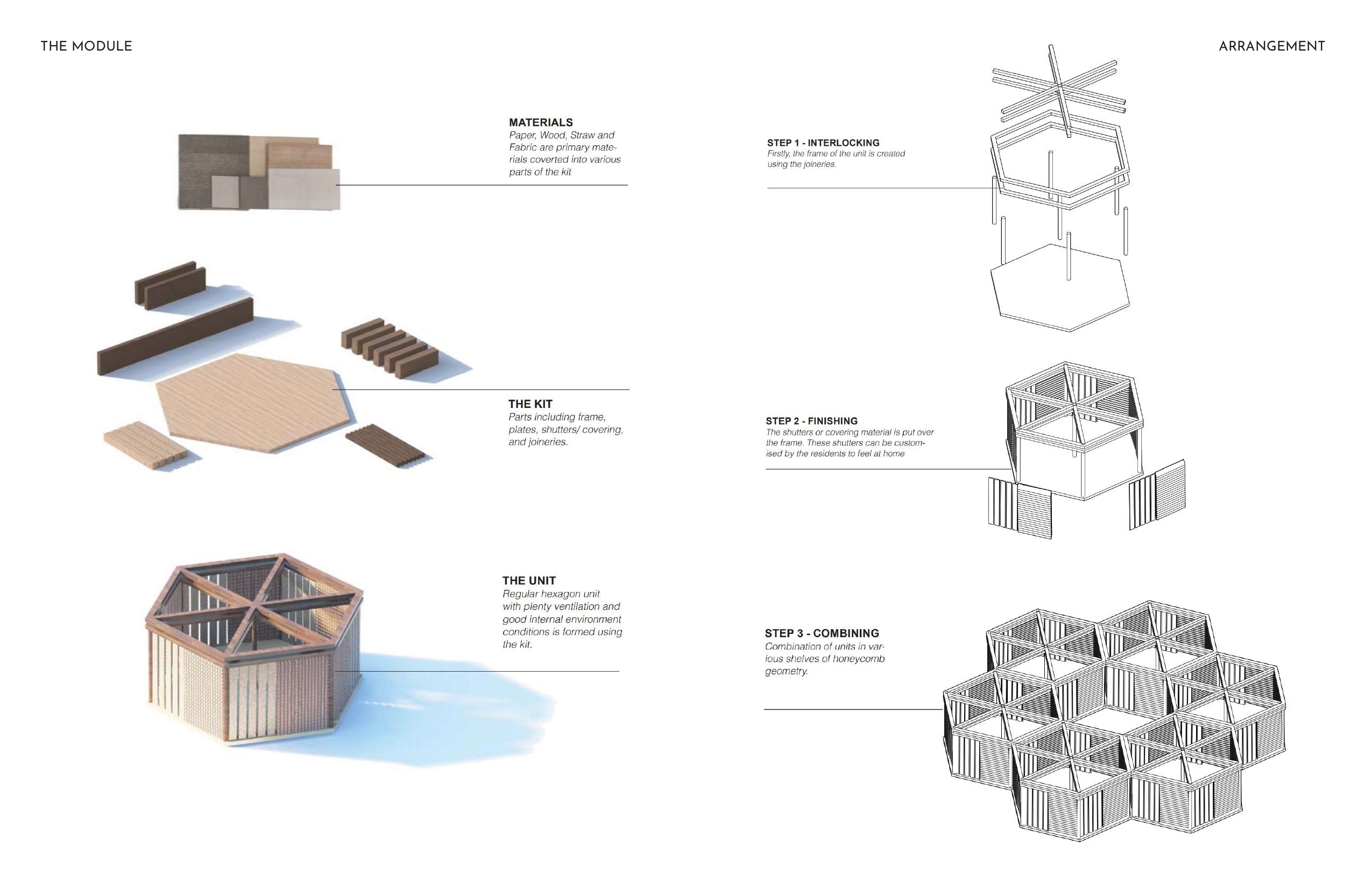
Module Design — The Kit
Flat-Pack Delivery System:
Structural frame: Timber/metal interlocking members
Floor plates: Modular flooring sections
Wall panels: Shutters/covering with insulation
Roof components: Weatherproof covering
Joineries: Connectors, fasteners, hardware
Materials: Paper, wood, straw (sustainable, affordable). Fabric walls for
flexibility,
natural insulation (straw, cardboard), residents can customize with local materials.
Assembly Process
Step 1 — Interlocking: Frame members slot together using joinery system requiring
no specialized tools. Residents can self-assemble with basic instruction.
Step 2 — Finishing: Structure + covering material put over frame. Residents
customize
screens/walls. Personalization creates sense of home.
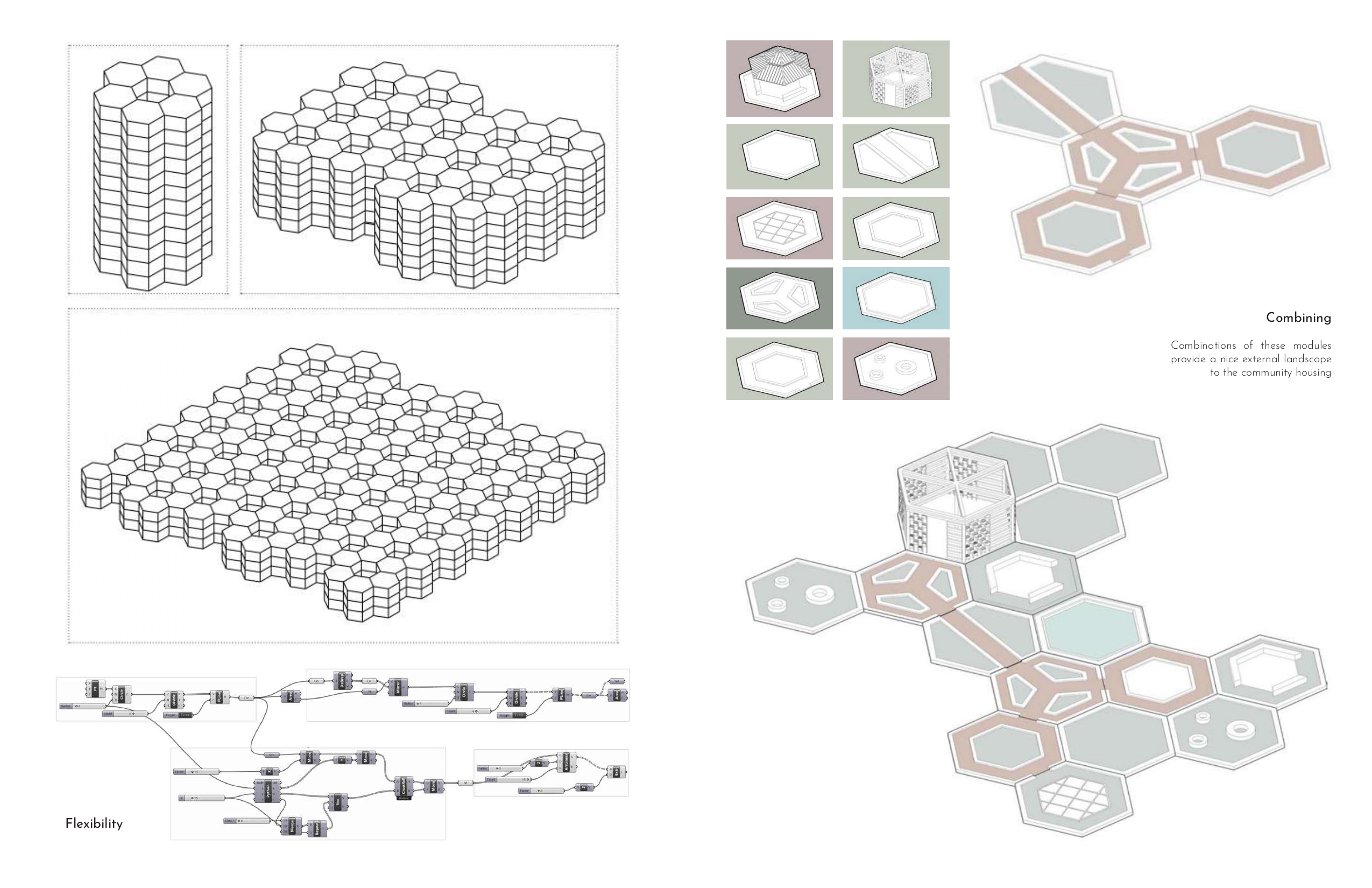
Step 3 — Combining: Units combine in various honeycomb geometries with infinite
arrangement possibilities. Shared walls reduce material needs, community develops organically.
Scalability & Flexibility
Individual Family (1 Unit): Single hexagonal module, all sides open to exterior,
maximum ventilation/daylight.
Small Community (5-10 Units): Honeycomb cluster with shared central courtyard,
community garden spaces between units.
Dense Community (50+ Units): Multi-story hexagonal towers with vertical stacking,
shared circulation, roof gardens, integrated community spaces.
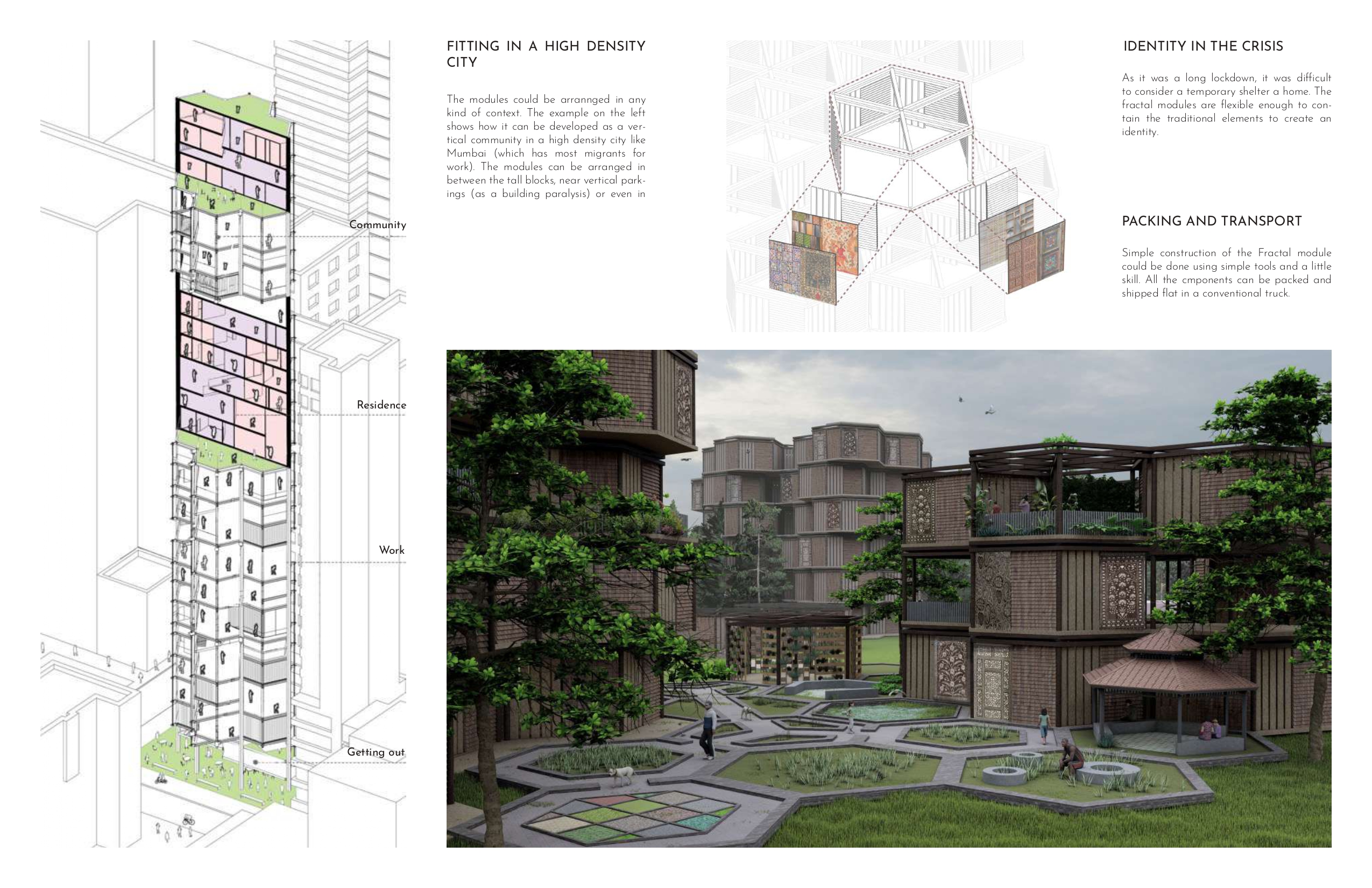
Urban Integration
High-Density Cities (Mumbai): Vertical towers in gaps between buildings, near
parking,
in unused lots, on underutilized rooftops of existing buildings.
Semi-Urban Areas: Horizontal clusters with community spaces.
Rural Areas: Scattered individual units near work sites.
Between units: community gardens, children's play areas, shared cooking facilities,
learning/skill-sharing spaces, storage.
"Tower as Second Place": Learning opportunities, skill development workshops,
social support network, mental health through community connection.
Psychological Design Considerations
Identity in Crisis: Customization opportunity through personalized fabric/screens,
traditional cultural motif integration, sense of ownership from self-building, community formation
through shared construction.
Comfort in Confinement: Hexagon reduces claustrophobia vs. rectangle, multiple
facade angles
provide varied views, natural ventilation ensures better air quality, community visibility reduces
isolation.
Construction: No heavy machinery, minimal skilled labor, self-assembly by residents,
temporary/reversible foundations.
Operation: Natural ventilation (no mechanical cooling), daylighting, rainwater
collection, community gardens for food security.
End-of-Life: Fully demountable, components reusable, biodegradable materials, zero
waste disassembly.
Logistics & Implementation
Transport: Flat-pack design, all components fit in conventional truck, lightweight
(manual handling), many units per truck.
Assembly: Simple tools (hammer, screwdriver), pictorial instruction manual, 2-4
people can assemble 1 unit in 4-6 hours.
Distribution: Government/NGO procurement, distribution through relief networks, site
selection by local authorities, residents self-assemble with supervision.
Quantitative Impact
Each unit: ~12-15 sqm living space | 1 truck: ~20-30 flat-pack units | 1 tower (100 units): ~100
families housed | Assembly: 1 community (10 units) = 2-3 days with 10 people
A collection of Python scripts generating animated video sequences for a 228×8 pixel
LED strip display. The show details the cycle of the four seasons: from summer bee
pollination through fall color transitions, winter aurora borealis, and spring cherry
blossoms — looping back to summer. Created by William Shaw, Suyeon Cha, Ananya Shrimali,
and Jessica Han (Team B(ee)) for Pausch Bridge Lighting Programming at Carnegie Mellon University School of Computer Science.
The Narrative
Summer: Bees emerge from their hive into a bright blue sky, working
tirelessly to pollinate a lush green field until it's fully populated with flowers.
Fall: The sky shimmers with fall colors as trees sway in the wind,
while dead brown leaves rustle on the ground.
Winter: Snow blankets the ground and sky, then the aurora borealis
lights up in vibrant icy colors.
Spring: Snow melts and gives way to cherry blossoms moving across
a bridge, before looping back to summer.
1. Summer Hive Simulation
A biological simulation of bees pollinating flowers across a strip garden.
4 bee agents originate from a brown hive zone (left 12 pixels) and
navigate a 216-pixel garden divided into 57 chunks. Bees select parent flowers using
proximity-weighted probability, visit both parents, then plant new flowers in empty
chunks. Movement runs at 0.3 pixels/frame with 15-frame hover delays, continuing
until the entire strip is filled.
2. Bridge Wave Effects
Procedural wave animations using multiple sine wave layers with different frequencies,
phases, and colors. Includes magenta and teal waves with snow-white sparkle accents.
Features 100-frame fade-in/fade-out transitions across 1000 total frames.
3. Seasonal Transition
A 41-second HSV-based color interpolation across 100 LEDs (25 "bees" + 75 "flowers").
Summer-to-Fall transitions over 23 seconds, Fall-to-Winter over the remaining 18 seconds.
Uses cosine-based ease-in-out timing and per-LED color assignment with randomized flower
palette selection for smooth, natural-feeling transitions.
Technical Highlights
228×8 pixel LED array at 30 FPS with AVI output
HSV color space interpolation for smooth hue transitions
Proximity-weighted probability for bee pollination behavior
Multi-layer sine wave mixing with normalization
Cosine ease-in-out timing for natural seasonal shifts
Modular code structure for easy parameter tuning
Tools & Technologies
Python, NumPy, OpenCV, HSV Color Space, Generative Animation, LED Strip Hardware
SolarSync Shutters — Dynamic Daylight-Responsive Window System
Overview
An Arduino-based control system for parametric window shutters designed to respond
dynamically to daylight. Created for IntelEnv 2025 by team members Katie, Evelyn,
and Ananya. The system targets corporate office environments where users maintain
static positions throughout the day, eliminating manual blind operation while
enhancing building aesthetics.
The Problem
Windows are a key component of the built environment — impacting energy consumption,
human productivity, and well-being. Traditional windows require manual operation
and don't adapt to changing conditions. SolarSync Shutters augment windows to
automatically respond to indoor lighting, natural ventilation, temperature control,
and privacy needs.
Technical Implementation
The system controls 16 servo motors (one per window pane) via an
Arduino Mega, with servos on pins 3, 5, 7, 9, 11, 13, 15, 17, 19,
21, 23, 25, 27, 29, 31, 33. Serial communication runs at 9600 baud rate with
smooth servo movement (15ms delay between degree increments).
Code Evolution
Version 1: Basic 4-servo control with automatic return to closed
position after a delay.
Version 2: Manual control for 4 servos — type '1'-'4' to open,
'r' to reset all.
Version 3: String command system — commands like "1o" (open) and
"1c" (close). Scaled to 16 servos in V3b.
Version 4 (Final): Array-based architecture for scalability,
smooth servo movement with gradual angle transitions, simplified command parsing.
Commands: "1o" through "16o" to open (90°), "1c" through "16c" to close (0°).
Key Features
Individual pane control — each of 16 window panes operated independently
Smooth servo movement — gradual angle transitions for natural motion
Serial command interface — simple open/close commands per pane
The team balanced automation, aesthetics, and practical problem-solving. Features like
multi-color light filtering, origami structures, and pattern-based movement were
identified for future iterations. The focus was on a robust, working prototype that
demonstrates the core concept of daylight-responsive architecture.
Arduino Mega, SG90 Servo Motors, C++ (Arduino), Serial Communication, Parametric Design
Personal Cognitive Architecture Engine (PCAE)
Project Overview
Type: Independent Research — Computational Neuroscience + AI Duration: March 2026 Scale: ~3,300 lines across 5 source files + 937-line cognitive architecture spec Model: ~300K parameter PyTorch neural network (CPU-trainable)
Concept
A digital twin system that computationally models an individual's cognitive architecture
using a biologically-grounded neural network. Unlike conventional AI persona systems that
replicate surface-level speech patterns, PCAE models the underlying neural machinery that
produces thought, emotion, and behavior. The system functions simultaneously as a
communication translator, cognitive diagnostic tool, and self-awareness instrument.
System Architecture
Stage 1 — Memory: ChromaDB semantic similarity search retrieves
top 5 relevant memories from 12 foundational cognitive documents across 10 modules
Stage 2 — Neural: PyTorch model processes input through 13
biologically-ordered brain regions with 9 neurotransmitter channels (~50ms to ~700ms
simulated propagation)
Stage 3 — Prompt: Assembles brain state, memories, and
communication protocol based on truth level + audience tier
Stage 4 — Generation: Gemini 1.5 Pro produces final articulated
response calibrated to the selected output mode
Neural Brain Model
The PyTorch model mirrors biological neural signal propagation through 8 processing stages.
Input text is embedded via all-MiniLM-L6-v2 (384 dimensions), then processed sequentially
through 13 specialized brain region modules: Thalamus, Amygdala, Hypothalamus, Temporal &
Parietal cortex, Prefrontal Cortex (4 sub-regions), Hippocampus, DMN, Insula, Mirror Neurons,
Basal Ganglia, Cerebellum, and Language Center. Each forward pass outputs a BrainState
containing region activations, NT levels, and cognitive readouts (valence, arousal, stress,
speech readiness, dissociation, simulation load).
Dual-Axis Output Control
The same raw thought produces dramatically different outputs depending on two independent
control axes — creating a 4 × 5 matrix of 20 distinct communication protocols:
5 Truth Levels: Executive Interface → Strategic Advisor →
Balanced Direct → Raw Diagnostic → Unsparing Mirror
4 Audience Tiers: Public API → Inner Circle →
Private Sanctum → Admin / Root (full system logs)
Training
300 epochs using AdamW with cosine annealing. Loss combines four components: region activation
BCE (1.0), neuroscience wiring constraints enforcing 7 biological rules (0.5), NT baseline
anchoring (0.3), and contrastive brain vector clustering (0.2). The architecture is
neuroscience-defined; individual parameterization via cognitive profile data sets gains,
thresholds, and biases — the same model class can represent any person.
Frontend
Dark-theme single-page chat interface with a live brain state visualization showing
13 color-coded region activation bars and 6 cognitive readout gauges (valence, arousal,
speech readiness, action readiness, dissociation, dlPFC load). Sidebar contains audience
tier selector, truth level slider, and memory input panel.
Type: Mobile Application — 15113 Course Project Duration: Spring 2026 Platform: Cross-platform (iOS & Android) via Expo Repository:GitHub
Motivation
While preparing for the LEED Green Associate certification, I wanted a focused,
interactive flashcard system tailored to LEED GA mock exam questions — something
more effective than generic study tools. This app was built to combine exam prep
with mobile development practice.
Key Features
100 LEED GA mock exam questions bundled directly in the app — no API keys or backend required
Tap-to-flip card interaction with smooth Y-axis rotation animation using react-native-reanimated
Progress tracking: mark cards as Known (green) or Still Learning (orange)
Filter mode: study only unmastered cards for focused review sessions
Persistent progress via AsyncStorage — survives app restarts
Manage screen: scrollable list of all 100 cards with color-coded status badges and a reset button
Demo Video
App Screens
Study Screen (Home Tab): The main study interface where you flip through
flashcards one at a time. Tap a card to reveal the answer, use arrow buttons to navigate,
and mark cards as Known or Still Learning. A filter toggle lets you focus on unmastered cards only.
Manage Screen (Second Tab): Displays all 100 flashcards in a scrollable list
with colored badges indicating mastery status. Shows overall progress at the top with an
option to reset all progress.
Technical Implementation
Built with React Native and Expo SDK 54, using file-based routing via expo-router.
The card flip animation leverages a Y-axis rotation built with react-native-reanimated
for a native-feel interaction. All 100 questions are stored in a typed data file
(data/questions.ts), and card progress is persisted locally through
@react-native-async-storage/async-storage. The app uses a consistent light theme
with green (#4CAF50) and orange (#FF9800) accents.
Process & Takeaway
After learning the value of thorough planning in a previous assignment, I invested
heavily in writing a clear spec and workflow plan before writing any code.
The structured approach paid off — the core app was built in a single
agent-assisted session with only minor tweaks needed (adding answer options to
card faces). The engineering architecture required no revisions.
Type: Web Application — 15113 Capstone Duration: Spring 2026 Stack: Next.js 16 (App Router), React 19, TypeScript, Tailwind CSS 4 AI: Google Gemini Flash (gemini-flash-latest) via @google/generative-ai Repository:GitHub Live App:vibecheck-15113-capstone.onrender.com
Elevator Pitch
VibeCheck recommends music from implicit context instead of explicit mood surveys.
It collects passive signals in the browser — time, timezone, optional weather, device hints,
idle estimate, and on-device listening history — sends them to a server-side LLM that returns
a strict JSON "vibe card," then surfaces three playable tracks via the iTunes Search API.
No accounts. No mood checkboxes. Just open and play.
Demo
Motivation
Music discovery often means manual search or static playlists. VibeCheck experiments with:
if we know something about the user's moment — clock, environment, recent listens — can we
shorten the path from "open app" to "good song playing"? The project also demonstrates
responsible AI use: structured outputs, fallbacks when the API is unavailable, and
non-clinical copy.
Core User Flow
First visit: Privacy/consent screen explains the signals collected and Gemini's role before anything runs
Location (optional): Browser geolocation + Open-Meteo for current weather; skipping still works — limitations recorded in the signal packet
Automatic first run:collectSignals(idleMs) → POST /api/infer → GET /api/music?q=…
Results: Mood label, confidence, sidebar copy (headline, metaphor, playlist blurb, creative nudge, affirmation), and three tracks with in-app player (preview and/or full-length)
Ongoing use: Re-read the room (15s cooldown), Reshuffle (new trio, same vibe keywords), Vibe Profile modal for long-term taste, Apple Music deep links
Architecture
Two server-side API routes handle all AI and music logic. The browser calls
/api/infer with a SignalsPacket — local time, optional weather,
device hints, idle estimate, recent listening history, and an optional vibe profile —
and Gemini returns a typed InferenceResult JSON. That result's
deezer_search_query field feeds /api/music, which merges
paraphrased iTunes search queries, picks three diverse tracks by artist/genre/decade/album,
and optionally resolves full-length audio via public Piped mirrors — no YouTube Data API key required.
No database; all client state lives in localStorage.
AI Layer — Key Design Decisions
Structured output: System prompt forces raw JSON matching the InferenceResult schema — not free-form chat; one schema drives both UI copy and the music search pipeline
Local clock vs UTC:local_time_period (morning/afternoon/evening/night) derived from the user's browser clock with explicit prompt rules, so mood copy matches the user's actual evening — not a UTC timestamp mislabeled as "afternoon"
Fallback inference: If GEMINI_API_KEY is missing, JSON parse fails, or Gemini errors → buildFallbackInference(signals) returns the same schema using deterministic rules from local_time_period and weather — product works without Gemini for demos and resilience
Vibe profile blending: Optional VibeProfilePacket (display name, MBTI, zodiac, preference notes, summary_for_model) appended to the user message for personalized vibe copy
Music Layer — Freshness & Diversity
Multi-query expansion:expandCandidatePool merges paraphrased iTunes queries (base + chart/radio/popular variants) so results aren't one rigid ranking
Diversity pick:pickDiverseTracks prefers distinct artists, spreads genre buckets (primaryGenreName), decades (releaseDate), and albums (collectionId) using seeded shuffle (mulberry32 from vary nonce)
Exclude lists: Client merges seen track IDs + current queue before each request — reshuffles and re-reads feel fresh across a full session
Full playback resolution: After track pick, searches Piped for a matching video; prefers a direct audio stream URL, else returns a video id for an iframe embed
Privacy & Security
Consent screen before any signal collection. Gemini API key lives server-side only
(process.env.GEMINI_API_KEY); .env* files gitignored.
No OAuth, no accounts — all listening history and preferences stay in
localStorage with user-accessible clear controls in the footer.
Geolocation stored locally for repeat weather fetches; user can skip location entirely
and the app still functions.
Limitations & Future Work
iTunes and Piped availability varies by region and network. Gemini quality and cost depend
on API rate limits. Mobile is responsive web, not a native app. Possible next steps:
native mobile or PWA + push notifications, optional last.fm / Spotify read-only OAuth,
embeddings-based catalog search for tighter mood–track alignment, and a stronger
accessibility audit.










Social Nexus — Tianducheng Ghost City Activation
Project Overview
Type: International Competition
Duration: 54 hours (timed competition)
Team: 3 members
Location: Tianducheng, China (Parisian replica / "duplitecture")
Recognition: International Winner — Docexdoce Competition
Publication: Web publication
Problem Statement
Tianducheng is a Chinese suburb replicating Paris (including an Eiffel Tower replica), resulting in ghost town conditions — used only as a photo backdrop with informal, unstructured living, no cultural identity, and a small growing population with zero community engagement. The challenge: create cultural identity through intangible daily activities rather than iconic architecture replication.
Design Philosophy
"Culture does not make people, people make culture" — Chimamanda Ngozi Adichie
Replicating heritage buildings does not equal cultural authenticity. Cultural identity comes from the intangible aspects of daily resident activities. Architecture serves as a catalyst, not the solution. The design responds through a simple, effective grid system with adaptive squares enabling sense of ownership, developing community through three pillars: interaction, collaboration, and creation.
Site Strategy — Central Park Transformation
16 Adaptive Square Typologies
Design Principles
Urban Strategy
Circulation: Grid pathways ensure connectivity with multiple access points to each square. Pedestrian-priority environment with flexible routing.
Landscape: Green infrastructure in every grid with varied topography, water features, and native planting.
Infrastructure: Underground utilities, distributed water/power to each grid. Modular infrastructure allows phased development with sustainable drainage systems.
Expected Outcomes — Phased Development
Tools & Technologies
Urban Design, Adaptive Grid Systems, Community Participation Design, Landscape Architecture, Phased Development Strategy